
Hanoi vs Ho Chi Minh City: which city to visit first?
Hanoi vs Ho Chi Minh City comes down to what you want in the trip: Hanoi is older, cooler in winter, and slower on the street, while Ho Chi Minh City is newer, hotter, and moves at twice the pace. If you only have one city, pick Hanoi for history and northern day trips, and pick Ho Chi Minh City for southern food, nightlife and the Mekong.
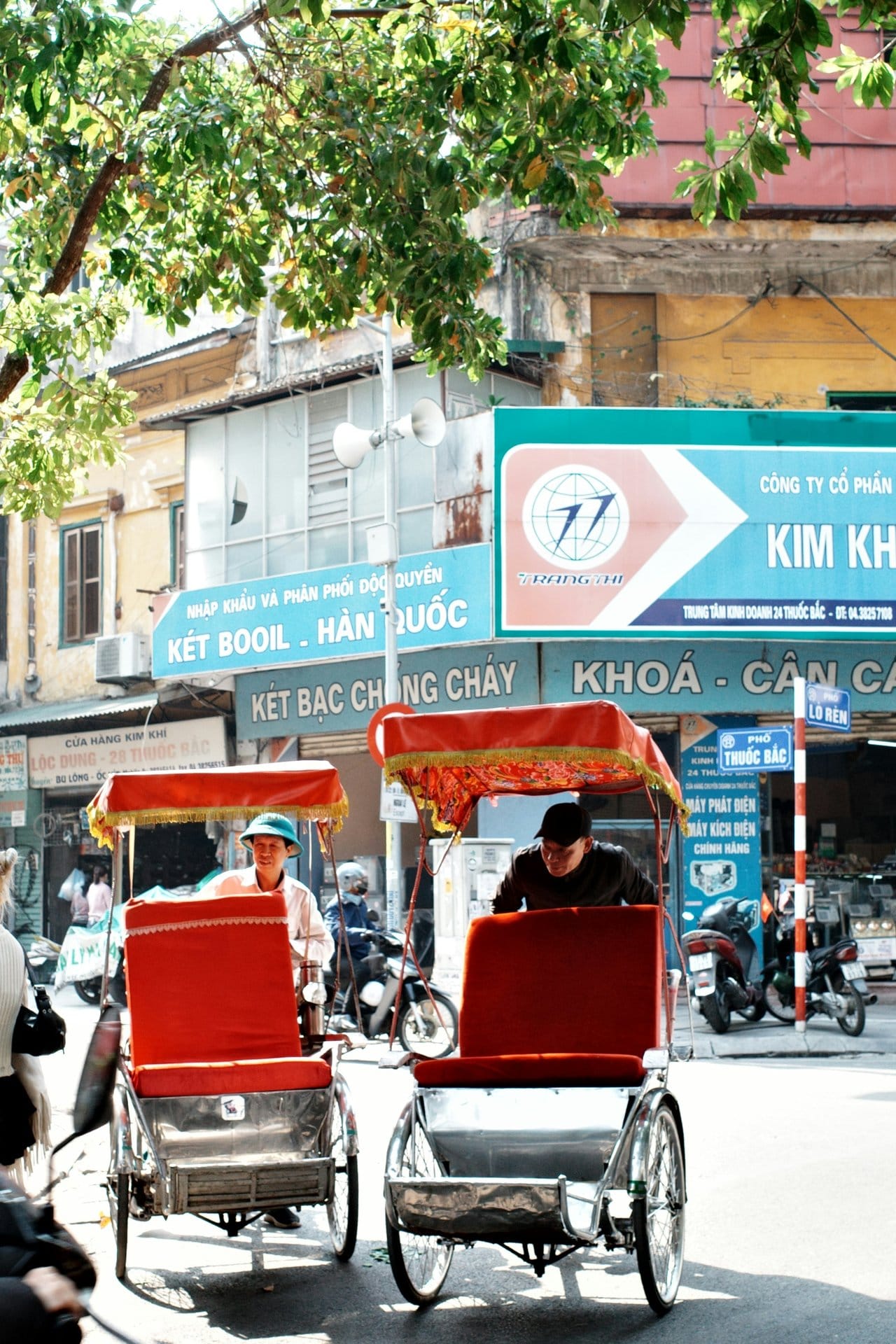
Hanoi vs Ho Chi Minh City at a glance
Hanoi and Ho Chi Minh City are the same country and almost nothing else in common on the ground. This table is the version most travelers actually need on a first read.
Hanoi | Ho Chi Minh City | |
|---|---|---|
Population | ~8.69 million (2024) | ~9.52 million (2024) |
Climate | Humid subtropical, four seasons | Tropical, wet and dry season only |
Best window | Mid-September to late November, or March to April | December to April, dry season |
Signature food | Pho, bun cha, egg coffee | Com tam, hu tieu, banh mi |
Vibe | Older, slower, more traditional | Louder, faster, more commercial |
Metro | Two operational lines, small coverage | Line 1 opened December 2024, 19.7 km |
Base for | Ha Long, Ninh Binh, Sapa, Ha Giang | Mekong Delta, Cu Chi, Phu Quoc |
How the weather differs and when to go
Hanoi runs a full four-season year while Ho Chi Minh City only has two: a warm dry season and a hot wet one. The best shared window for visiting both cities is October to March, when Hanoi is cool and Ho Chi Minh City is dry.
Hanoi's four seasons
Winter, December to February, is cool enough for a real jacket, with days around 18-22°C and nights near 14°C in January. Spring is mild but often gray and drizzly. Summer from May through August is hot, humid and heavy with rain. Autumn from mid-September to late November is the local favorite.
Ho Chi Minh City's two seasons
The dry season, December to April, stays warm and mostly rain-free, with temperatures from about 21-26°C in December rising to 26-35°C by April. The wet season runs May to November, with a heavy afternoon shower most days. January and February are the most comfortable dry-season months.
Seeing both cities in one trip
October to March gives you cool Hanoi and dry Saigon at the same time. For the full month-by-month picture, see our Vietnam weather by month guide.
Skip Hanoi's spring if a dry trip matters more than blossom season; gray, drizzly days are common enough that autumn is the safer bet.
What to eat in each city
Both cities have full Vietnamese menus, but each has a home dish the other imitates rather than owns: Hanoi's plain, clear-broth pho against Ho Chi Minh City's sweeter, herb-loaded version.
Hanoi: home of northern pho
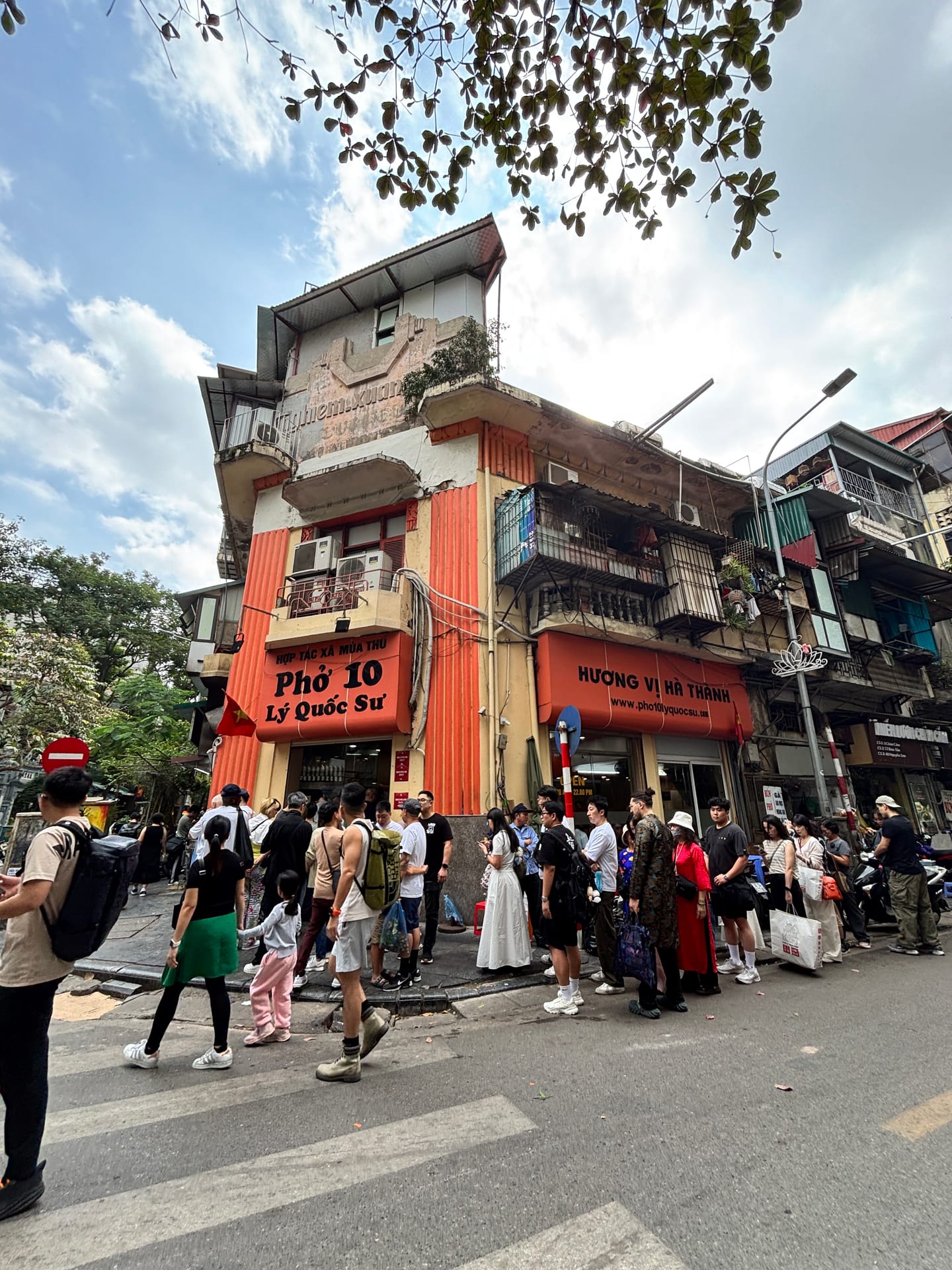
The broth is clear, slightly sweet from bone and star anise, and served with only spring onion, coriander and a few slices of lime. Locals do not add hoisin sauce or bean sprouts, unlike the southern style. Try it at Pho Gia Truyen at 49 Bat Dan or Pho Thin at 13 Lo Duc. The other Hanoi dishes worth planning around are bun cha (grilled pork with rice noodles and a warm dipping bowl), cha ca la vong (turmeric fish with dill), and egg coffee, which was invented on Nguyen Huu Huan street in 1946.
Ho Chi Minh City: the wider food capital
The southern pho is sweeter, comes with a plate of herbs and bean sprouts, and you top it as you like. Com tam (broken rice) is the working lunch that defines the city. Hu tieu is the noodle soup with the widest range of styles, from clear Nam Vang to dry Saigon-style. And banh mi is on almost every corner. If you have to pick one Saigon meal, make it com tam with grilled pork and a fried egg.
Skip adding hoisin sauce or bean sprouts to Hanoi pho; the northern version is deliberately plain, and asking for extras marks you as a first-time visitor fast.
Top sights in Hanoi worth the walk
Hanoi's sights sit close together on a first visit, most travelers cover the essentials in one full day of walking plus a slower half day for the West Lake area.
Hoan Kiem Lake and the Old Quarter
The heart of central Hanoi and where most short-stay hotels are. Walk the lake at sunrise for tai chi, or after dark when the surrounding streets close to traffic on weekends.
Temple of Literature and Ho Chi Minh Mausoleum
- Temple of Literature. Vietnam's oldest temple to Confucius, founded in 1070, with the attached Imperial Academy added in 1076. Give it about 60 to 90 minutes. Adult entry is 70,000 VND.
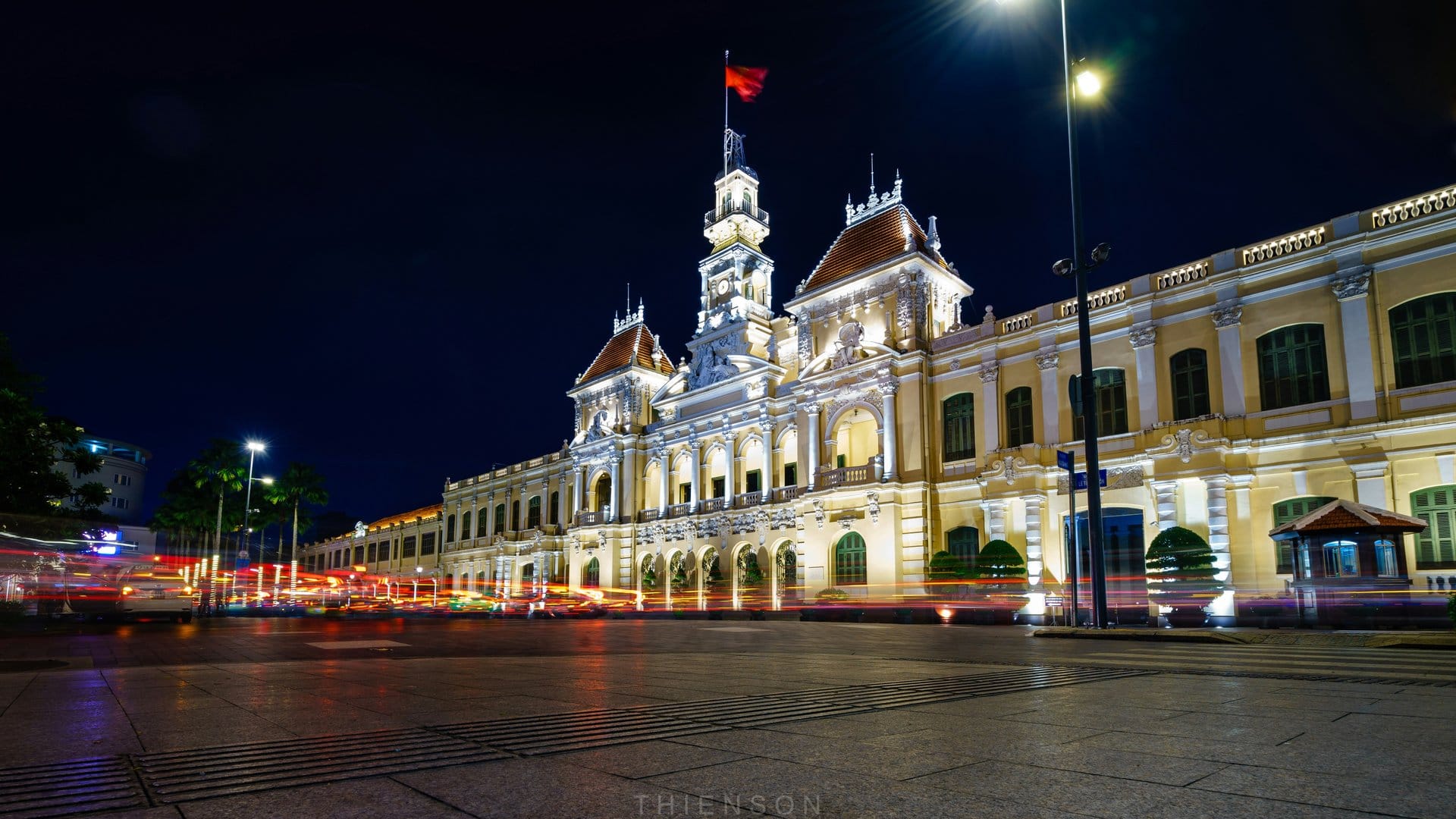
- Ho Chi Minh Mausoleum complex. The mausoleum, the palace grounds, the stilt house and the One Pillar Pagoda cluster on one plot. Opens Tue, Wed, Thu, Sat and Sun mornings only. Entry is free. Dress respectfully.
Tran Quoc Pagoda, Hoa Lo Prison, and Bat Trang village
- Tran Quoc Pagoda and West Lake. Hanoi's oldest pagoda, traditionally dated to the sixth century, on a small island at the edge of West Lake. Best photographed in the evening.
- Hoa Lo Prison Memorial. The colonial-era prison and Vietnam War site in the French Quarter. About 90 minutes for the exhibits.
- Bat Trang pottery village. 14 km outside Hanoi, a working ceramics village where a pottery session costs roughly 30,000-100,000 VND.

For a Hanoi-only day plan, see our full Temple of Literature guide, and our upcoming things-to-do-in-Hanoi post for a longer sight list.
Skip fitting Bat Trang into the same day as the Old Quarter. It sits 14 km out and works better as its own half-day trip.

Top sights in Ho Chi Minh City
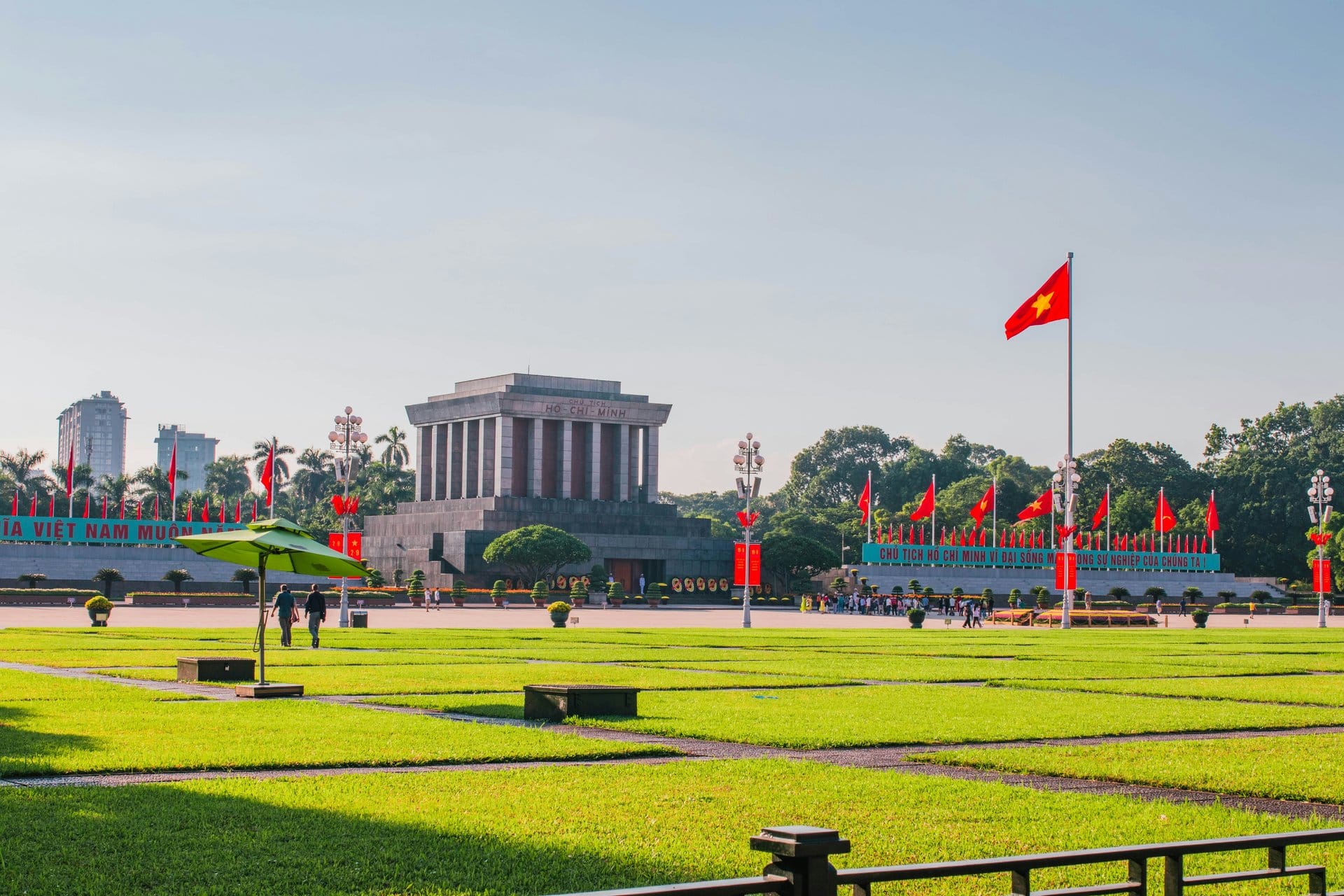
Central HCMC is smaller than it looks on a map. A history-focused morning covers the Reunification Palace, the War Remnants Museum, and the Notre-Dame Cathedral square with the Central Post Office next door.
A history-focused morning
The Palace, the museum, and the Cathedral square sit close enough to cover on foot in one morning.
Ben Thanh Market and Nguyen Hue at night
Add Ben Thanh Market at midday, then Nguyen Hue walking street after dark, when the street closes to traffic.
For a full day plan and the current admission prices, read our Ho Chi Minh City things to do guide. It has the palace, museum and metro fares in one place.
Skip cramming the palace, the museum and Ben Thanh Market into one rushed loop before noon; midday heat slows you down more than the short distances suggest.
Where to stay in Hanoi
Almost every first-time visitor to Hanoi should stay in the Old Quarter or the French Quarter. Everything else is a compromise for a first trip.
Area | Feels like | Mid-range rate per night |
|---|---|---|
Old Quarter | Dense, noisy, lively. 36 named streets, most food and market stalls inside a 15-minute walk. | US$28-60 |
French Quarter | Wider streets, colonial villas, heritage hotels. Quieter and more expensive. | US$80-200 |
Ba Dinh / West Lake | Larger apartments, longer commutes to Old Quarter. Good for repeat visitors and families. | US$60-120 |
Old Quarter: the first-time pick
If it is your first time, pick the Old Quarter. It is the best area for boutique hotels close to Hoan Kiem Lake, and everything a first visitor wants is on foot.
French Quarter: quieter, and pricier
The French Quarter is the smarter pick for a second visit or if you want quiet and heritage architecture. Sofitel Legend Metropole is the landmark heritage hotel; Hotel de l'Opera by MGallery is the boutique alternative for a shorter stay. Book at least three months ahead if you want either during autumn.
Skip Ba Dinh or West Lake for a first stay even though the rates look reasonable. The trade-off is a longer commute back to Hoan Kiem Lake every evening, better suited to a repeat visitor than a first-timer.
Getting between Hanoi and Ho Chi Minh City
The cities are roughly 1,700 km apart by road, depending on the route. Flying is the only sensible option for a short trip.
Flying, direct or with a coastal stop
Vietnam Airlines, Vietjet and Bamboo Airways operate direct flights, dozens of times a day at peak hours. Flight time is around 2 hours 10 to 15 minutes. Fares run roughly US$45-120 depending on how early you book. On a two-week trip, break the journey with a coastal stop instead; Hanoi to Hue is 1 hour 15 minutes.
The Reunification Express train
The long-distance SE1/SE2 train journey via Hue and Da Nang takes about 31-33 hours end to end. It is worth doing for the coastal Hai Van Pass leg, not for the whole route.
City metros do not connect Hanoi and HCMC
The metro helps inside each city but does not cross between them. HCMC Metro Line 1 is 19.7 km with 14 stations, opened December 2024. Hanoi's two operational lines run about 21.6 km combined, with limited coverage of the Old Quarter.
Skip the overnight train for the full route unless the journey is the point; 31-33 hours against a 2 hour 15 minute flight is only worth it for the Hai Van Pass stretch.
North vs South Vietnam in one paragraph
North and South Vietnam are further apart than the two cities alone. The north is cooler, more traditional, and closer to the mountain and karst scenery visitors think of first. The south is hotter year round, more commercial, and closer to the Mekong and the islands. That comparison is a bigger question than which city to start in, and we cover it separately in our north Vietnam vs south Vietnam guide.
Which city should you visit first?
For most first-time travelers, land in Hanoi and fly out of Ho Chi Minh City. That way you ride the country from cool to hot, older to newer, and finish near an airport with regional connections.
Pick Hanoi first if...
You care about history, cooler weather in winter, egg coffee, and want easy access to Ha Long Bay, Ninh Binh and Sapa.
Pick Ho Chi Minh City first if...
You land from Australia or Singapore, want warm dry weather, or plan to base the trip around the Mekong and Phu Quoc.
Two full days is a practical minimum for each city, and three days each gives you time to breathe.
Skip splitting a short trip evenly between both unless you have five nights or fewer, and even then keep Hanoi for a northern-focused week or HCMC for a southern-focused week.

Plan both cities into your Vietnam route
See how Hanoi and Ho Chi Minh City fit inside a two week trip in our Vietnam ultimate guide. If you want both cities and the north-south route in one trip, our North-South Vietnam 6 day tour covers Hanoi, Ha Long Bay, Ho Chi Minh City, Cu Chi Tunnels and the Mekong Delta.
Population figures, HCMC Metro Line 1 length and open date, and Reunification Express duration checked September 2026 against Vietnam Airlines schedules, Ho Chi Minh City Metro information and vietnam.travel. Hotel rates are typical mid-range rates from Hotels.com and Tripadvisor listings on the same date and change by season; use them as ranges, not fixed prices.
Jasmine is a Meetup Travel local expert, born and raised in Vietnam, who plans first-time family routes between Hanoi and Ho Chi Minh City and knows which city order actually keeps kids comfortable instead of jet-lagged and overheated.