
Phu Quoc Island Travel Guide: What to Do, When to Go, and What to Skip
Phu Quoc is Vietnam's largest island, now a special administrative zone in the newly expanded An Giang province (it was a city in Kien Giang province before the 2025 reorganisation), sitting in the Gulf of Thailand just off Cambodia's coast. It splits naturally into three parts: the developed south (Sunset Town, An Thoi cable car, Khem Beach), the resort-heavy central-west (Long Beach, Duong Dong town, the night market), and the quieter jungle-and-beach north (Ganh Dau, Vung Bau, Phu Quoc National Park).
The best months are November through April in the dry season, and most visitors need 4 to 5 nights minimum to see more than one region. Vietnam grants a 30-day visa exemption for international arrivals to Phu Quoc, open to all nationalities, but only if the island is your only stop in Vietnam.
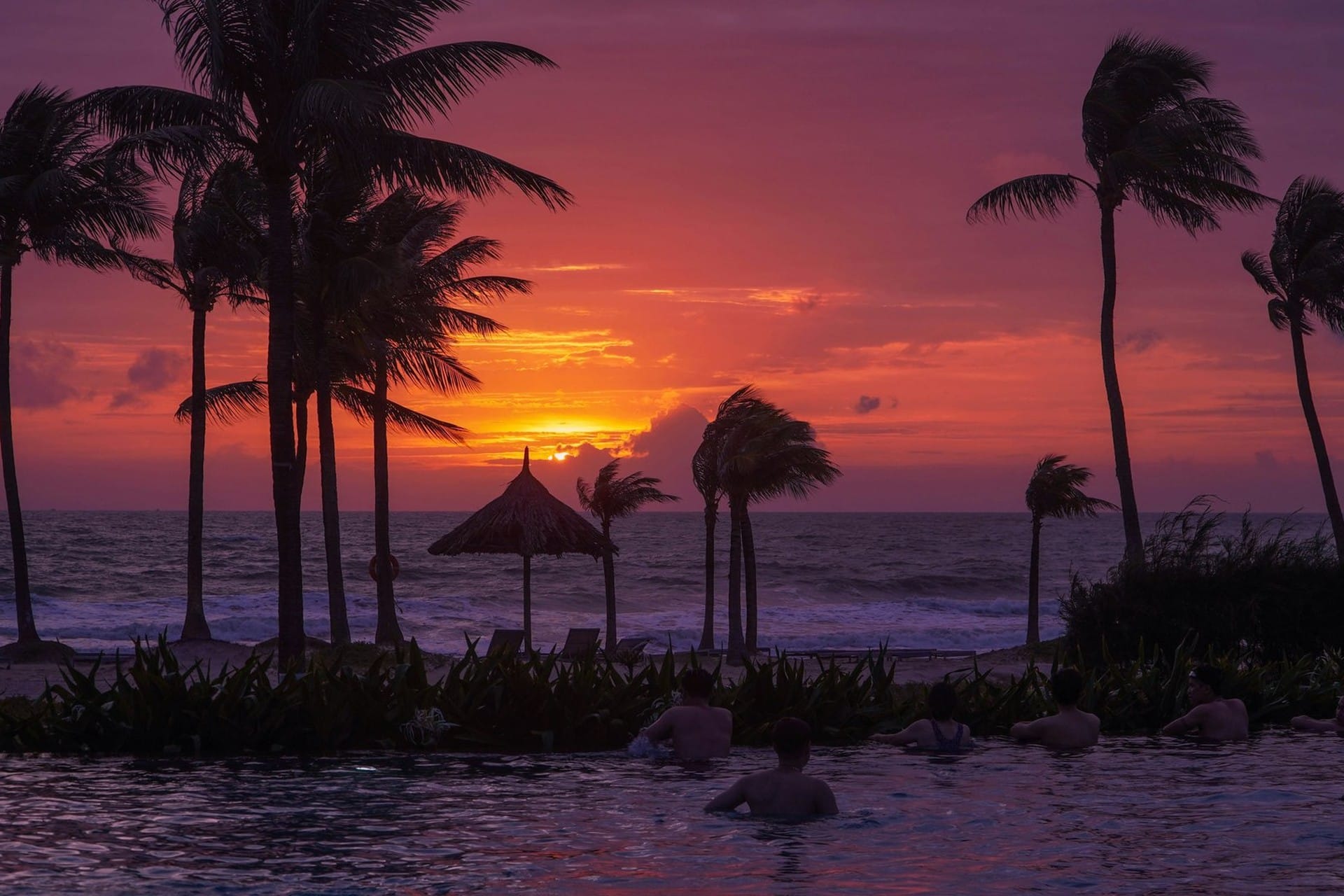
Beach and clear sea on Phu Quoc Island
I have been sending travelers here for years, and I still think most first-time visitors get Phu Quoc wrong in the same way: they book a single resort on Long Beach, spend four days on a lounger, and leave thinking the island is nice but not remarkable. Phu Quoc rewards moving around. The south does not look like the north. The east coast does not swim like the west coast. The night market is loud and worth one dinner, not three. This guide is written to help you avoid the standard mistakes and see the version of Phu Quoc that actually earns the flight.
Prices below are in VND and are reference only. Ferry fares, resort rates, and tour prices move with season and operator.
Quick Reference
Detail | Value |
|---|---|
Location | Gulf of Thailand, off the coast of Cambodia, south west Vietnam |
Administrative status | Special administrative zone (dac khu), An Giang province (was a city in Kien Giang until the 2025 reorganisation; Tho Chau was split off into its own zone) |
Size | ~574 km² for the main island (Vietnam's largest); the special zone covers ~575 km² |
Population | ~160,000 registered, and roughly 220,000 in more recent administrative figures. |
How to arrive | Direct international flights, domestic flights from HCMC, Hanoi, Da Nang; ferry from Ha Tien or Rach Gia |
Currency | Vietnamese Dong (VND). Some resorts quote USD. |
Timezone | GMT+7, no daylight saving |
Best months | November to April (dry season) |
Reference budget per day (mid-range) | 1,800,000 to 3,500,000 VND per person, resort included |
Visa | 30-day visa exemption for international arrivals, all nationalities, island-only stay. |
When is the best time to visit Phu Quoc?
The best time to visit Phu Quoc is November through April, when the north east monsoon has calmed the west coast, humidity is manageable, and sunsets over Long Beach are reliable almost every evening. May through October is the wet season, with afternoon storms and rougher seas on the west and north coasts, though the south east coast often stays swimmable.
I want to be honest about the shoulder months, because the guidebooks tend to be lazy about this. Late October and early November can still deliver bad-weather days that ruin your snorkel plans. Late April can hit 34°C with humidity that makes the cable car ride into a sauna. If you want the guaranteed version of Phu Quoc, aim for December, January, or February and pay the peak-season premium.
Calm dry season water on the west coast of Phu Quoc
Month by month
Month | Weather | Sea condition | Notes |
|---|---|---|---|
January | Dry, 24–29°C | Calm west and north | Peak season, Tet crowds late month |
February | Dry, 24–30°C | Calm | Best all-round month; premium prices |
March | Dry, warming, 25–31°C | Calm | Excellent visibility for snorkeling |
April | Hot and dry, 27–33°C | Calm early, choppy late month | Book cable car early morning to avoid heat |
May | Hot, first storms, 27–33°C | West coast turning rough | Shoulder pricing begins |
June | Wet, 26–32°C | Rough on the west | East coast still swims well |
July | Wet, 26–32°C | Rough | Domestic peak (Vietnamese school holidays); crowded |
August | Wet, 26–31°C | Rough | Domestic peak continues |
September | Wet, 26–31°C | Rough | Lowest prices, real risk of trip disruption |
October | Wet easing, 26–31°C | Transitioning | Gamble on second half of month |
November | Dry returning, 25–30°C | Calming | Great value early month |
December | Dry, 24–29°C | Calm | Peak begins mid-month, Christmas surge |
If forced to pick one month, I would pick February: dry, warm without being brutal, water clarity at its best.
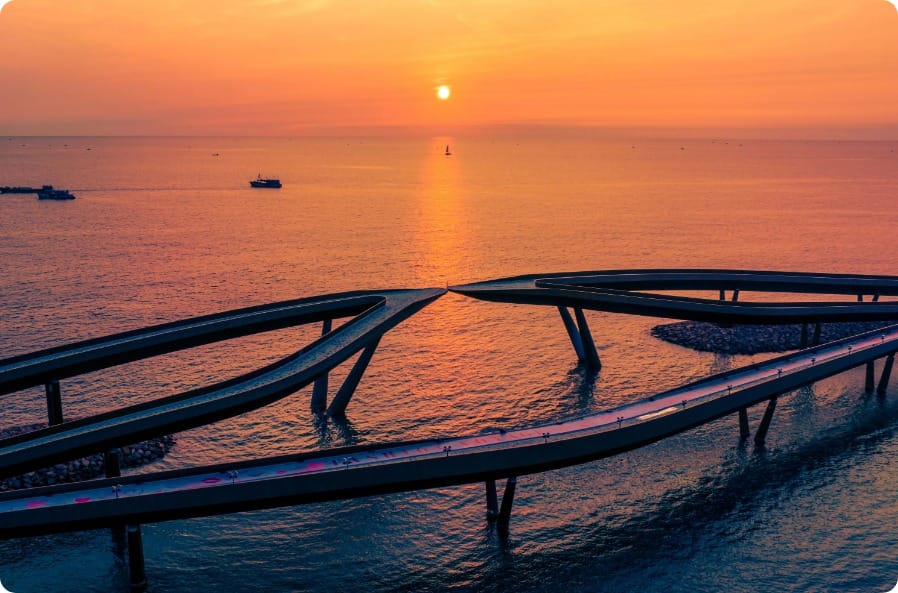
Kiss Bridge on a Phu Quoc beach
How do I get to Phu Quoc?
The fastest way is a direct flight (around 55 minutes from Ho Chi Minh City, roughly 2 hours from Hanoi), and the cheapest is the high-speed ferry from Ha Tien or Rach Gia in the Mekong Delta. Phu Quoc International Airport also takes direct international arrivals from cities like Seoul, Bangkok, Singapore, and several Chinese hubs.
Here is the full comparison.
Route | Time | Reference cost (one way) | Best for |
|---|---|---|---|
Flight HCMC → Phu Quoc | 55 minutes | 900,000 – 2,200,000 VND | First-timers, short trips |
Flight Hanoi → Phu Quoc | ~2 hours | 1,600,000 – 3,000,000 VND | Northern travelers |
Flight Da Nang → Phu Quoc | ~1h 45min | 1,500,000 – 2,800,000 VND | Central Vietnam pairings |
International direct (Seoul, Bangkok, Singapore, etc.) | 3–5 hours | Varies widely | Visa-exempt direct entry |
Ferry from Ha Tien port (Superdong) | ~1h15 to 1h30 | ~150,000 to 250,000 VND | Travelers already in the Mekong |
Ferry from Ha Tien port (Phu Quoc Express) | ~1h20 | Higher than Superdong, | Twin-hull, steadier in chop |
Ferry from Rach Gia port | ~2h15 to 2h30 | ~300,000 VND | Coming from Can Tho / Rach Gia |
If you are already in Can Tho or Ha Tien after a Mekong Delta itinerary, the ferry beats a backtrack to HCMC for a flight. If you are landing internationally and want the full 30-day visa exemption, a direct international flight is cleaner than any land-plus-sea combo.
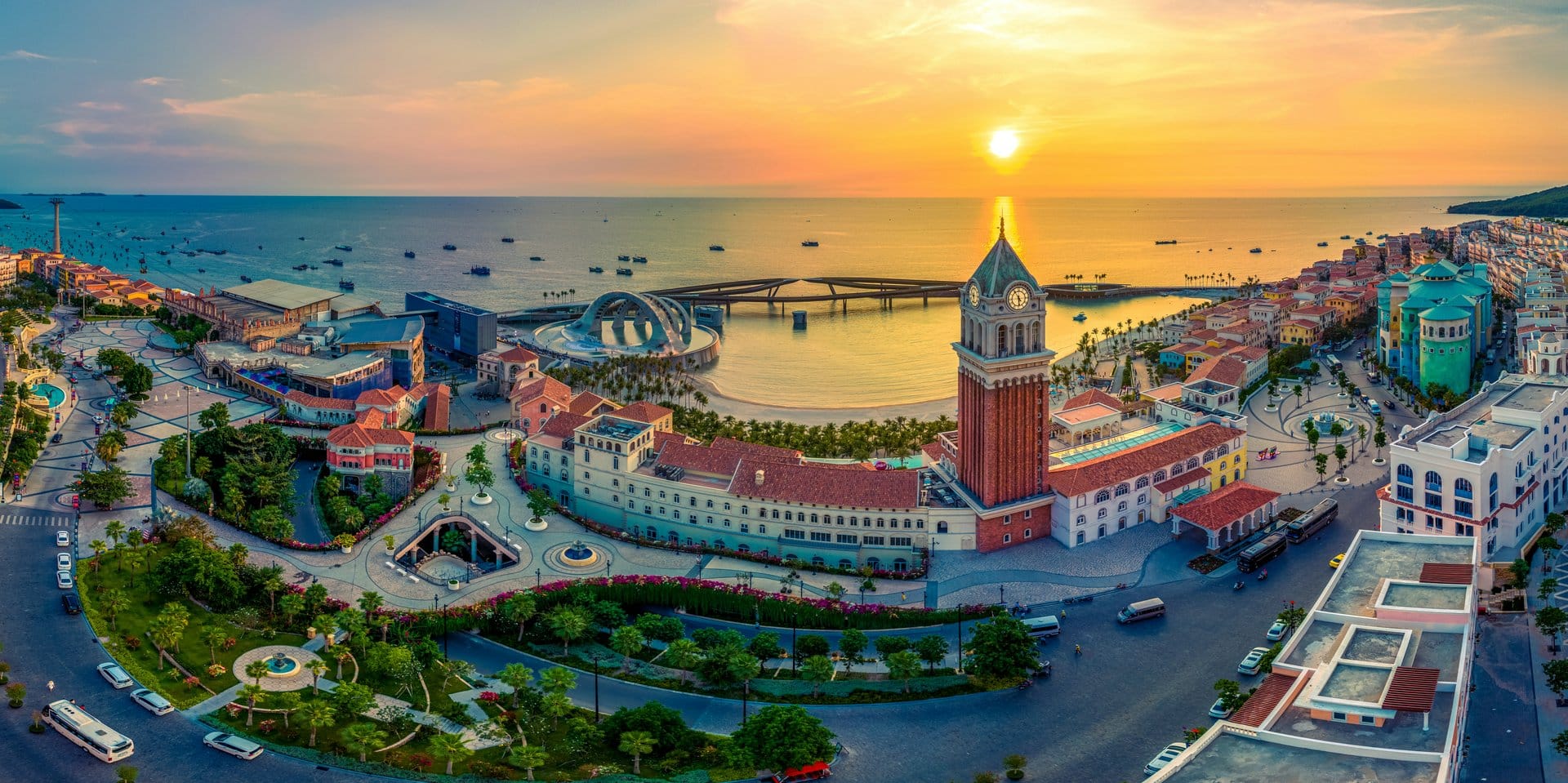
Golden hour descending over Sunset Town Phu Quoc
Ha Tien to Phu Quoc ferry
The Ha Tien to Phu Quoc crossing takes around 1.5 hours, not the half-day some guidebooks imply. Two operators run it: Superdong, a single-hull high-speed boat, at around 1 hour 15 minutes, and Phu Quoc Express, a twin-hull catamaran, at around 1 hour 20 minutes. There are several departures per day in dry season and reduced schedules in the wet months. Reference fare is around 150,000 to 250,000 VND one way on Superdong and higher on Phu Quoc Express. Foreigners pay the same as locals, and you should book at least a day ahead in peak season through your hotel or a travel operator.
A few things I always tell travelers about this crossing:
Boats dock at Bai Vong on Phu Quoc's east coast, not Duong Dong town. From Bai Vong you still have a 30 to 45 minute transfer to your hotel. Ask your resort about the shuttle before you book.
May through October the seas are noticeably rougher. If you get motion sick, take medication before boarding, not on the boat.
The Ha Tien route is shorter and prettier than the Rach Gia route, which crosses more open sea and takes around 2h15 to 2h30, but Rach Gia is easier to reach if you are coming up from Can Tho.
Combined bus-plus-ferry tickets from Ho Chi Minh City exist, but the total travel time is 12+ hours. A flight makes more sense for most travelers unless the Mekong stopover is part of the plan.
Verify the schedule the day before you travel. Wet-season cancellations happen with little notice.
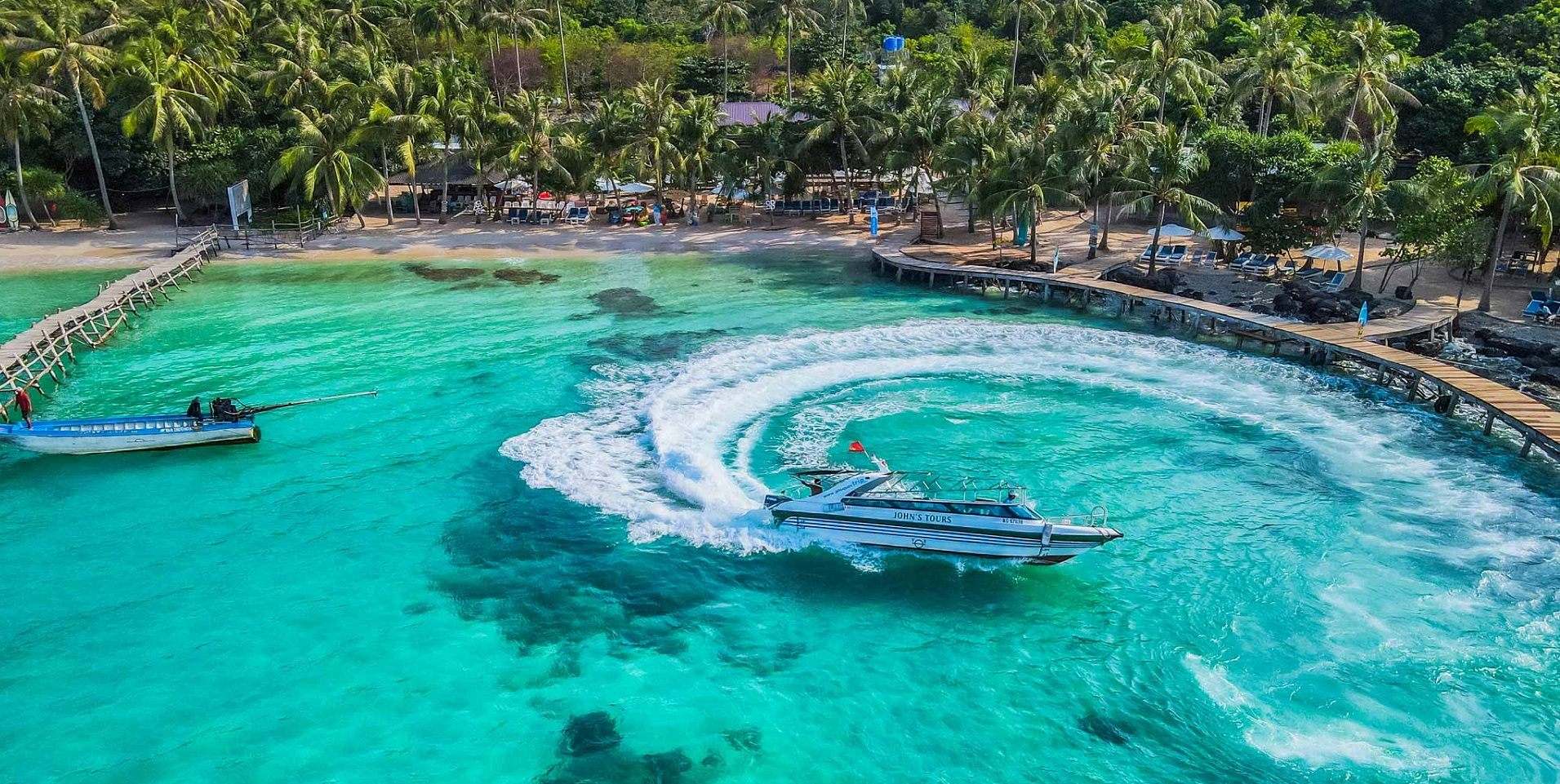
Fast ferry crossing from Ha Tien to Phu Quoc
How many days do I need in Phu Quoc?
4 to 5 nights is the sensible minimum. Three nights forces you to pick one region and skip the other two. A full week is where Phu Quoc actually opens up: you get the south, the north, an An Thoi snorkel day, and enough slow beach time that the island justifies the flight.
Here is how I structure it.
Length | Realistic itinerary |
|---|---|
3 nights | One region only. Stay central-west (Long Beach), do one snorkel day trip, eat at the night market once, sunset at Sunset Sanato. Everything else is beach time. Not enough. |
4 nights | Split the trip. Two nights central-west for infrastructure, two nights north for quiet. Add either the cable car or the An Thoi snorkel tour, not both. |
5 nights | Balanced. Two central-west, one south (Sunset Town day), two north. An Thoi snorkel tour, national park hike, night market dinner, one full slow beach day. |
7–10 nights | Deep dive. Add a second snorkel day (different island cluster), a pepper-farm and fish-sauce factory afternoon, a full national park day, and 2 to 3 completely unstructured beach days. This is when Phu Quoc actually feels like an island holiday, not a checklist. |
Personal take: if you have 7 nights, do not spend all of them at one resort. Split between two properties (one in the north, one in the south or center) and let the drive itself be part of the trip.
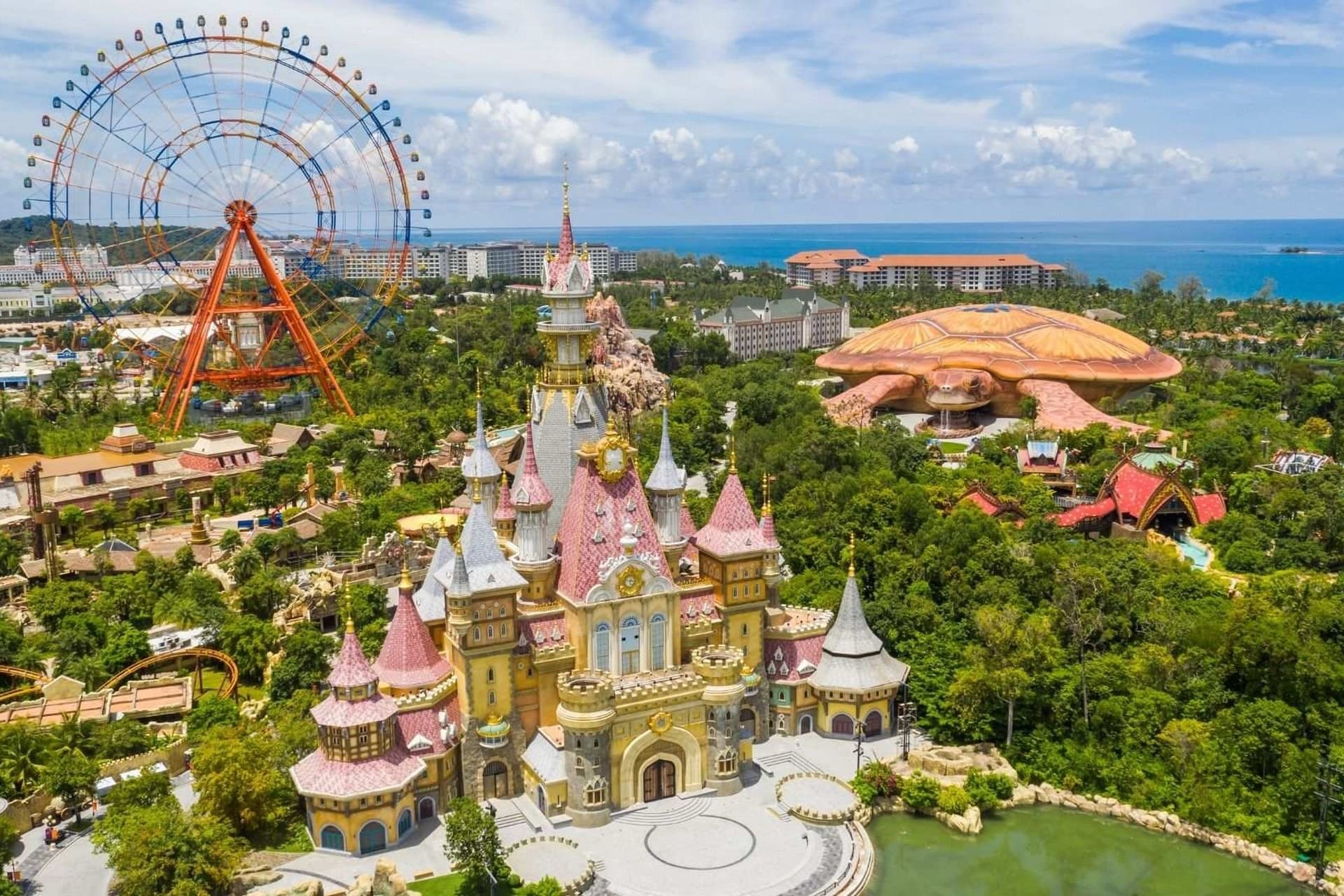
VinWonders Phu Quoc Theme Park
Where should I stay: north, center, or south?
Match the region to your trip. The center-west is the default for first-timers because it has the most restaurants, the night market, and the standard resort strip. The south is polished and package-friendly. The north is quieter, more forested, and better if you want to feel like you are on an island rather than in a resort suburb.
Region | Vibe | Best for | Reference nightly rate (mid-range) |
|---|---|---|---|
Central-west (Long Beach, Duong Dong) | Busy, resort strip, restaurants, night market | First-timers, families needing options | 1,800,000 – 4,500,000 VND |
South (Sunset Town, Khem Beach, An Thoi) | Polished, walkable, cable car access | Honeymooners, package travelers, families with older kids | 2,500,000 – 6,000,000 VND |
North (Ong Lang, Vung Bau, Ganh Dau) | Quiet, jungle-adjacent, fewer restaurants | Slow travelers, couples, second-time visitors | 2,000,000 – 5,500,000 VND |
Central-west: the default, and not always the best default
Long Beach and Duong Dong give you the most restaurants per square kilometer, the night market on your doorstep, and the biggest range of tours departing nearby. But the west coast beach is not the island's best beach, the water clarity is only average, and in high season the shoreline can feel busy. Good for a first trip, weak for a repeat.
South: Sunset Town and Khem Beach
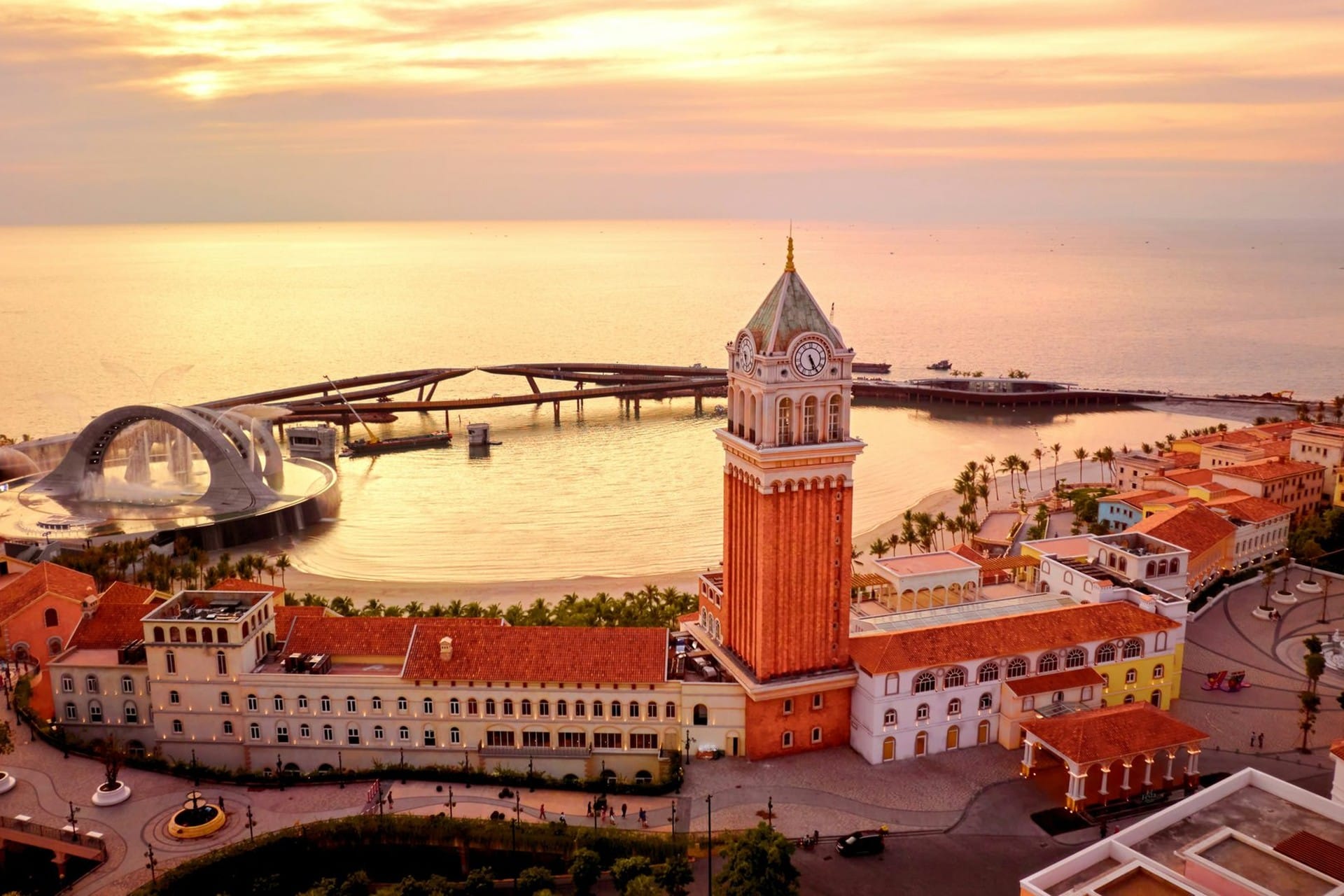
The south around An Thoi has been transformed by large-scale development. Sunset Town is genuinely photogenic in a Mediterranean-style way and it works for a half-day walk. Khem Beach is the polished, resort-locked stretch with fine white sand. The cable car to Hon Thom departs from here. It is easy, it is comfortable, and it is a bit sterile. First-timers on package holidays often love it.
North: my personal recommendation for repeat visitors
Ong Lang, Vung Bau, and Ganh Dau are quieter, greener, and closer to Phu Quoc National Park. Restaurants are fewer and further apart, so plan on eating mostly at your resort or hiring a scooter. The trade-off is that mornings on Ong Lang beach still feel like an island, not a hotel strip. This is where I stay when I come here myself.
Skip the DIY planning? Meetup Travel's 4-night Phu Quoc package with resort, private airport transfer, An Thoi 3-island snorkel tour, and pepper-farm lunch runs from VND 8,500,000/person (twin share, reference). See Phu Quoc tours →
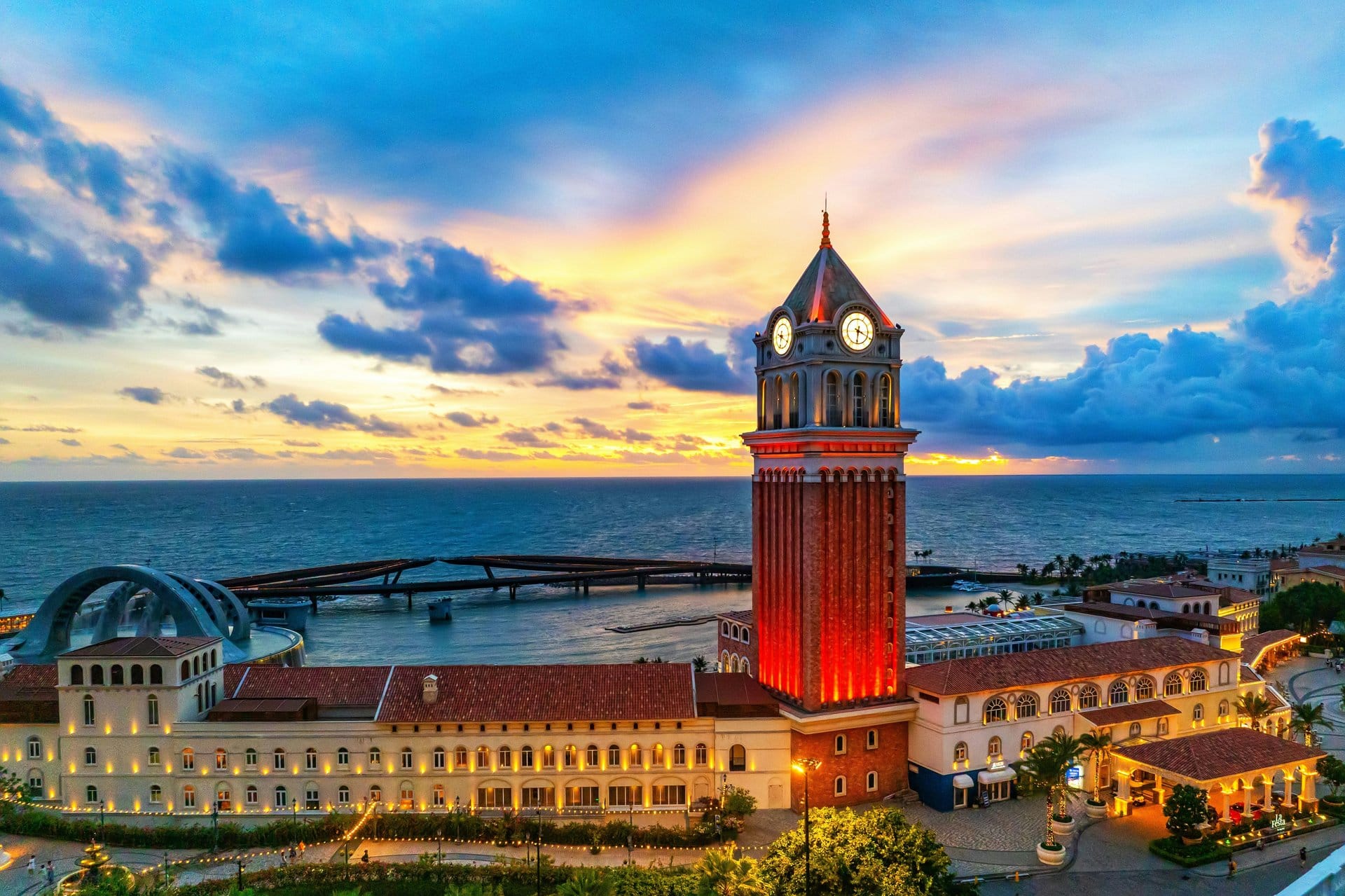
Sunset Town and the Central Village Clock Tower, Phu Quoc
Which are the best beaches in Phu Quoc?
Sao Beach on the south east coast is the pure winner on water clarity and sand quality, but Long Beach is the practical everyday swim beach. The full ranking depends on where you are staying and whether you are willing to drive.
Beach | Location | Vibe | Water clarity | Swimming | Verdict |
|---|---|---|---|---|---|
Sao Beach | South east | Postcard, day-trip crowded | Excellent | Excellent, swimmable most of the year | Best beach on the island; requires the drive |
Long Beach (Bai Truong) | Central-west | Resort strip, busy | Average | Good in dry season | Practical, not spectacular |
Ong Lang | Center-north | Quiet, rocky sections | Good | Good, calmer than Long Beach | Best mid-range compromise |
Vung Bau | North | Very quiet, undeveloped | Good | Good | Second-time visitors' beach |
Khem Beach | South | Polished, resort-controlled | Very good | Very good | The luxury option |
Ganh Dau | Far north west | Fishing village + resort | Good | Good | Best sunset in the far north |
For a full breakdown of Sao Beach specifically (how to get there, best time of day, what to pack, food shacks worth eating at), see Meetup Travel's dedicated Sao Beach guide. It answers the questions this pillar does not have room for.
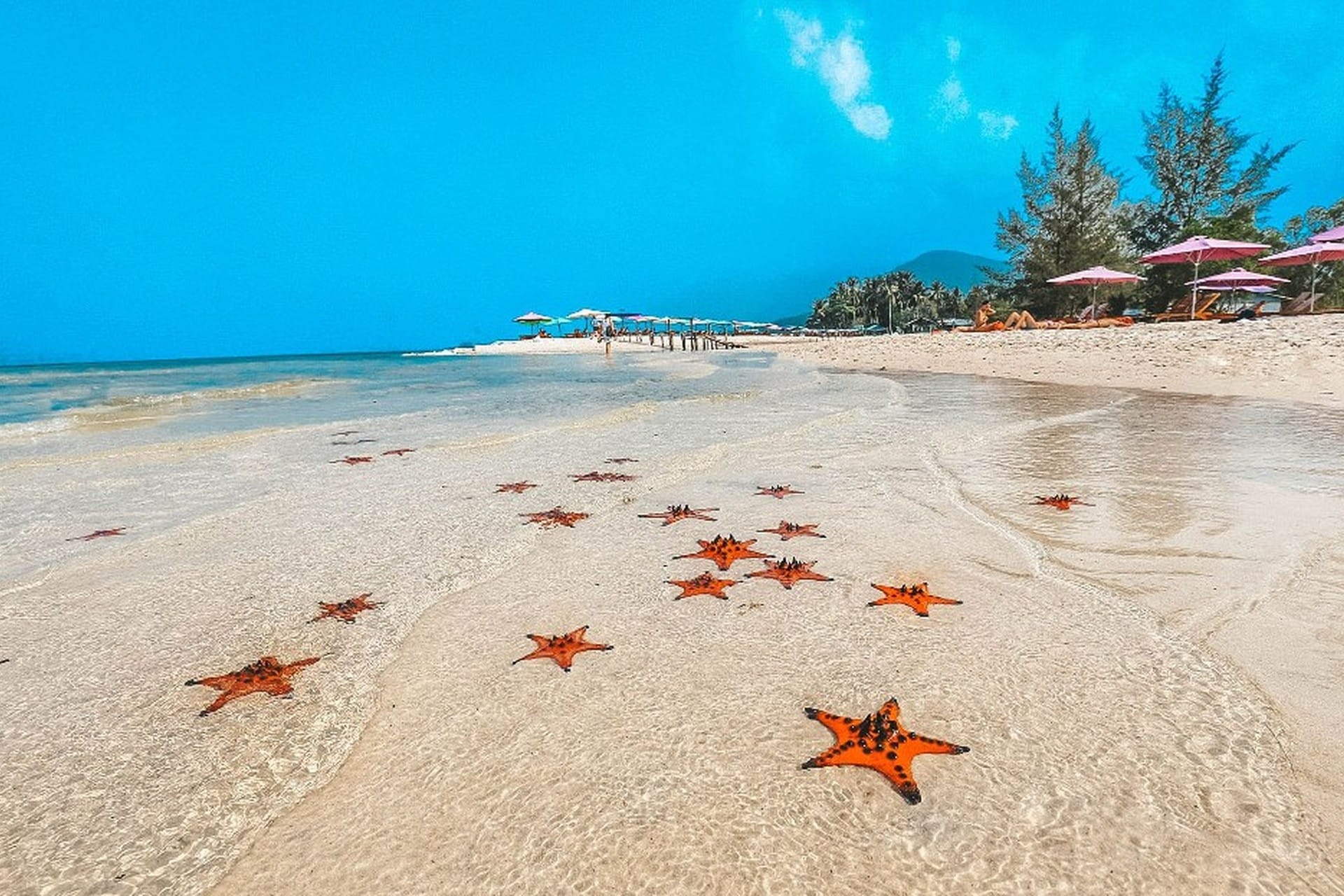
Sao Beach on the south east coast of Phu Quoc
What should I actually do on Phu Quoc?
Pick two to three real activities across a 5-night trip; do not try to do everything. Phu Quoc's mistake is over-scheduling. The island is at its best when you leave whole days completely empty.
Here are the honest brackets.
Activity | Category | My take |
|---|---|---|
An Thoi cable car to Hon Thom | Worth it | World-record over-sea cable car at ~7,900 m; go early morning to avoid heat and haze |
An Thoi 3-island or 4-island snorkel tour | Worth it | The single best day out on Phu Quoc; book the small-group option, not the mega-boat |
Phu Quoc National Park hikes | Hidden gem | Under-visited; go with a guide, take mosquito repellent for dusk |
Duong Dong Night Market | Worth it, once | One dinner, not three; see food section below |
Sunset Sanato bar | Worth it | Sunset drinks work; the "installation art" is Instagram-optimized filler |
VinWonders theme park | Overrated for adults, family-worth | Full day; go only if traveling with kids under 12. |
Grand World | Overrated | 90 minutes for the "Venice" boat photo, then leave. |
Pepper farm + fish-sauce factory | Worth it | Combine into one half-day; buy the pepper, skip most fish-sauce factory shops |
Sunset boat cruise | Depends | Overpriced from Duong Dong; better value if you book a small-group option in the north |
Squid-fishing night trip | Hidden gem | Genuinely fun with the right operator; skip if the sea is rough |
An Thoi cable car: worth it, but not at midday
The cable car holds a Guinness World Record as the world's longest three-wire sea-crossing cable car, at around 7,900 metres. It is a genuine engineering feat and the views are extraordinary. But going in the middle of the day in April, when the cabin heats up and the haze reduces visibility to grey, ruins it. Go first hour or last hour. Check the current timetable first, because the line has run a midday break in some seasons. Take water. Do not plan a full Hon Thom day around the water park at the far end unless you have kids.
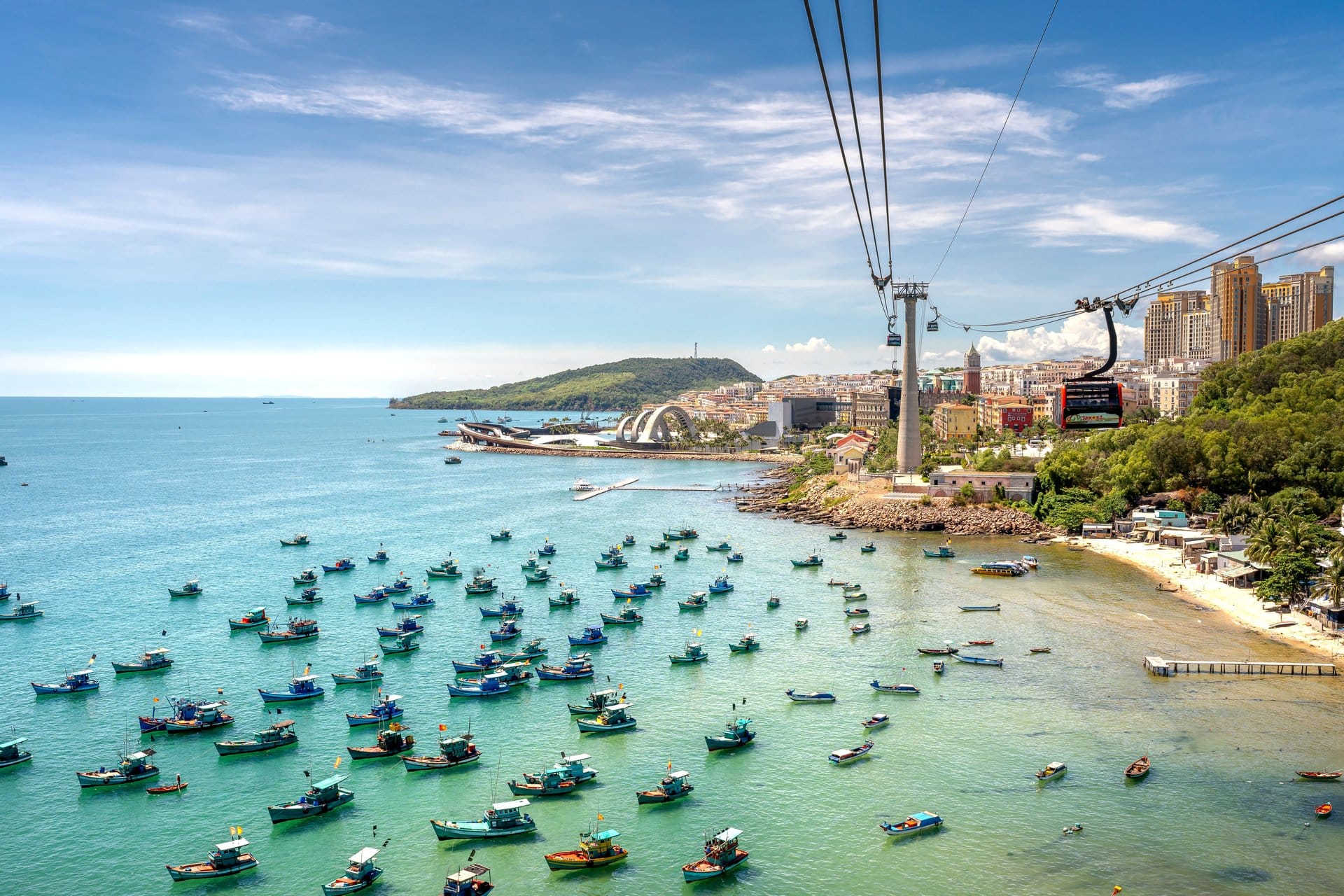
Hon Thom cable car over the sea at An Thoi
An Thoi snorkel tour: the day I always recommend
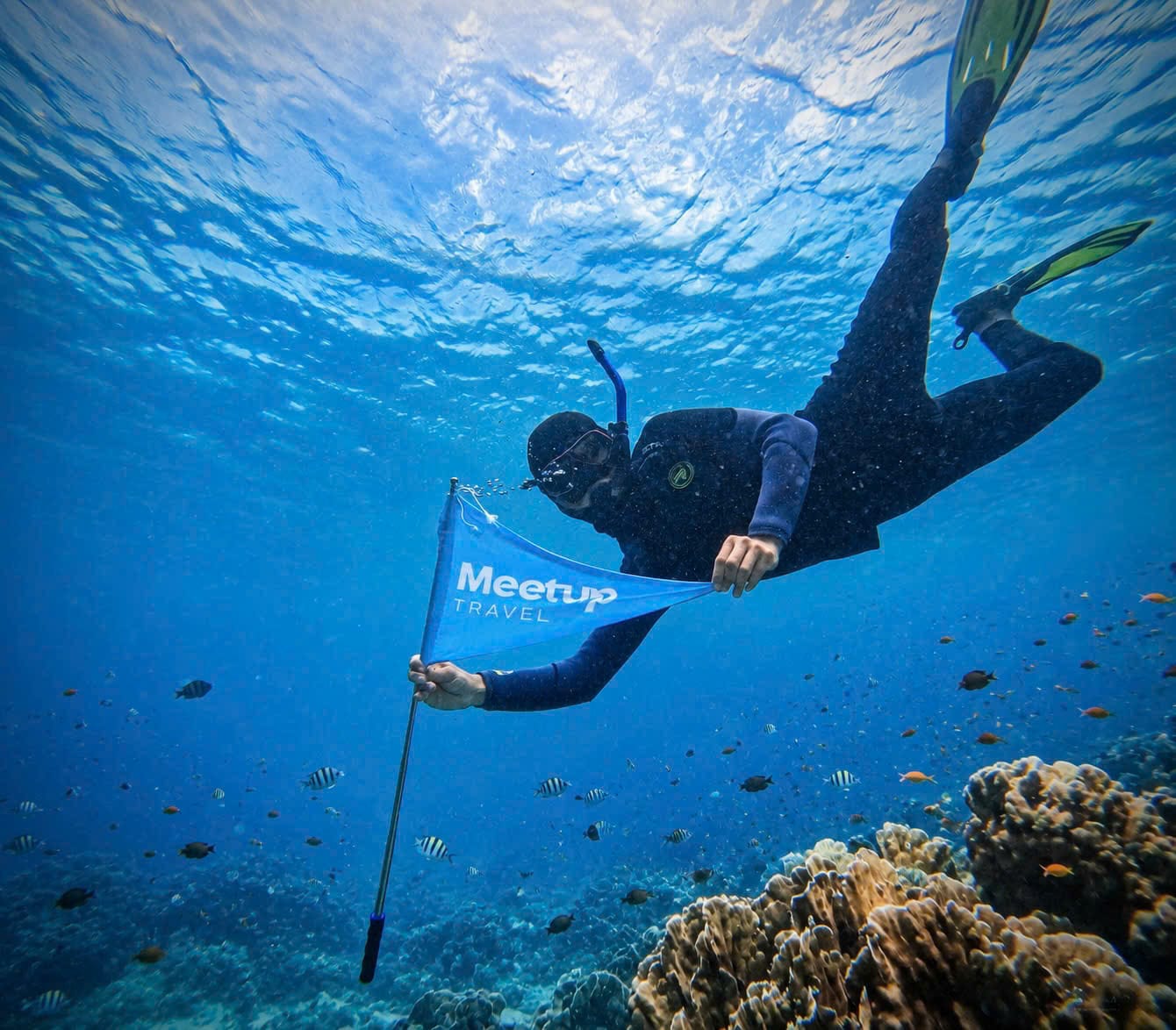
If you do one activity on Phu Quoc, do the An Thoi Archipelago snorkel day. Small islands south of the main island, clear water, three to four stops for snorkeling and swimming, lunch on board. Book the small-boat operator, not the large group ferry-style tour where 80 people share three snorkels. Best months are November through April; May through October the seas can cancel the day.
Phu Quoc National Park: quieter than you expect
The park covers more than half the island. Access requires a guide for the interior hikes. Trails are humid, mosquito-heavy at dusk, and rewarding in the way small tropical parks are: not spectacular, but genuinely wild in places. Half-day trip. Combine with a north-of-island lunch.

SUP boarding over crystal-clear waters in Phu Quoc
What food should I eat and where? (including night market)
Eat seafood by weight at the night market once, but the real Phu Quoc food is bun quay, goi ca trich, and the pepper-farm meals in the interior. The island is a fish-sauce (nuoc mam) capital with EU protected designation of origin status, and you will taste that in every noodle bowl you order.
The must-try Phu Quoc list:
Bun quay: Phu Quoc's local specialty noodle. Fresh, chewy rice noodles in a light broth, mix in your own dipping sauce at the table with fish sauce, chili, lime, and mustard powder. Cheap, distinctive, breakfast-friendly.
Goi ca trich: herring salad with roasted coconut, herbs, and rice-paper wrap. Order this at any beach-town restaurant that lists it. If they do not list it, do not order it there.
Grilled seafood by weight: the night market classic. Choose the piece live, weigh it, pay by kilogram plus a cooking fee.
Sea urchin (nhum): grilled with scallion oil and peanut. Divisive texture, worth trying once.
Sim wine (ruou sim): the local rose-myrtle wine. Sweet, low alcohol, sold at every gift shop.
Fish sauce (Phu Quoc PDO, EU quality label): the island's most important export. The good stuff is amber, high nitrogen, and made from long-fermented anchovies. Buy at a factory, not the airport.
Pepper: Phu Quoc black and red pepper is genuinely world-class. Buy from a farm, not a supermarket.
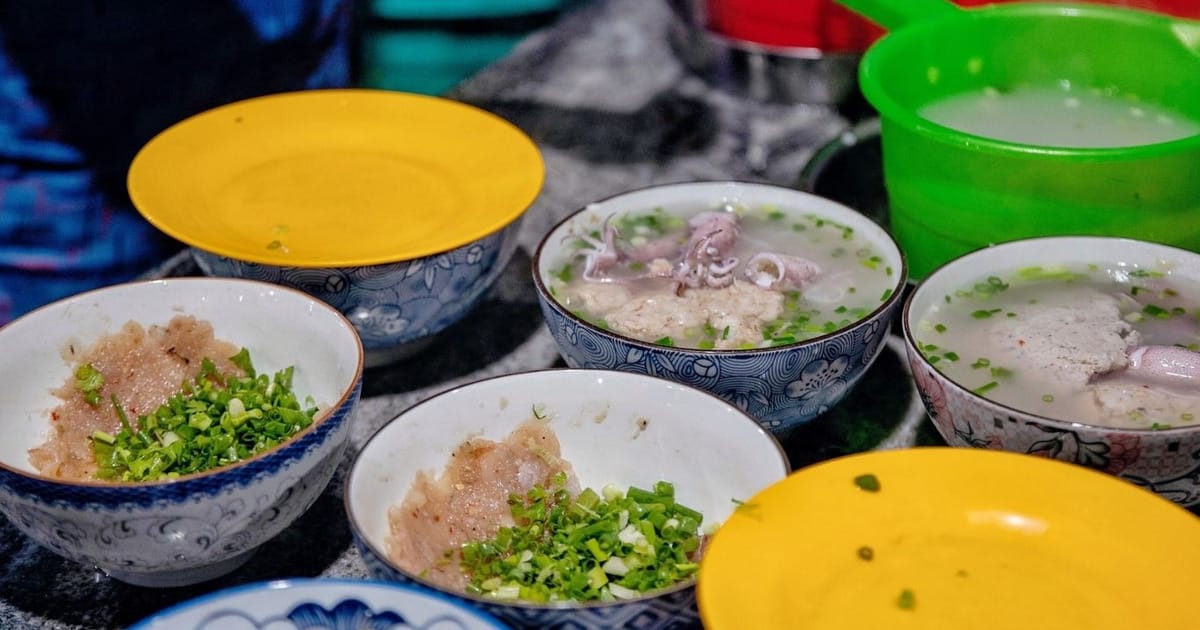
Bun quay Phu Quoc at Duong Dong night market
Duong Dong Night Market food: the honest playbook
The Duong Dong night market is Phu Quoc's most-hyped food experience, and it is worth exactly one dinner, not three. Go early (5:30–6:30pm) before the tour buses arrive, order grilled seafood by weight, and always confirm two things before you commit: the price per kilogram and the weight on the scale (ask them to weigh in front of you). Bring cash in small denominations.
What to actually order at the night market:
Grilled sea scallops with scallion oil and peanut: cheap, consistent, hard to ruin.
Whole grilled fish: snapper, grouper, whatever is fresh. Pay by weight.
Grilled prawns: bigger than the mainland versions, priced accordingly.
Sea urchin, grilled: try one, decide from there.
Fresh coconut with the top chopped off.
Sim wine tasting: the sellers are friendly, no pressure to buy.
Fish-sauce ice cream: a gimmick. Try if you like a story to tell at home.
What to skip: the "seafood buffet" pitches from touts (opaque pricing), any stall that will not show you the scale, and the shark-fin and manta-ray displays some stalls still show (both ethically and, in some cases, legally problematic).
Pepper farm meals
Several pepper farms in the interior serve lunch on-site. Simple grilled chicken with pepper crust, rice, greens, and a walk through the vines. This is one of the best food experiences on Phu Quoc and almost no first-time visitor books it. Include it if you have a full week.
What about the weather, rainy season, and typhoons?
Phu Quoc has a two-season climate: dry November to April, wet May to October, with the west coast getting the worst of the wet-season waves while the south east coast stays largely swimmable. Direct typhoons are rare because Phu Quoc sits in the Gulf of Thailand, sheltered from the South China Sea storm tracks, but the tail ends of storms further north still bring rain and rough seas.
Season | Months | West coast | East coast | Impact on trip |
|---|---|---|---|---|
Dry | Nov–Apr | Calm, swimmable | Calm | Ideal; premium pricing Dec–Feb |
Shoulder | May, Oct | Choppy, mixed | Mostly calm | Good value, some risk |
Wet | Jun–Sep | Rough, seaweed | Often still swimmable | Snorkel tours regularly cancelled |
The reason Sao Beach on the south east coast can be swimmable in the wet season is which way the coast faces: the west and north west coasts face the direction of the summer south west monsoon, so they take the wind and the swell. The south east coast is on the lee side and stays calmer more often. If you must travel in the wet season, base yourself close enough to reach Sao Beach or Khem Beach on the swim-worthy days.
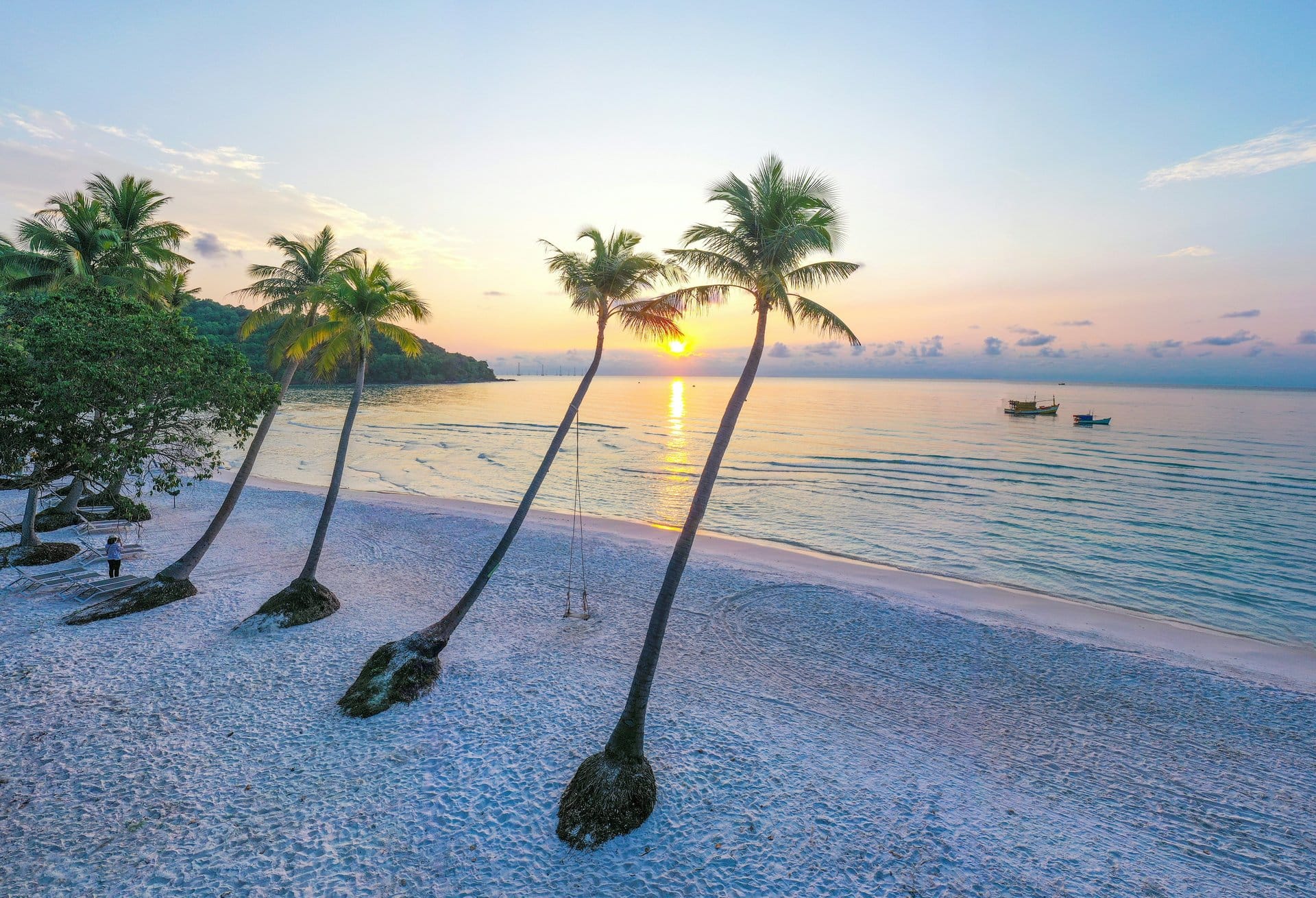
Wet season sea conditions off Phu Quoc
Is Phu Quoc better than Con Dao?
They solve different problems, so the honest answer is neither. Phu Quoc gives you infrastructure, variety, easier access, real restaurants, actual nightlife, and enough beach range for a family. Con Dao gives you a national park that dwarfs its town, near-deserted beaches, sea turtle nesting from roughly May to September, and a serious historical layer (Con Dao Prison). Note for booking and searching: since the 2025 reorganisation Con Dao is a special administrative zone under Ho Chi Minh City, not Ba Ria - Vung Tau. If you have to choose, choose based on trip type, not on which one is "better".
Factor | Phu Quoc | Con Dao |
|---|---|---|
Size | ~574 km² (Vietnam's largest island) | ~76 km² across 16 islands; Con Son itself ~52 km² |
Population | ~160,000 to 220,000 depending on source | ~12,000 |
How to arrive | International + domestic flights + ferries | Flight from HCMC or slow ferry |
Beach range | Dozens of beaches, all styles | Fewer, wilder, less-visited |
Infrastructure | Extensive resorts, restaurants, nightlife | Limited but sufficient |
Nightlife | Real bars, night market, some clubs | Almost none |
Snorkeling / diving | Good in An Thoi (dry season) | Better; national marine park |
History / culture | Fishing village + pepper + fish sauce | Colonial prison complex, heavy history |
Wildlife | Reef fish, some wildlife in park | Sea turtles (May–Sep), dugongs (rare) |
Cost | Wide range, budget to luxury | Skews mid-to-upper |
Best for | First-time island trip, families, honeymoons | Slow travelers, history buffs, wildlife-focused |
I would send a first-time island visitor to Phu Quoc. I would send a second-time Vietnam visitor who has already done a beach week to Con Dao. If you want the deeper side-by-side, see Con Dao vs Phu Quoc: which Vietnam island.
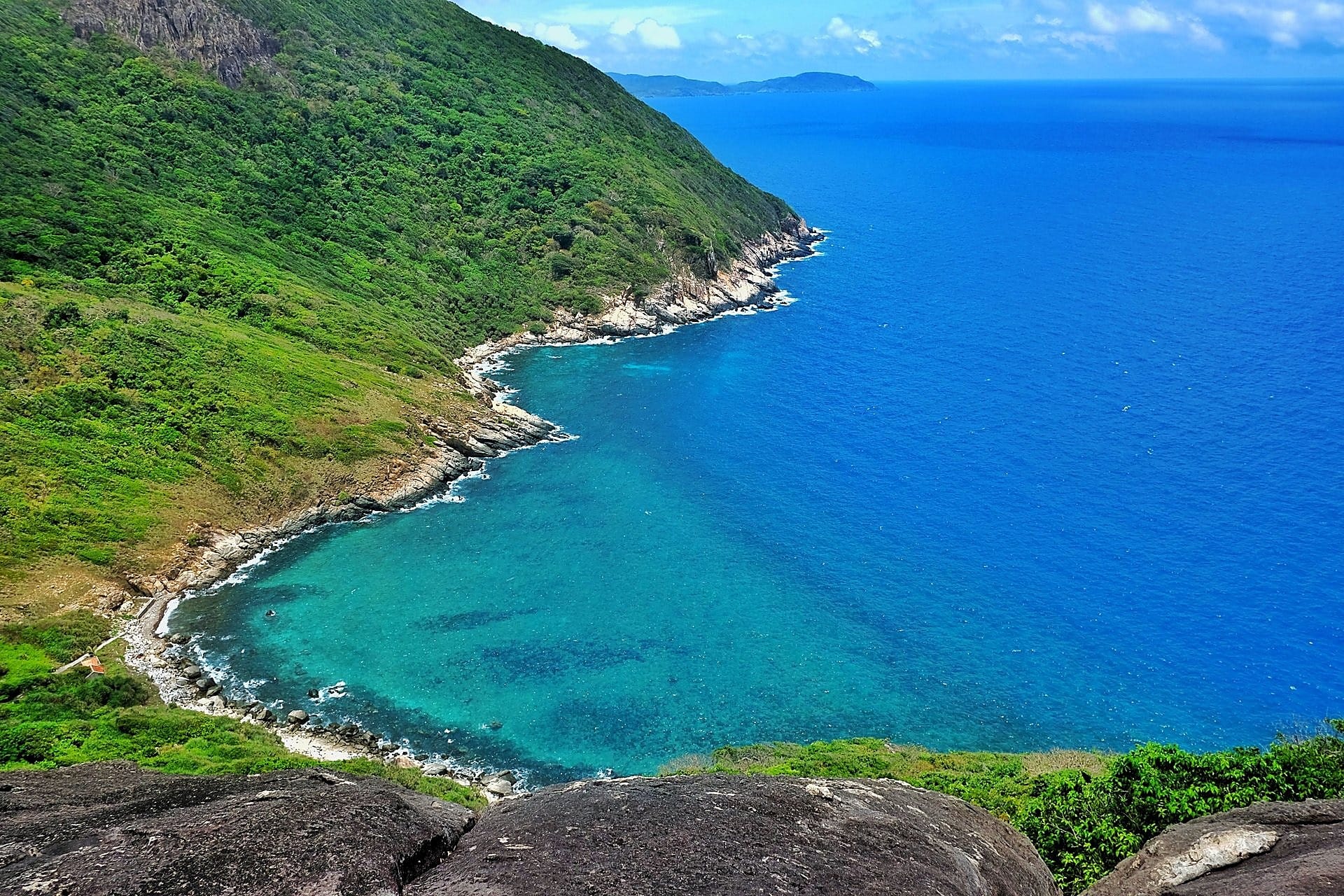
Quiet coastline on Con Dao island
How does the 30-day visa exemption work for Phu Quoc?
Vietnam grants a 30-day visa exemption for international arrivals to Phu Quoc, and unusually it is open to all nationalities. The catch is the one most travelers get wrong: Phu Quoc has to be your only stop in Vietnam. You can connect through an international airport in Hanoi or Ho Chi Minh City if you stay inside the transit area, but the moment you clear immigration on the mainland, this exemption no longer covers you.
The important rules, as of the latest published guidance:
Arrive from abroad. Fly into Phu Quoc direct from another country (Seoul, Bangkok, Singapore, Kuala Lumpur, various Chinese cities, etc.), or arrive by sea from abroad, and get 30 days visa-free.
Airside transit only. Connecting through Hanoi or Ho Chi Minh City is fine if you stay inside the international transit area and fly straight on to Phu Quoc. If you exit the transit zone, even briefly, you have entered mainland Vietnam and the exemption is gone.
You cannot use the exemption for a general Vietnam trip. No day trip to Saigon, no ferry to Ha Tien or Rach Gia, and you must leave Vietnam directly from Phu Quoc to another country. If you want Phu Quoc plus mainland cities or use your nationality's general Vietnam visa exemption if you have one.
Passport must be valid for at least 6 months from date of entry.
Return or onward ticket required, departing from Phu Quoc to a destination outside Vietnam, within 30 days.
Verify current rules with the Embassy of Vietnam or with your airline before flying. Vietnam updates its wider visa exemption list periodically, and some nationalities get a longer general exemption that does cover the mainland.
For any Vietnam trip that includes the mainland, or any trip longer than 30 days, apply for the e-visa in advance. It is straightforward, and it removes the single most common way travelers get stuck at the airport.

European Avenue at VinWonders Phu Quoc
What are the common tourist mistakes on Phu Quoc?
The most expensive mistakes are about your whole approach, not small details: booking the wrong region, wrong month, or wrong beach for your priorities. Here are the seven I see most.
Assuming west coast beaches swim well in monsoon. If you are booking Long Beach or Ong Lang in July, you are gambling. Base yourself close to Sao Beach or Khem Beach if wet-season swimming matters.
Booking Sao Beach without knowing it's a 45-minute drive from most hotels. Do not stay on Long Beach and expect Sao Beach to be a stroll. It is a full-day trip.
Doing the cable car at midday. Cabins get hot, the haze kills the view, and the walk on Hon Thom is brutal in the sun. Go first hour or last hour.
Skipping the north entirely. The north is where Phu Quoc still feels like an island. If your whole trip is Long Beach and Sunset Town, you have seen a Vietnamese resort strip, not the island.
Eating night market seafood without checking price per weight. Always confirm the price per kilogram and watch the weighing. The scam is not universal but it happens.
Over-scheduling activities. Phu Quoc rewards slow days. Two real activities plus beach time beats five rushed activities.
Ignoring mosquitoes in the north jungle at dusk. Repellent, long sleeves, and do not linger on national park trails after sunset.
An honorable mention: assuming you can pay by card everywhere. Larger resorts and Duong Dong restaurants take card. Night market stalls, small beach shacks, scooter rentals, pepper farms: cash only. Bring VND in small denominations.

People stand in the Kiss Bridge Phu Quoc
In short, a Phu Quoc trip in one paragraph
Fly into Phu Quoc from HCMC, or direct from abroad if you want the island-only visa exemption, plan 4 to 5 nights minimum, and split your stay between the central-west or south for infrastructure and the north for actual island feel. Go between November and April for the safe version, or between May and October at your own risk with the south east coast (Sao Beach, Khem Beach) as your swim insurance. Do the An Thoi snorkel tour, do the cable car early morning, eat one dinner at Duong Dong night market with a firm hand on the price-per-kilo, buy the pepper and the fish sauce, and leave two full days completely empty. That is the version of Phu Quoc that earns the flight.
Ready to book?
Ready-made 4-night and 7-night Phu Quoc itineraries with resort, transfers, An Thoi snorkel tour, and pepper-farm lunch included: Meetup Travel's Phu Quoc tours. Prefer a hybrid Phu Quoc + Mekong Delta day trip from Ho Chi Minh City (Can Tho or Chau Doc via Ha Tien ferry) or Phu Quoc + Con Dao two-island routing? Message us and we will build the itinerary around your dates.