
Vietnam eVisa Cost 2026: Fees, Timing and Hidden Charges
Vietnam eVisa costs USD 25 for a single-entry visa and USD 50 for a multiple-entry visa in 2026. That is the official government fee, no matter your nationality. Everything else you might spend, rush upgrades, photo prep, resubmission delays, comes on top of that base price and often catches travelers by surprise.
I have watched too many travelers pay double because they picked the wrong entry type, missed a photo requirement, or booked a rush package that could not run overnight. This guide walks you through every real cost tied to the Vietnam eVisa in 2026 so you know exactly what you are paying for and where the money quietly disappears.
How much does a Vietnam eVisa cost in 2026?
The standard Vietnam eVisa fee is USD 25 for single entry and USD 50 for multiple entry, paid directly to the Vietnam Immigration Department during your online application on the official portal at evisa.gov.vn. That is the only site that charges the government fee and nothing else. These fees are fixed by the Ministry of Finance under Circular No. 28/2026/TT-BTC, effective April 1, 2026, and apply to every eligible nationality without exception. There are no separate government charges beyond this, and the fee is non-refundable even if your application is rejected.
eVisa type | Government fee | Validity | Best for |
|---|---|---|---|
Single entry | USD 25 | Up to 90 days | One-time visit, no border hops |
Multiple entry | USD 50 | Up to 90 days | Cambodia and Laos side trips, business travel |
The fee is paid by credit or debit card on the official portal, and is charged in Vietnamese Dong at the exchange rate applied at the moment of payment. Once submitted, the payment locks in and the application enters the queue. If you notice a typo or wrong entry date after paying, you cannot edit the record. You must reapply from scratch, and that means paying the USD 25 or USD 50 again.
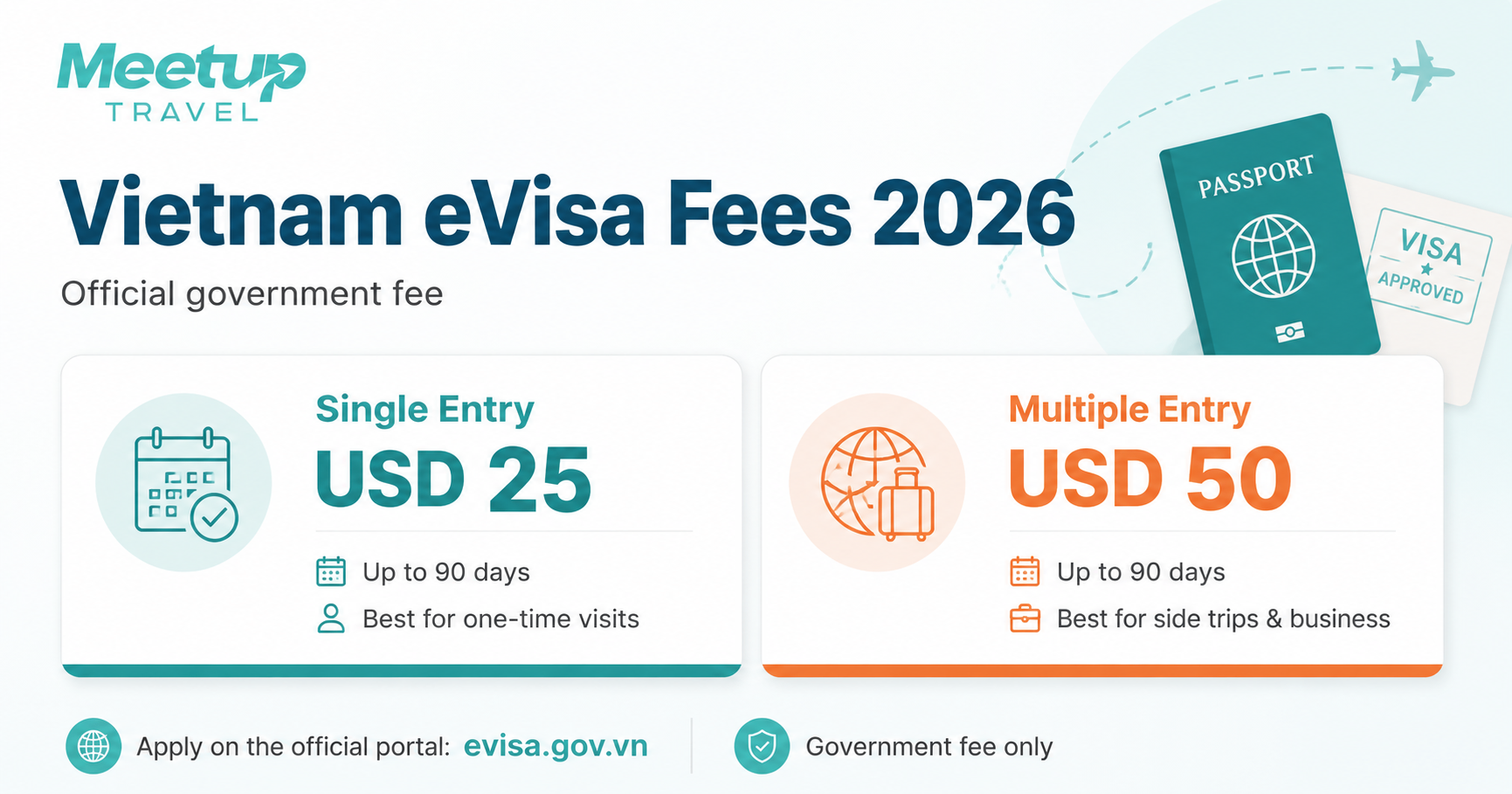
Vietnam eVisa fee shown on the official application portal
What is the difference between single-entry and multiple-entry Vietnam eVisa?
A single-entry eVisa lets you enter Vietnam once and leave once. A multiple-entry eVisa lets you cross the border as many times as you want inside the 90-day validity window. The price gap is USD 25, and for most first-time travelers, single entry is enough.
Choose single entry if:
Your trip is Vietnam only, start to finish
You are flying in and flying out on the same passport stamp
You have no plans to hop into Cambodia, Laos, or Thailand mid-trip
Choose multiple entry if:
You want to combine Vietnam with a Cambodia or Laos side trip
You are doing a longer regional journey and returning to Vietnam later
You are visiting family and expect two separate stays inside 90 days
A common mistake is paying USD 50 for multiple entry when a single entry would have been fine. If your itinerary is Vietnam-only, save the USD 25 and use it for a decent street food dinner in Hanoi instead.
Single entry and multiple entry Vietnam eVisa options
How long does the Vietnam eVisa really take to process?
The official processing time on the Vietnam Immigration portal is 3 working days, not counting Saturdays, Sundays, or Vietnamese public holidays. In practice, most complete applications land between 3 and 7 working days, and visa agencies commonly quote 3 to 5 as the working range.
The calendar matters more than your nationality. The one pattern worth planning around is Tet, the Lunar New Year holiday in late January or February, when extended government closures push processing out to 7 to 10 working days.
If your application needs supplementation, meaning the system asks you to fix a photo or a data field, the clock restarts from day one after you upload the fix. That is where the timeline blows out for travelers who submit blurry passport scans.
A safe rule of thumb: apply at least two weeks before your flight, or three weeks if you are traveling during Tet. That buffer absorbs weekends, holidays, and one round of resubmission without touching a rush package.

Meetup Travel and our lovely travelers with their approved visas
What do rush processing packages cost for Vietnam eVisa?
Rush processing is offered by private visa agencies, not through the government portal. There is no official licensing scheme for these agencies, so vet them the way you would any other operator. Expect to pay anywhere from USD 30 to USD 250 on top of the base eVisa fee, depending on how fast you need the result.
Package | Typical delivery | Extra fee range (per applicant) | Notes |
|---|---|---|---|
3 working days | 3 working days | USD 30 to USD 60 | Cheapest rush, safe choice |
2 working days | 2 working days | USD 50 to USD 90 | Good for last-minute bookings |
1 working day | 1 working day | USD 80 to USD 130 | Same-day-ish, apply before 10am |
4 hours | Within 4 hours | USD 100 to USD 180 | Business hours only |
2 hours | Within 2 hours | USD 130 to USD 200 | Business hours only, weekdays only |
1 hour | Within 1 hour | USD 150 to USD 250 | Business hours only, no weekends |
Note the last three rows: the 1-hour, 2-hour, and 4-hour urgent packages only run during Vietnam business hours (Monday to Friday, roughly 8am to 5pm ICT). If you pay for a 1-hour rush at 8pm Vietnam time, the clock does not start until the next business morning. Travelers get burned on this all the time when they book a Sunday rush from a different time zone.
For most travelers who realize late they need a visa, the 1 or 2 working day package is the sweet spot. It costs less than the hourly rushes and still lands your visa in time for a next-week flight.
Rush processing offers from private Vietnam visa agents
What documents do I need to avoid paying the eVisa fee twice?
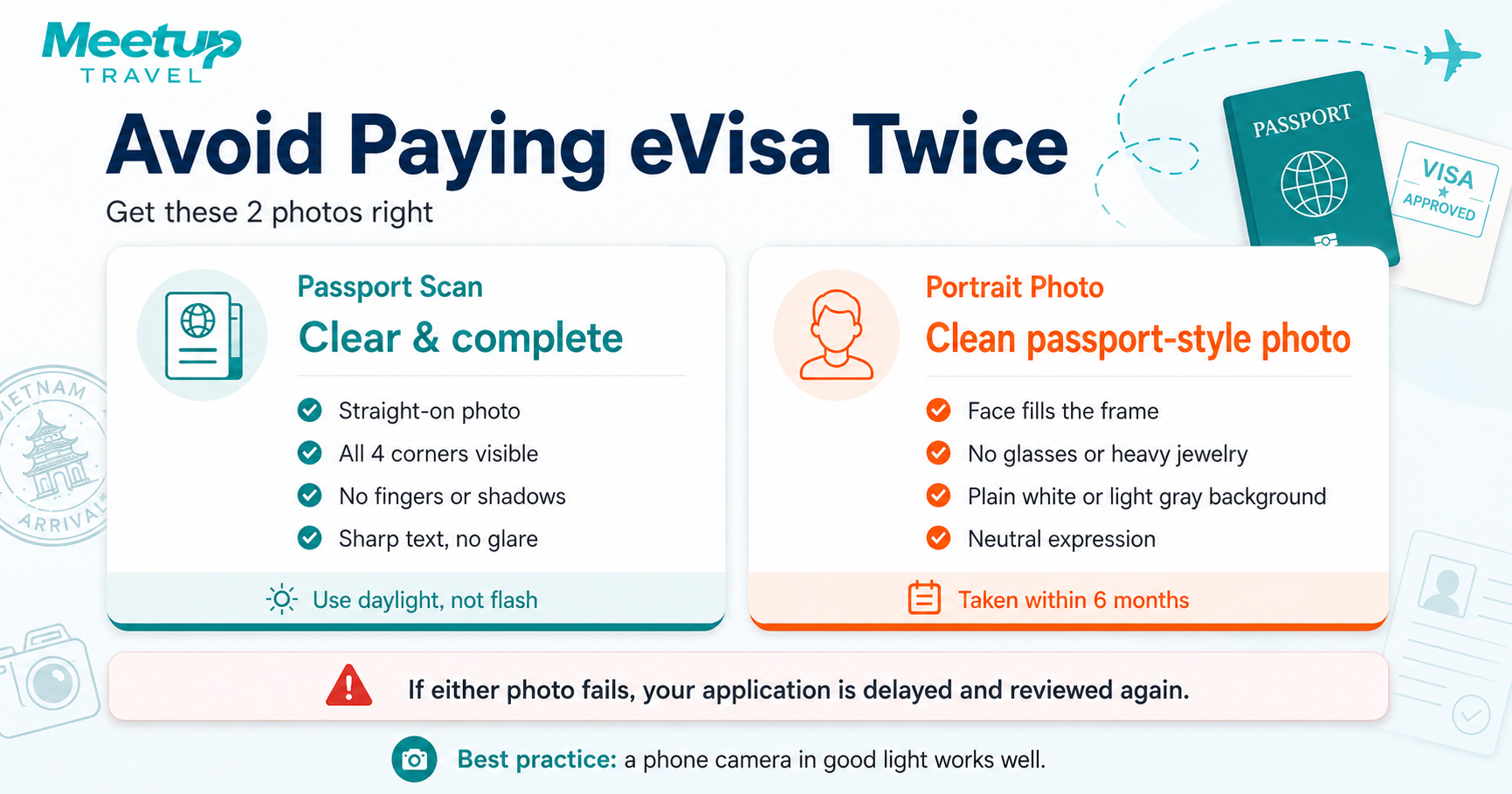
Two photos decide whether your USD 25 or USD 50 becomes useful or wasted. Both are strict, and both trigger the most common rejections.
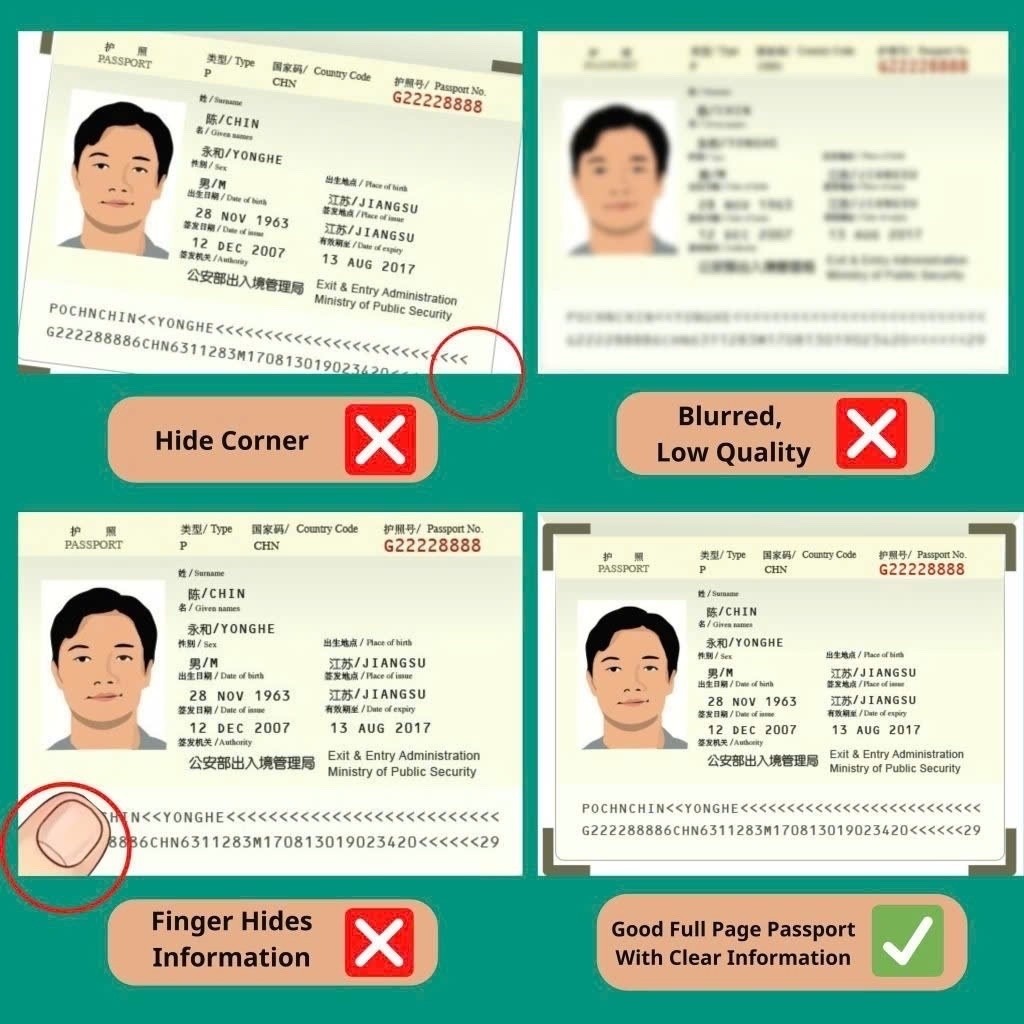
Passport scan requirements
Straight-on shot of the photo page, no angle or tilt
All four corners visible, nothing cropped
No fingers or hand shadows in the frame
Sharp focus, text is readable, no glare from lamps or flash
Use natural daylight or a well-lit room, not camera flash
A phone camera in good light beats a bad scanner
Portrait photo requirements
Face fills the frame, clear features
No glasses, no sunglasses, no heavy jewelry
Plain, clean background, ideally white or light gray
Neutral expression, mouth closed
Recent, taken within the last six months

Portrait photo requirements for a Vietnam eVisa application
If either photo fails, your application goes into supplementation. The processing timer resets to day one from the moment you upload the fixed file. That is not a resubmission fee, but it does mean the visa you needed by Friday now arrives the following Wednesday.
Can I change my port of entry after paying for the eVisa?
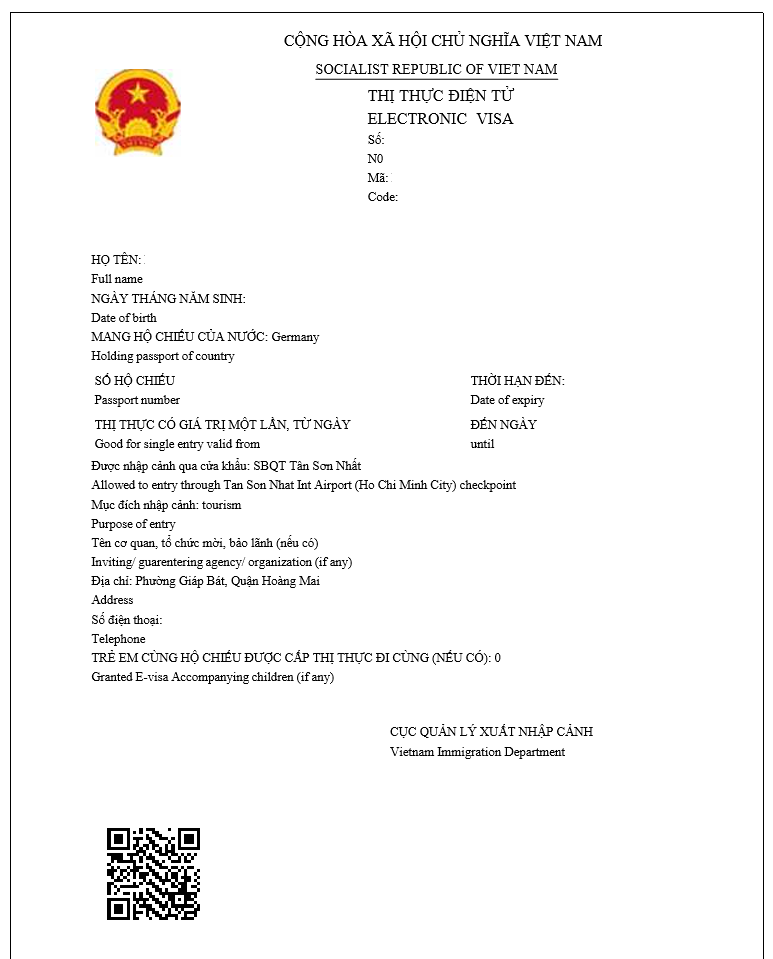
Within limits, yes. Since late 2025 the eVisa no longer prints a port of entry at all, and under Resolution No. 389/NQ-CP dated December 2, 2025 you may enter and exit through any of the 83 eligible international checkpoints, regardless of which one you selected on the application form. So if your flight is rerouted from Tan Son Nhat to Noi Bai, the same eVisa still works.
The limit is the list itself. Vietnam has many border crossings, and only those on the official eligible-checkpoint list can be used with an eVisa. Turning up at a crossing outside the list can still mean refused entry, so check your actual arrival point against the current list before you travel, especially for land borders and cruise seaports.
What you should not do is pay a service to "change your port of entry" after issuance. There is nothing on the visa to change.
Port of entry listed on an approved Vietnam eVisa
What are the most common reasons a Vietnam eVisa gets rejected?
Rejection reasons are wide-ranging and sometimes feel unfair, but the pattern is predictable. The four that come up most often at Meetup Travel:
Blurry or glare-hit passport photo. The number one reason. Fix by shooting in daylight, no flash.
Name order does not match passport. Middle names, surnames, and given names must appear in the exact order printed on the passport data page. Do not shuffle.
Missing middle name. If your passport lists a middle name, the eVisa application must list it too. Skipping it triggers resubmission.
Expired or nearly-expired passport. Vietnam requires at least six months of validity remaining from your intended entry date.
If your application is flagged for supplementation, you upload the corrected document and the timer restarts from day one. This is why the three-week buffer matters. One rejection eats a full week.
Common reasons a Vietnam eVisa application is rejected
What hidden costs should I plan for beyond the eVisa fee?
The government fee is only the visible line item. Real Vietnam eVisa cost, once you count everything, usually lands between USD 30 and USD 90 for single entry and USD 55 to USD 120 for multiple entry, depending on how much prep you outsource.
Hidden cost | Typical range | Avoidable? |
|---|---|---|
Passport-quality photo shoot | USD 5 to USD 15 | Yes, phone in daylight works |
Printing eVisa on arrival | USD 1 to USD 3 | Sometimes, digital shown on phone is often accepted |
Rush upgrade if you apply late | USD 30 to USD 250 | Yes, apply two weeks out |
Reapplication after rejection | USD 25 to USD 50 | Yes, get photos right the first time |
Currency conversion fees | 1 to 3 percent | Partly, use a no-FX card |
Most of these disappear with a bit of front-loaded prep. Shoot photos on a bright morning in front of a white wall, keep a printed backup of your eVisa PDF in your carry-on even if immigration usually accepts a phone screen, and use a card with no foreign transaction fees for the government payment.
One cost worth planning for is the arrival queue. Our fast track service at the airport covers assistance on landing. For the rest of the trip, see what a Vietnam trip really costs per day.
Is paying a service for Vietnam eVisa worth the extra cost?
If your application is straightforward and you have two weeks of buffer, doing it yourself on the official government portal for USD 25 or USD 50 is fine. If you are traveling as a family, on a tight timeline, or your nationality tends to need extra scrutiny, a licensed service is worth the surcharge.
Approach | Total cost (single entry) | Best for |
|---|---|---|
DIY on government portal | USD 25 | Solo travelers, 2+ week buffer, clean documents |
Service without rush | USD 40 to USD 80 | Families, first-time travelers, help with photo checks |
Service with 1-3 day rush | USD 80 to USD 200 | Last-minute bookings, business travel |
Service with hourly rush | USD 150 to USD 350 | Emergency departures, weekday only |
Meetup Travel offers full eVisa concierge as part of our tailor-made trip planning. We can handle your application from start to finish, review your photos before submission, walk you through the entry-type choice, and coordinate anything else you need around the paperwork. Guests who book with us can lean on our team from the first passport scan all the way to their last day in Vietnam, arranged around what actually matters for your trip rather than a one-size package.
Before you pay anyone, check them. Our guides on how to verify a Vietnamese travel agency and vetted Vietnam tour companies show what to look for.
Vietnam eVisa cost 2026: the short version
The Vietnam eVisa itself is one of the cheapest travel visas in Southeast Asia. USD 25 single entry, USD 50 multiple entry, up to 90 days validity, any of the 83 eligible checkpoints. The real cost sneaks in when travelers apply too late, fail the photo check, or pay for a rush package that cannot run outside business hours.
Apply two weeks before your flight, three if you are traveling during Tet, shoot both photos in daylight, check your arrival point against the eligible-checkpoint list, and pick single entry unless you truly need to cross the border twice. Do that and your all-in cost stays at the government fee of USD 25, plus whatever your bank charges to convert it.
If your itinerary is complex, family-sized, or on a tight window, let a trip planner handle the eVisa alongside your bookings. A ten-minute review of your file before you click submit saves the one week you cannot afford to lose to a resubmission, and it takes the paperwork off your plate before your trip even starts.
Hi, I'm Rosie. I was born and raised in Hanoi, and I work as a travel consultant at Meetup Travel. I look after the paperwork side of a Vietnam trip: eVisas, airport transfers, and what a tour quote should really include. I have walked more than 200 first-time visitors through Vietnam entry procedures. Tell me your dates and I'm happy to check the details for you.