
Vietnamese Culture: Traditions, Etiquette, and What Travelers Should Know
Vietnamese culture is shaped by family ties, respect for elders, ancestor remembrance, regional traditions, and hospitality. Travelers notice these values in small moments: incense curling above a family altar, younger diners waiting for an older relative to begin a meal, or shoes lined up beside a doorway.
You do not need to memorize a long list of rules. It is more useful to understand why customs matter and watch what local people do. This guide covers the traditions travelers are most likely to encounter, from temple etiquette and Tet to weddings, clothing, and shared meals.
Customs differ between regions, religions and the 54 recognized ethnic groups, so treat what follows as a starting point rather than a rulebook.
Vietnamese Culture at a Glance
A few cultural patterns can help you read everyday situations more easily.
Situation | What you may notice | A respectful response |
|---|---|---|
Meeting a family | Older relatives may be greeted first | Follow your host's lead and greet elders politely |
Entering a home | Shoes may be left near the entrance | Check what others do or ask before walking inside |
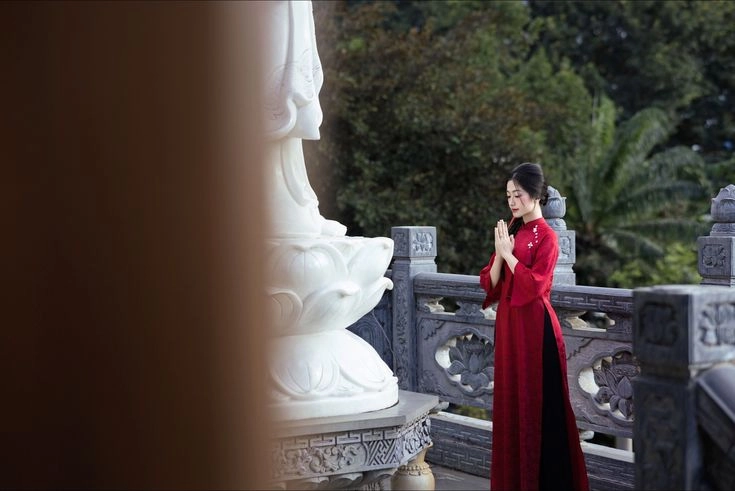
Visiting a sacred site | People may be praying or making offerings | Dress modestly, speak quietly, and avoid interrupting |
Sharing a meal | Several dishes may be placed in the center | Wait briefly for the host or an older diner to begin |
Giving or receiving an item | Two hands may be used for important objects | Use both hands when it feels practical and appropriate |
These gestures are not tests for visitors. Being observant, patient, and willing to adjust usually matters more than performing every custom perfectly.
Family, Age, and Everyday Communication
Family is an important part of social life in Vietnam. Adult children may remain closely involved with their parents, and major decisions can include the wider family. Lifestyles are changing, but age and family roles still influence many conversations.
Vietnamese pronouns express the relationship between speakers. The appropriate word for "you" may depend on age, gender, and familiarity. This is one reason someone might ask your age sooner than expected. You can answer approximately, then let the other person guide the form of address.
People may communicate less directly when disagreement could cause embarrassment. A hesitant answer or change of subject can signal discomfort. Do not assume every "maybe" means no, but allow room for a response without pressure.
A light handshake is common in many settings. With older people, watch how others greet one another and follow their lead.
Ancestors, Beliefs and Religious Life
Ancestor remembrance is one of the most visible traditions in Vietnam. Many homes and family businesses have an altar with incense, flowers, fruit, tea, or family photographs. It is a place for remembrance and rituals, not simply decoration.
If you enter a room with an altar, avoid pointing directly at it, touching the objects, or placing a bag or drink on the altar ledge. Ask before taking a close photograph. During a ceremony, give the family space and wait for an invitation before participating.
Religious life includes Buddhism, Catholicism, Protestantism, Cao Dai, Hoa Hao Buddhism, and local beliefs. Confucian ideas have also influenced family relationships, education, and ceremonies. Practices can overlap, so someone may honor ancestors at home while also visiting a pagoda or belonging to a religion.
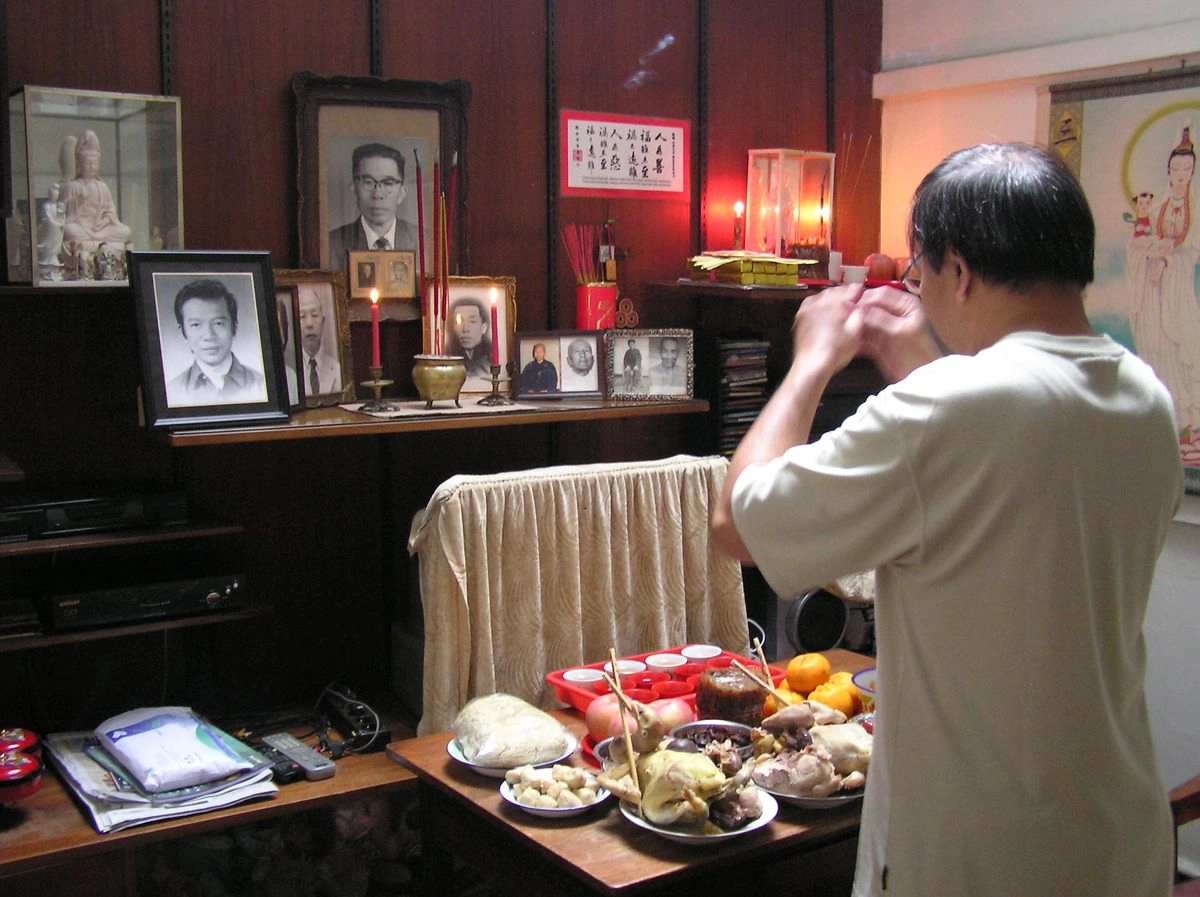
For travelers, "What is happening here?" is often more useful than trying to assign every practice to one religion.
Temples, Pagodas and Communal Houses
English travel writing often calls every sacred building a temple. Vietnamese uses several terms, and each points to a different purpose.
Vietnamese term | Common English translation | Main role |
|---|---|---|
Chùa | Pagoda or Buddhist temple | A Buddhist place of worship and practice, sometimes with a resident monastic community |
Đền | Temple or shrine | A place honoring a deity, spirit, historical figure, or cultural hero |
Đình | Communal house | A village space for ceremonies, community affairs, and worship of a guardian spirit |
Miếu | Shrine | Usually a smaller place dedicated to a deity, spirit, or revered figure |
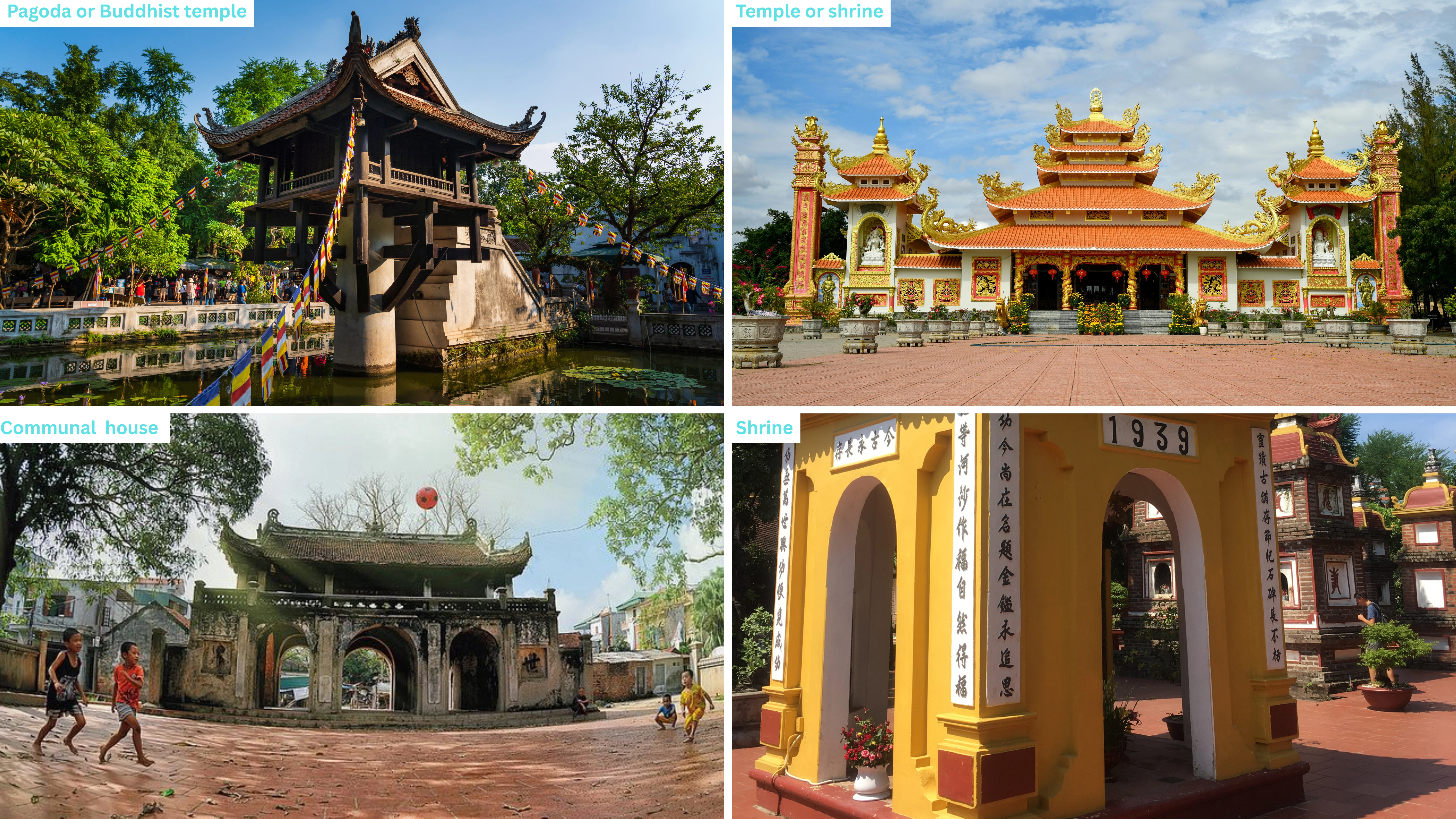
This distinction explains why a Vietnam temple may not function like a Buddhist pagoda. When English names are unclear, check the Vietnamese term.
Hanoi's Văn Miếu, commonly called the Temple of Literature, combines a Confucian sanctuary with the history of the Imperial Academy. Its courtyards and stone stelae tell a story about scholarship rather than Buddhist monastic life. Read the Temple of Literature guide for more context.
Cao Dai emerged in southern Vietnam and draws on several religious and philosophical traditions. Tòa Thánh Tây Ninh is its best-known sacred complex, open 07:00 to 22:00 with free entry. Services run four times a day at 00:00, 06:00, 12:00 and 18:00; the noon service is the one most visitors come for, with robed dignitaries entering in formation and traditional court music. Stay to the side aisles and upper gallery during worship.
How to Visit Vietnamese Temples Respectfully
Vietnamese temples and pagodas are active places of worship. Their carved doors, bells, and bright offerings may attract your camera, but worshippers still need space to pray.
Keep these habits in mind:
Wear clothing that covers your shoulders and knees when visiting a sacred interior.
Follow posted instructions about shoes. Removal is required in some areas, not everywhere.
Speak quietly and silence phone notifications.
Do not point at statues, altars, or sacred objects.
Never walk between a person who is praying and the altar in front of them.
Ask before photographing worshippers, monks, nuns, clergy, or ceremonies.
Do not touch offerings or place personal belongings on an altar.
If a doorway has a raised threshold, step over it rather than standing on it.
Signs at the site override anything on this list.
Tet and New Year in Vietnam
Tet, or Tết Nguyên Đán, is Vietnam's Lunar New Year and its most important family holiday. It brings reunions, ancestor remembrance, seasonal food, and wishes for a fortunate beginning. The date moves with the lunar calendar: the first day of Tet falls on Saturday 6 February 2027, the year of the Goat. Plan around the week before and the week after, not just the day itself.
Before Tet, flower markets fill with color and conversation. Peach blossoms are associated with northern celebrations, while yellow apricot blossoms are especially familiar in the south. Kumquat trees are also popular. These are associations, not strict regional rules.
The Tet cake splits north and south:
Tet food | Form | Where it is commonly associated |
|---|---|---|
Banh chung | Square sticky-rice cake, commonly wrapped in lá dong leaves | Northern Vietnam |
Banh tet | Cylindrical sticky-rice cake, commonly wrapped in banana leaves | Central and southern Vietnam |
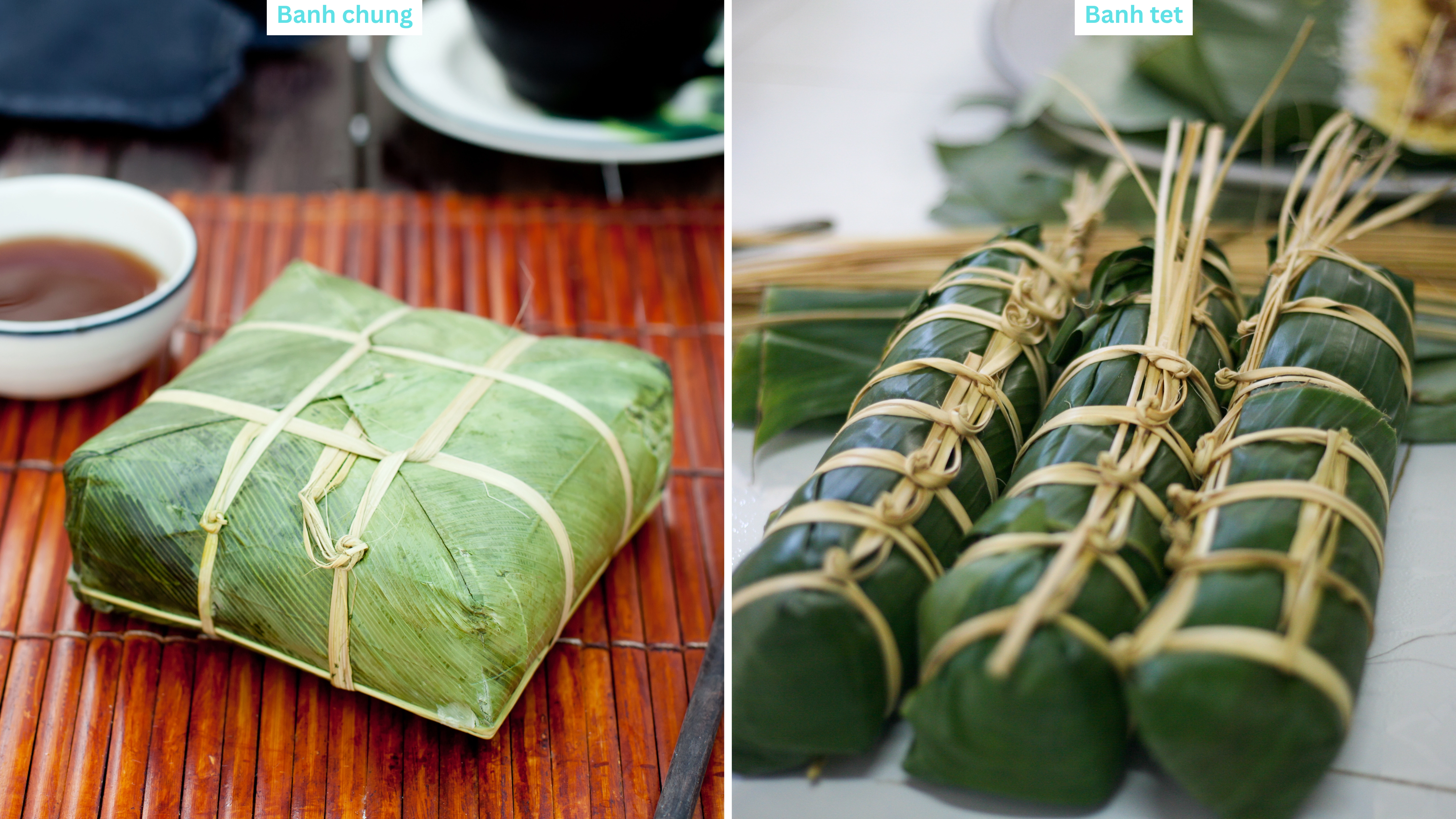
Both often contain mung bean and pork, although recipes differ and other versions exist.
Tet changes the rhythm of travel. Transport demand rises for about a week either side as people return home, and many family-run businesses close for the first 3 to 5 days of the new year. Book trains and flights well ahead if your dates fall in that window.
If a family invites you during Tet, ask about timing and gifts. Fruit, tea or sweets are the safe choices. Lucky money is for children and is given by the host's generation, so do not hand out envelopes without checking first.
Ao Dai and Traditional Vietnamese Clothing
The ao dai is the best-known form of traditional Vietnamese clothing. The long tunic worn over trousers appears at weddings, Tet celebrations, school ceremonies, formal events, and some workplaces.
The ao dai has changed over time and continues to evolve. Women wear it most visibly today, but men also wear áo dài for weddings, festivals, and formal occasions.
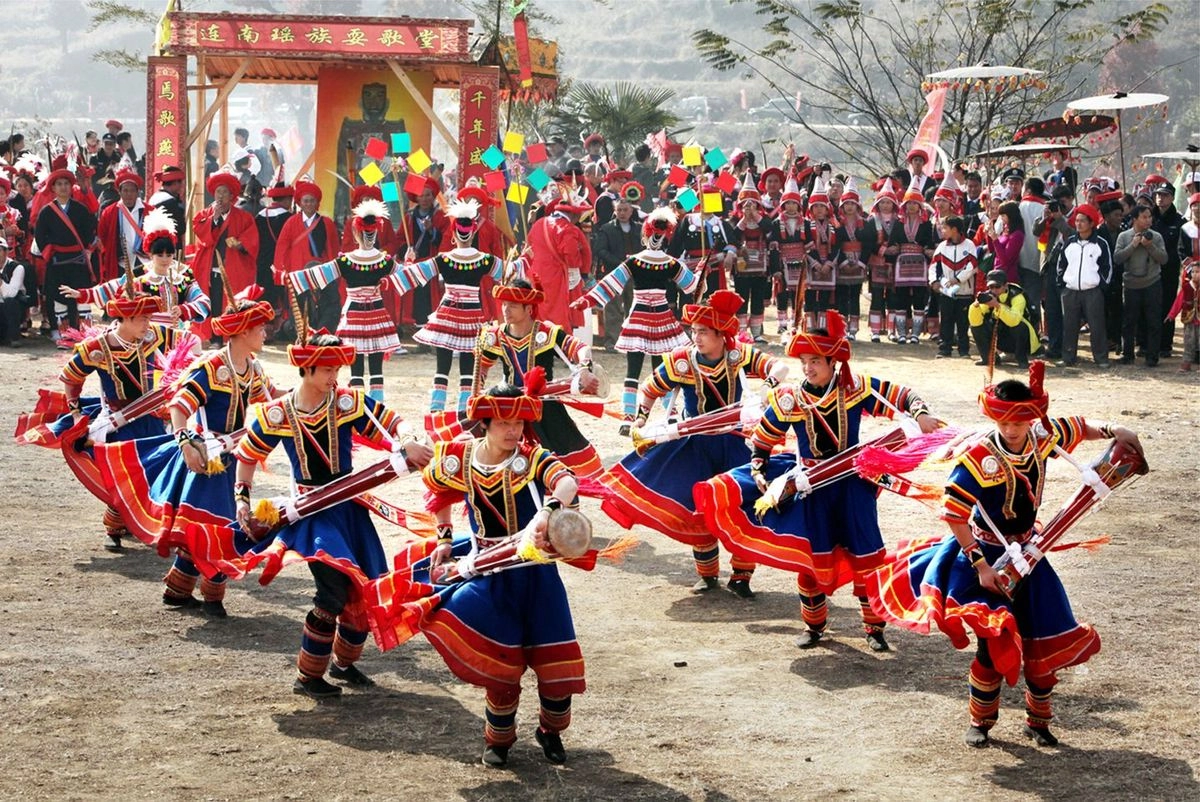
Historical dress was more layered than the ao dai suggests, which is why travelers often ask whether Vietnamese people wore hoods in ancient times. Not hoods in the European sense. Court dress for officials and military figures used structured fabric headdresses and wrapped head coverings that can look hood-like in paintings and museum displays. Buddhist monks and nuns wore fabric cowls. In everyday rural life the usual head covering was the nón lá, the palm-leaf conical hat, worn for sun and rain rather than ceremony. Highland communities have their own wrapped turbans and embroidered headbands, many of them still worn on ceremonial days.
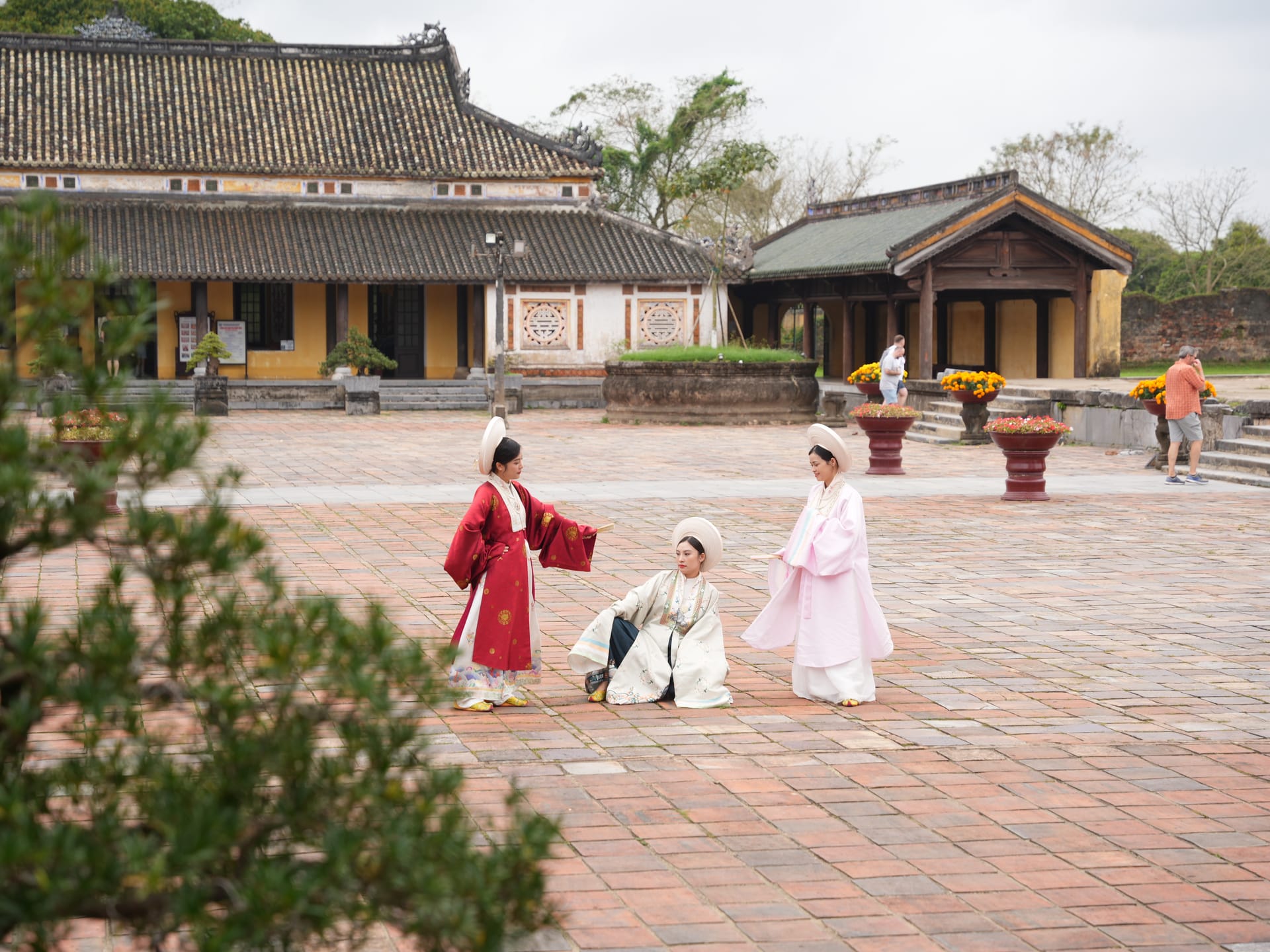
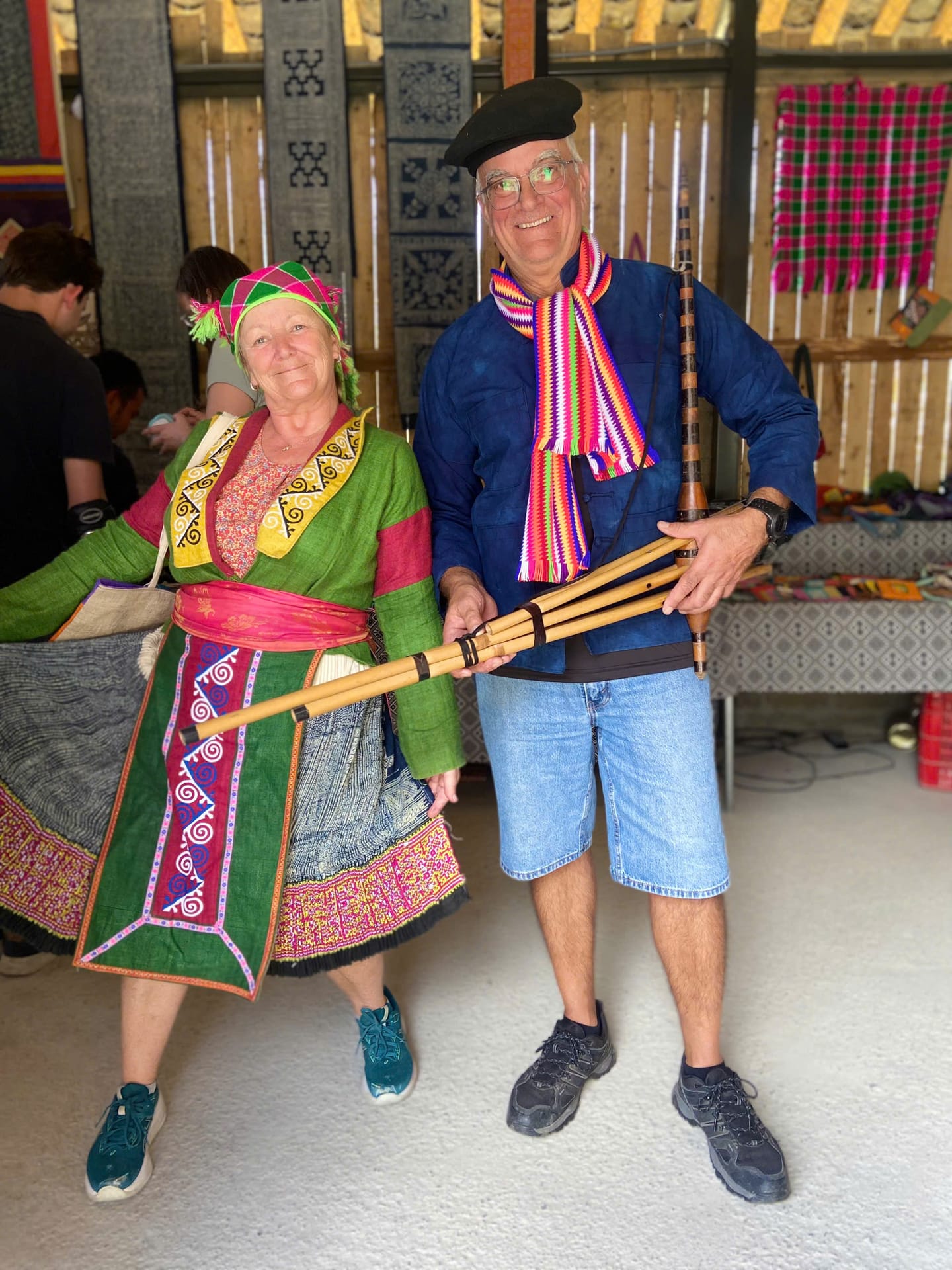
Travelers can rent or have an ao dai made. Choose the correct fit, do not treat it as a joke costume, and ask before wearing clothing connected to a specific ceremony or ethnic community.
Weddings and Family Ceremonies
A wedding in Vietnam may combine family rituals, regional customs, religious elements, and a modern reception. The sequence varies, but celebrations can include:
Vietnamese Family Introduction Ceremony (Lễ Dạm Ngõ): The first formal meeting between the two families to discuss the couple’s intention to marry.
Vietnamese Engagement Ceremony (Lễ Ăn Hỏi): An important traditional Vietnamese wedding ritual in which the groom’s family presents ceremonial gifts to the bride’s family.
Vietnamese Wedding Ceremony (Lễ Cưới): The main wedding ceremony in Vietnam, held at family homes, a place of worship, a reception venue, or a combination of these locations.
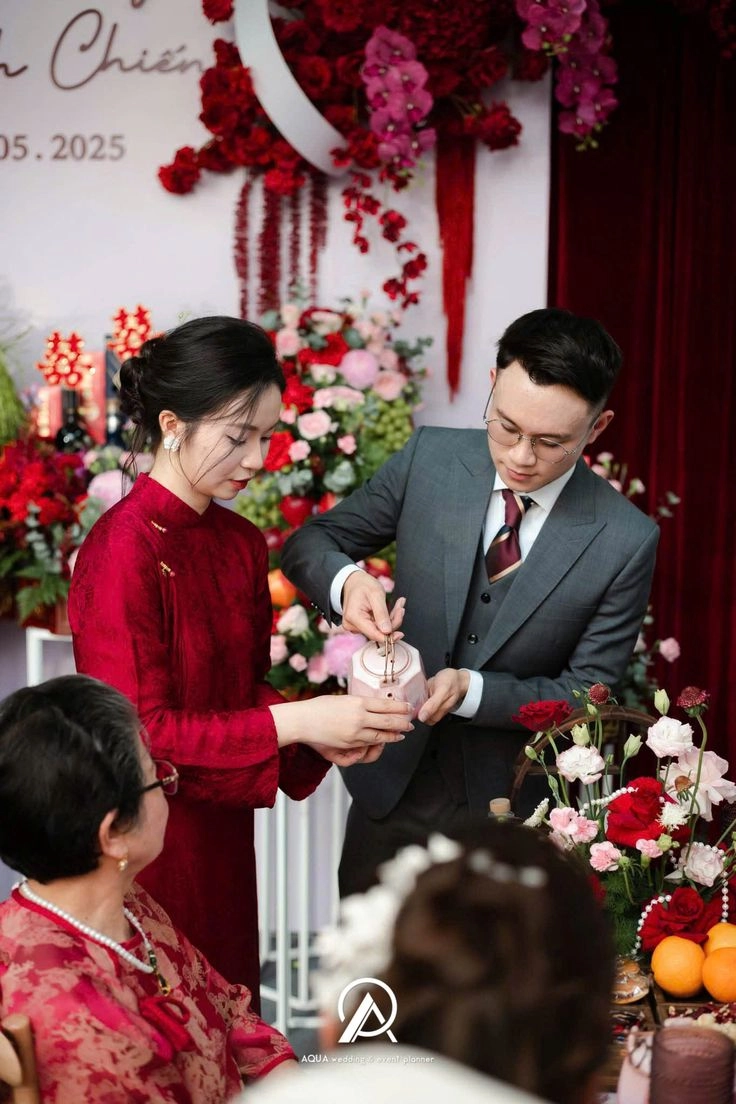
Red-covered gift trays typically hold tea, fruit, cakes, betel leaves and areca nuts, in an odd number of trays for luck. The couple may honor ancestors and serve tea to older relatives.
If invited, ask about dress, arrival time, and gifts. Money in an envelope is common at many receptions, but no single amount suits every relationship or event.
Regional and Ethnic Diversity
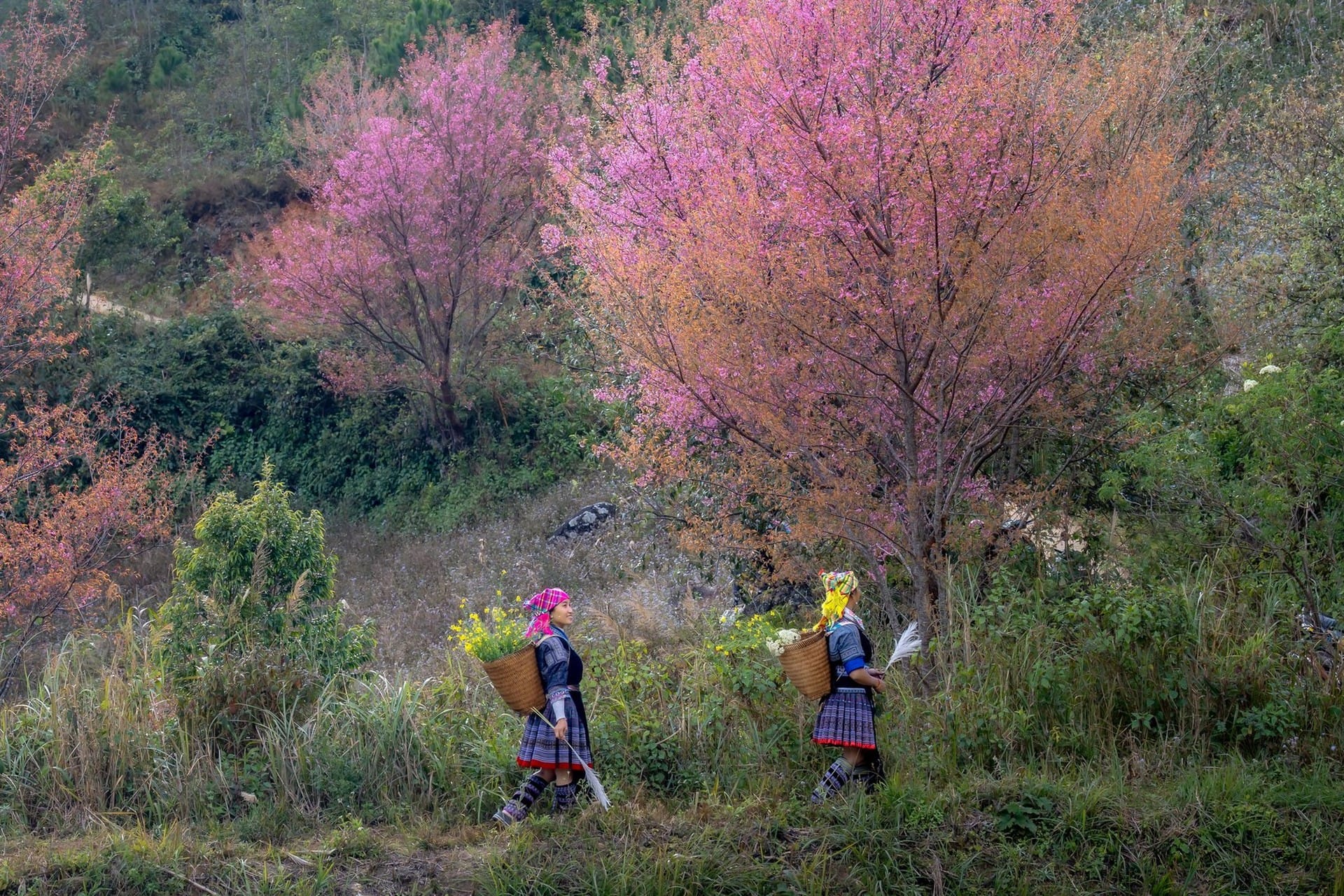
Vietnam officially recognizes 54 ethnic groups. The Kinh are the largest, while other communities have their own languages, histories, crafts, architecture, foodways, and spiritual traditions.
Culture also changes across geography. A house in the northern mountains, a family shrine in central Vietnam, and a riverside home in the Mekong Delta reflect different environments and histories. Food and ceremonies can shift between neighboring provinces.
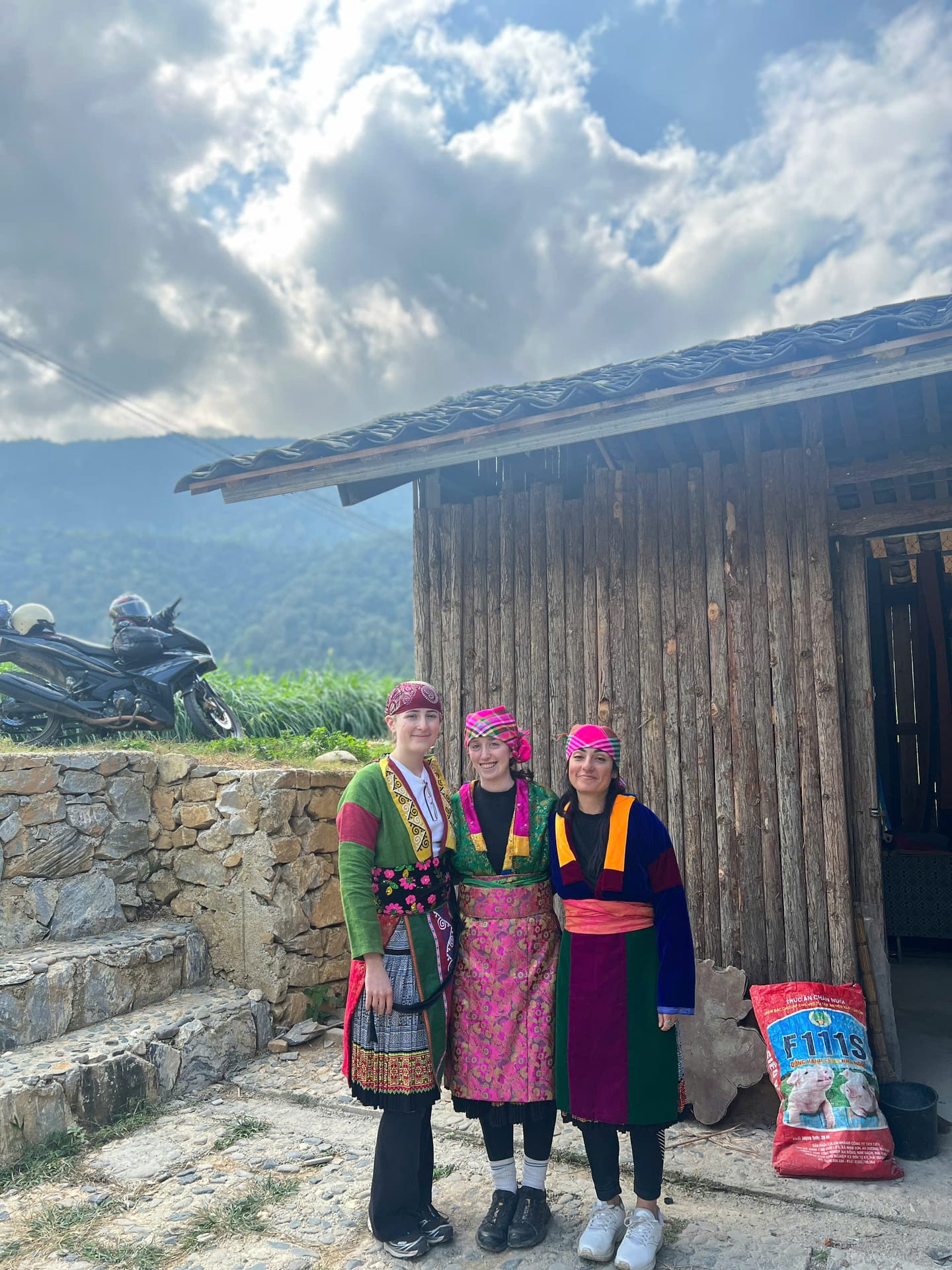
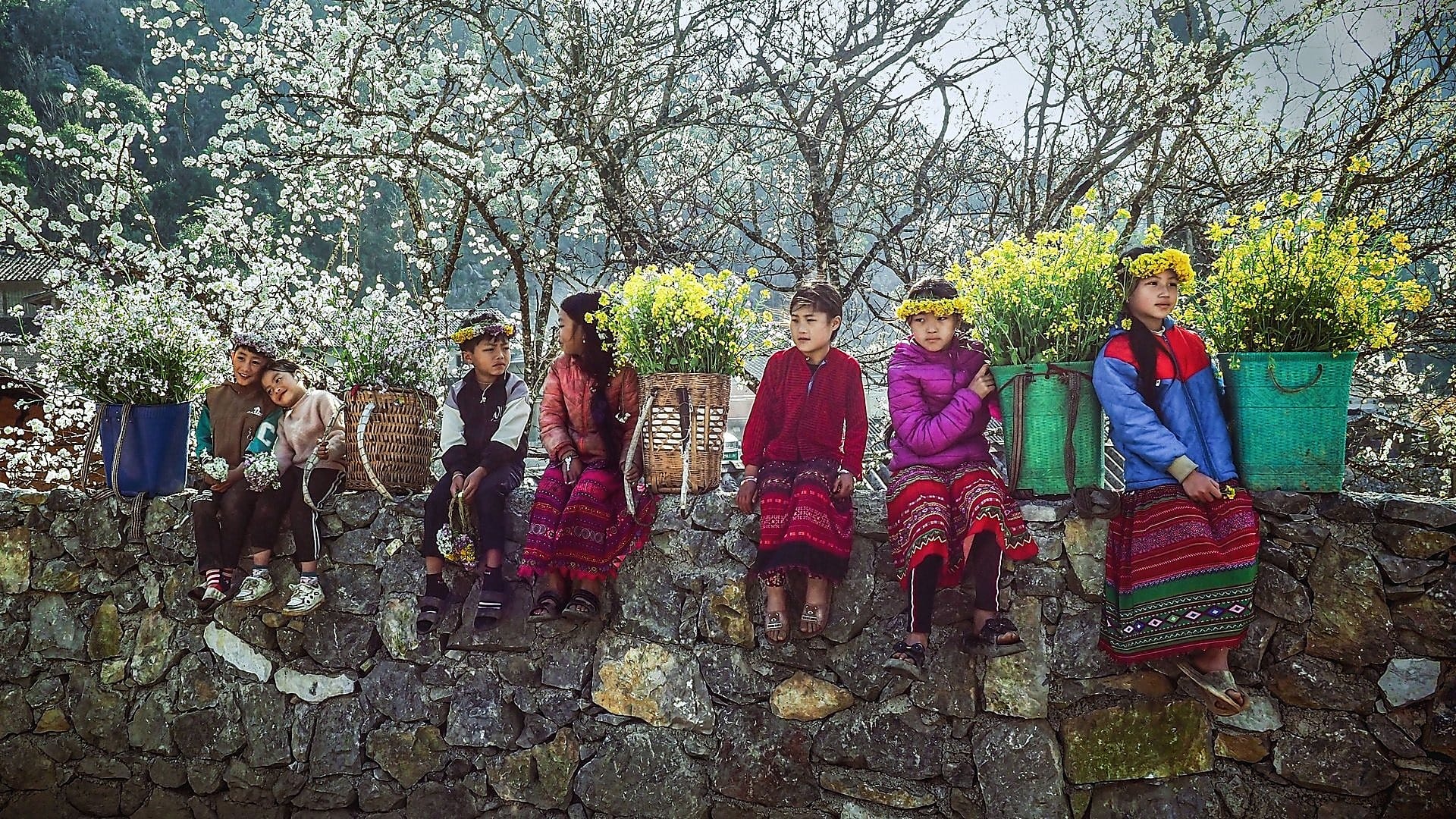
When visiting an ethnic minority community, ask before photographing people and do not enter homes, fields, workshops, or sacred spaces without permission. When buying crafts, ask who made the item rather than assuming everything sold locally was produced there.
Let residents represent their own culture rather than asking them to perform a simplified version for visitors.
Food, Markets, and Dining Etiquette
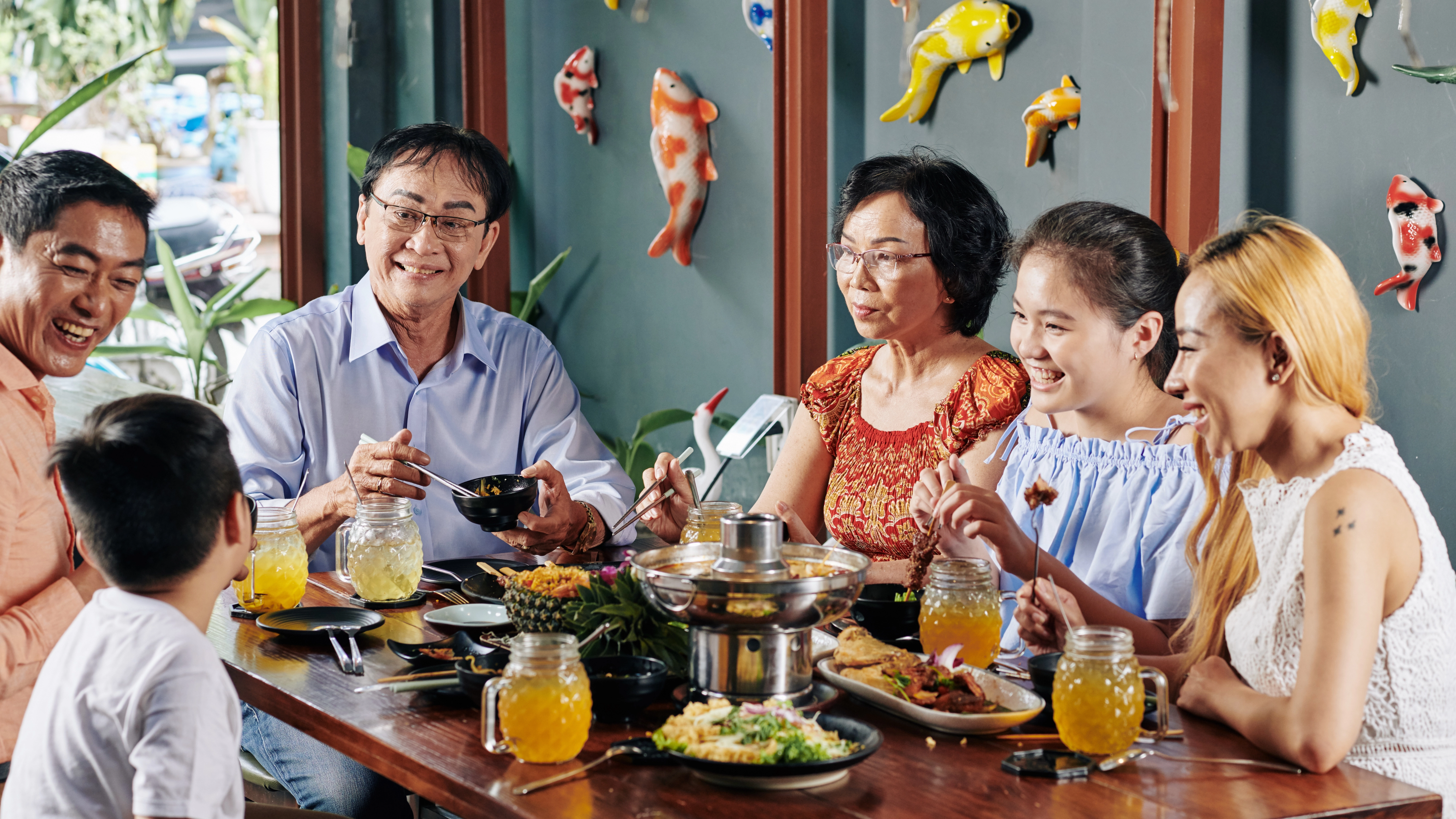
Vietnamese meals often place several dishes in the center of the table. Manners depend on the household and setting, but a few habits are widely useful:
Wait a moment for the host or an older diner to begin at a formal family meal.
Use serving utensils when they are provided.
Do not leave chopsticks standing upright in a bowl of rice.
Avoid reaching across someone when a dish can be passed.
If someone serves you food, a smile and "cảm ơn" are enough.
Explain allergies clearly, but remember that cross-contact may be difficult to prevent in a small kitchen.
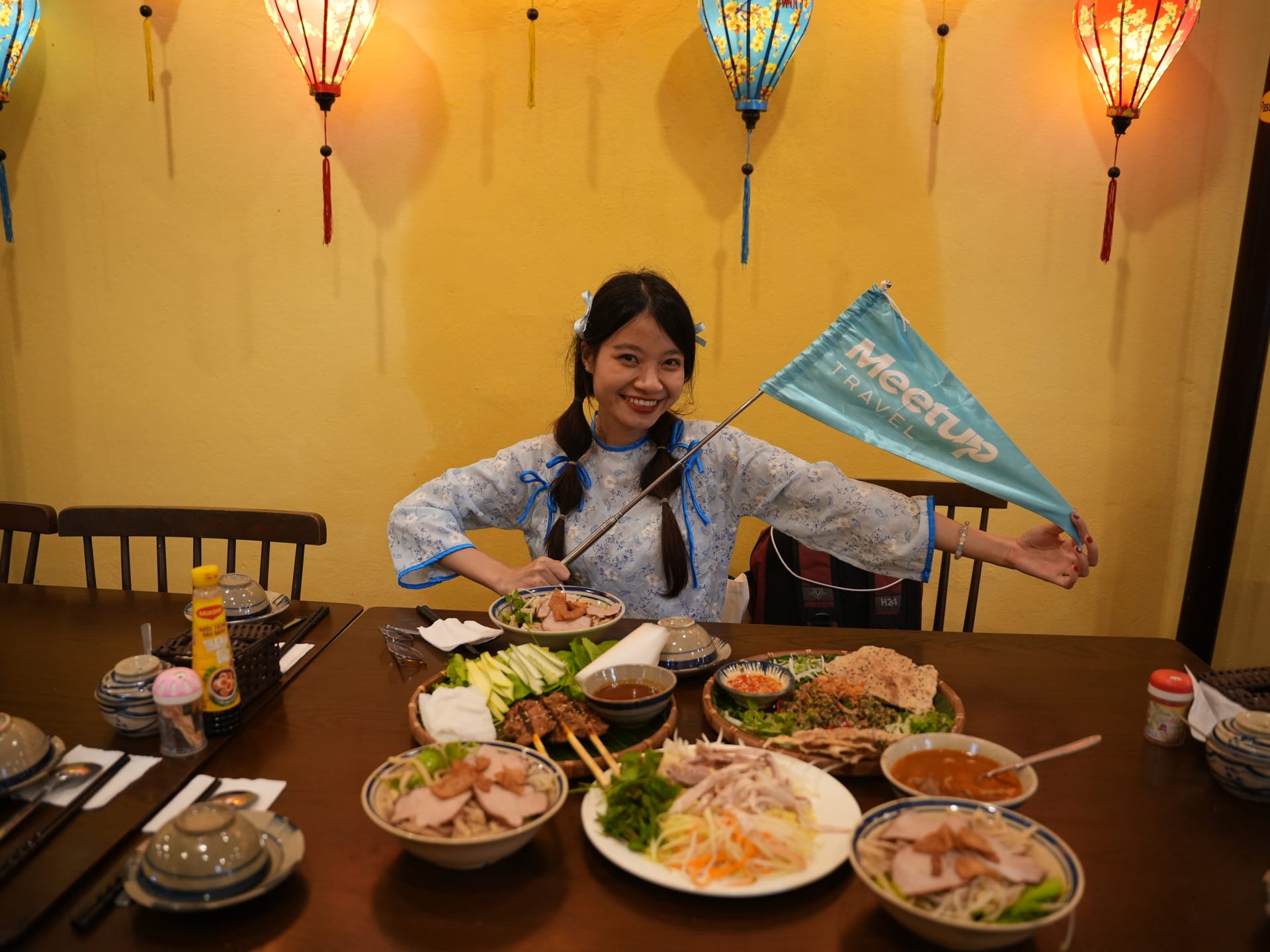
At markets, herbs sit beside baskets of fruit, cleavers tap against wooden blocks, and regular customers exchange a few quick words before breakfast. A Hanoi cooking class and market experience can connect those ingredients with the way a local meal is prepared and shared.
Christmas and Other Celebrations
Vietnam celebrates Christmas, particularly within Catholic and Protestant communities. Churches hold services, while public spaces in larger cities may display lights, trees, or nativity scenes. Christmas Eve can be busy around major churches, including among people who join the atmosphere without observing the holiday religiously.
Christmas is not a nationwide family holiday on the scale of Tet. Visible decorations do not mean that homes, workplaces, or transport will follow customs familiar to every overseas visitor.
Local temple festivals, village celebrations, and Buddhist observances follow the lunar calendar, so their solar dates move every year. These are the ones travelers are most likely to run into:
Occasion | Lunar date | What it means for travel |
|---|---|---|
Tet | 1st day of the 1st month (6 February 2027) | Transport booked out, many family businesses closed for several days |
Perfume Pagoda festival | Opens on the 6th day of the 1st month and runs into the 3rd month, busiest from the 15th to the 20th of the 2nd month | Vietnam's longest festival and one of its most crowded pilgrimages, south of Hanoi |
Hung Kings Commemoration | 10th day of the 3rd month | A public holiday; Phu Tho and the northern temples fill up |
Vu Lan | 15th day of the 7th month | Filial piety observance; pagodas are busy with families |
Mid-Autumn Festival | 15th day of the 8th month | Lanterns and lion dances, strongest in old quarters and around Hoi An |
Explore Vietnam with Local Context
The value of a local guide is not having someone recite a list of facts. It is being able to ask why a courtyard is arranged a certain way, what an offering means, or how a neighborhood tradition has changed. Browse Meetup Travel's local tours and day experiences if you want that context built into your time in Vietnam without turning the trip into a rigid schedule.
Festival dates and opening hours checked 14 September 2026. Lunar dates convert differently each year; the Tet 2027 date is from the Vietnamese government holiday calendar.