
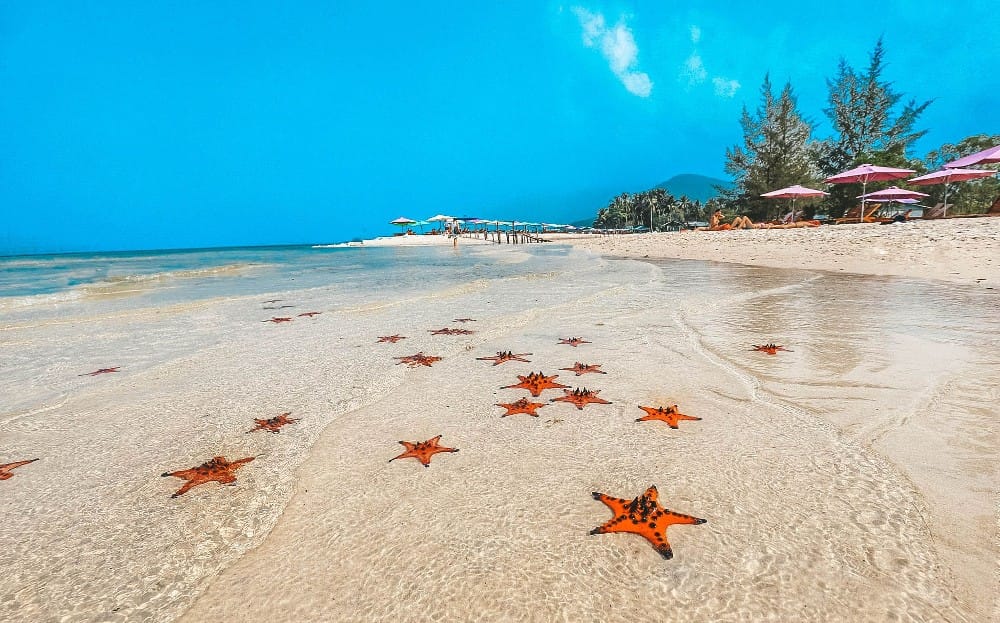
Sao Beach Phu Quoc: Access, Timing, and Sea Conditions
Sao Beach, or Bai Sao, sits on the south-east coast of Phu Quoc, about 25 km from Duong Dong. The sand is white and very fine. The water is usually calm. The beach is public land and free to walk onto.
Three things decide whether your day here is good: the hour you arrive, where along the sand you sit, and whether the wind is pushing debris ashore. The third one is the part most guides leave out, and in some months it matters more than the other two combined.
Where Sao Beach Is, and Why the Direction Matters
Sao Beach is near An Thoi, at the southern end of the island, close to the Hon Thom cable car station.
It faces east. Long Beach and Ong Lang face west. That one difference explains most of what follows.
Morning light is the best light here. There is no sunset over the water at Sao Beach.
The bay is sheltered from the south-west monsoon, roughly June to October, when the west coast turns choppy.
The bay is exposed to the north-east monsoon, roughly November to March. Vietnamese call this gio chuong. This is the wind that brings debris.
The bay sits in a shallow curve between two low forested points. The sand has almost no shell fragments in it, so it is comfortable to walk barefoot, which is why local families with small children use it more than most beaches on the island. Conde Nast Traveler readers voted Phu Quoc the best island in Asia in October 2025, with a score of 95.51 out of 100 and third place worldwide.
One administrative note. Since 1 July 2025, Phu Quoc is a special zone (dac khu) under An Giang province, after Kien Giang province was merged into An Giang. The name Phu Quoc is unchanged and nothing on the ground has moved. But newer Vietnamese articles and official addresses now write An Giang, while older hotel confirmations still say Kien Giang. Both refer to the same island.
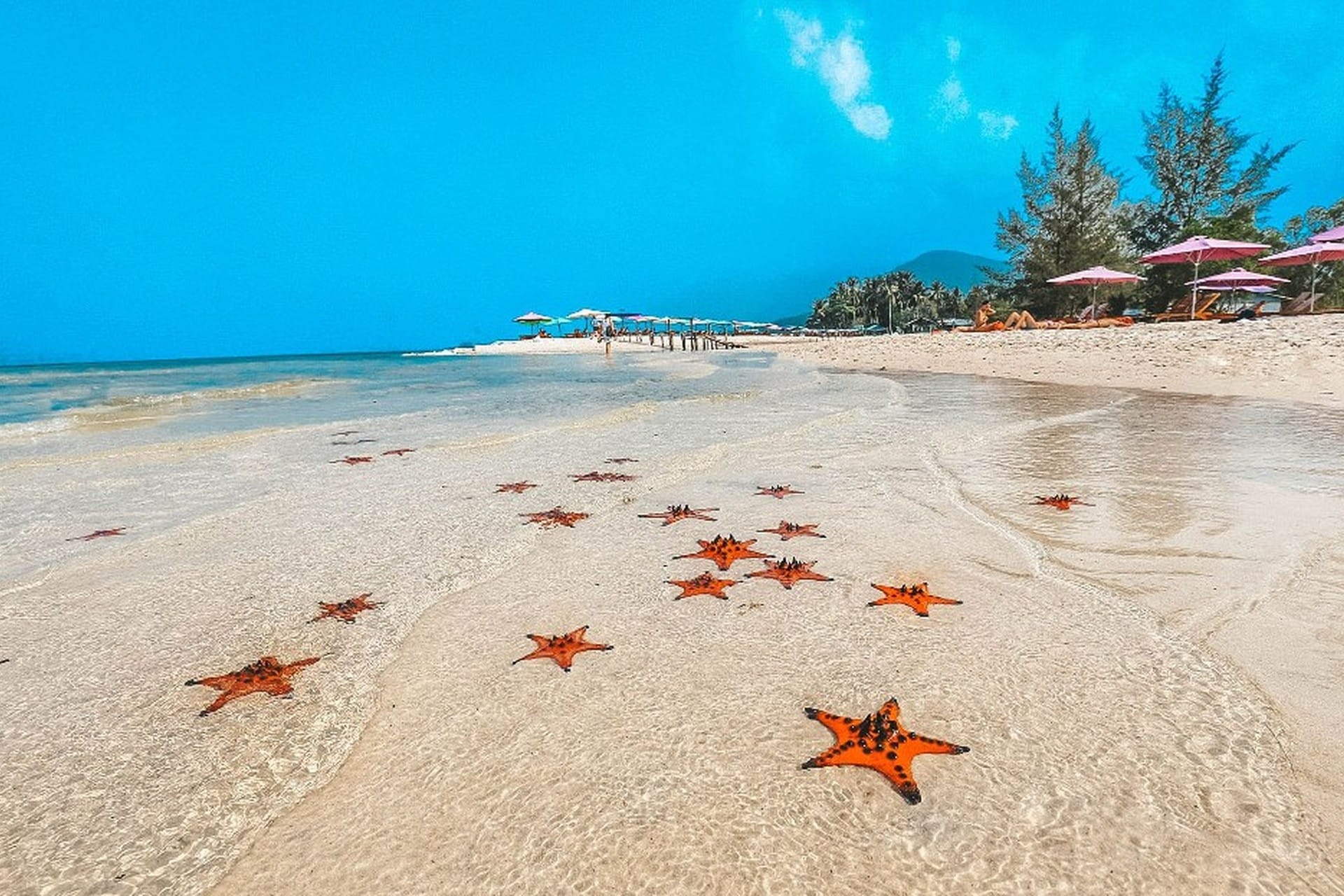
White sand and clear water at Sao Beach on Phu Quoc
The Debris Season Most Guides Skip
Every year the north-east wind pushes water hyacinth, seaweed, driftwood and household rubbish across from the Gulf of Thailand and onto the east-facing beaches.
In early January 2026 it was severe. Thick layers of hyacinth and rubbish covered both Sao Beach and nearby Khem Beach, and a number of international visitors chose not to swim at all. Hundreds of resort staff worked through the night to clear the sand.
This is not a freak event. Local environment officials describe it as an annual pattern tied to the gio chuong wind, and it repeats every season.
What that means for planning:
November to March has the driest, coolest weather. It is also the debris season. These two facts sit directly on top of each other, and most guides only report the first one.
Late December and January carry the highest risk.
Debris arrives in waves and usually clears within a few days once the wind eases.
If clean water is the point of your trip, ask your hotel for a photo from that morning before you commit to the drive.
April to early June is the best time to visit. The north-east wind has dropped, the debris season is over, and the heavy rain has not fully arrived.
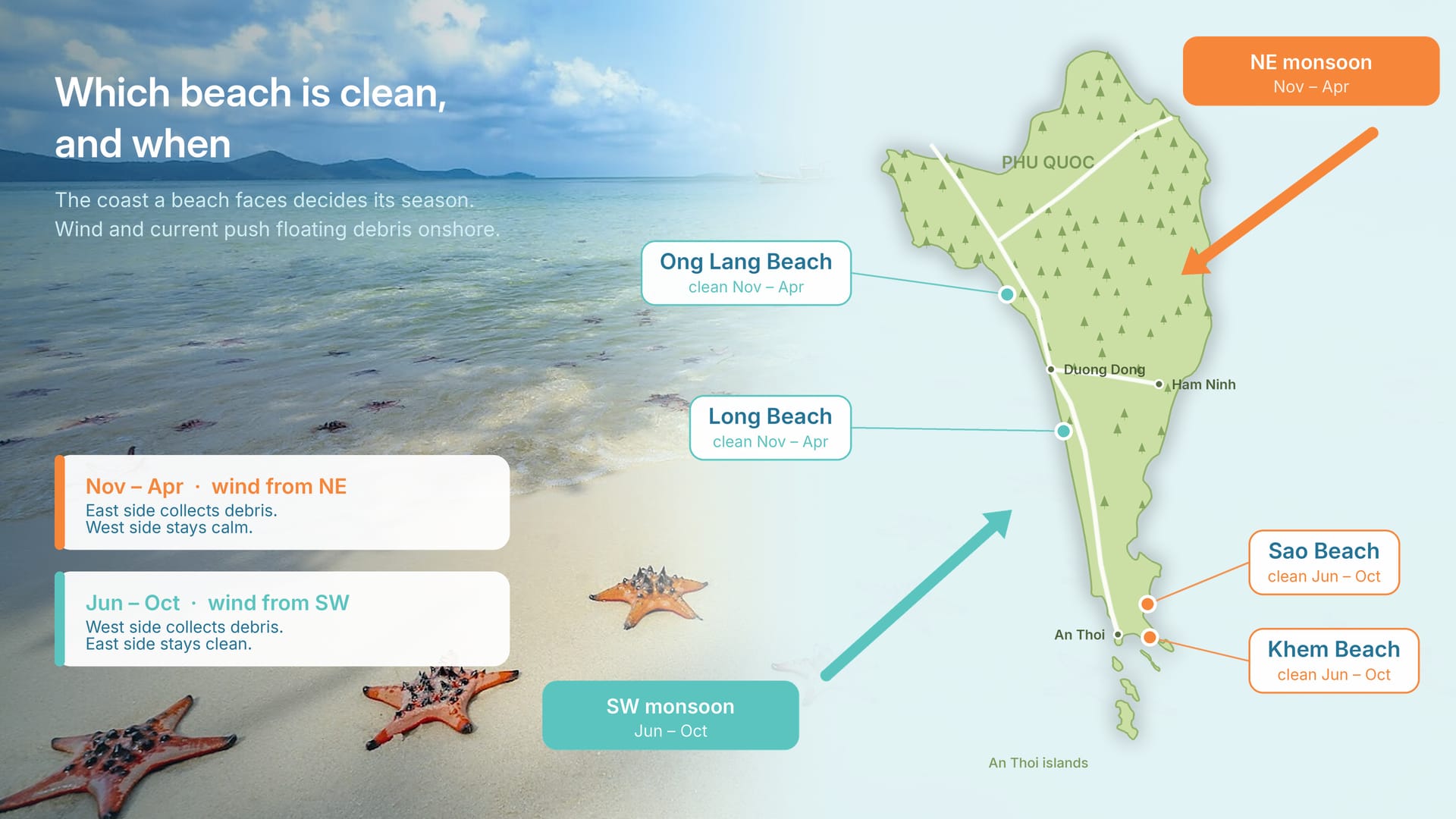
Phu Quoc beach guide: Seasonal winds and clean beaches
Months | Weather | Sea condition | Verdict |
|---|---|---|---|
Nov - Mar | Dry and cool | Calm, but this is gio chuong debris season | Good weather, real risk |
Apr - early Jun | Hot, dry, light wind | Cleanest and most reliable | Best time to visit |
Jun - Oct | South-west monsoon, rain | Sheltered here, choppier on the west coast | Workable, less predictable |
Access and the 60,000 VND Dispute
The beach is public land. There is no official entry ticket, and no one can legally charge you for reaching the sand.
In late December 2025, a beachfront restaurant at Sao Beach called Chez Dugong began charging 60,000 VND per person at its own gate. Vietnamese travel groups reacted strongly, because the sand behind that gate is public space.
The restaurant's own account is more specific than entry fee. It says the 60,000 VND is a service deposit voucher: eat or drink there, hand the voucher back, and the amount is deducted from your bill, with the rinse-off shower now bundled into it. The dispute is about the other case: if you only want to cross to the beach, or you walk on to a different business, the money is not returned.
So, practically:
If you were going to eat or drink there anyway, the voucher costs you nothing.
If you were not, use a different way down. The beach is long and public, and this restaurant is not the only frontage on it.
The special zone authority has instructed tourism businesses to display prices openly and not to push services on visitors.
Khem Beach, a few minutes further south, has open access and charges only when you use a service. It is the obvious fallback if the entrance situation annoys you.
Prices on the sand for loungers, showers, food and water sports vary by business and are not fixed island-wide. Agree the price before you sit down, order, or step onto a jet ski. That advice is unexciting, and it is the only version that stays true from one season to the next.
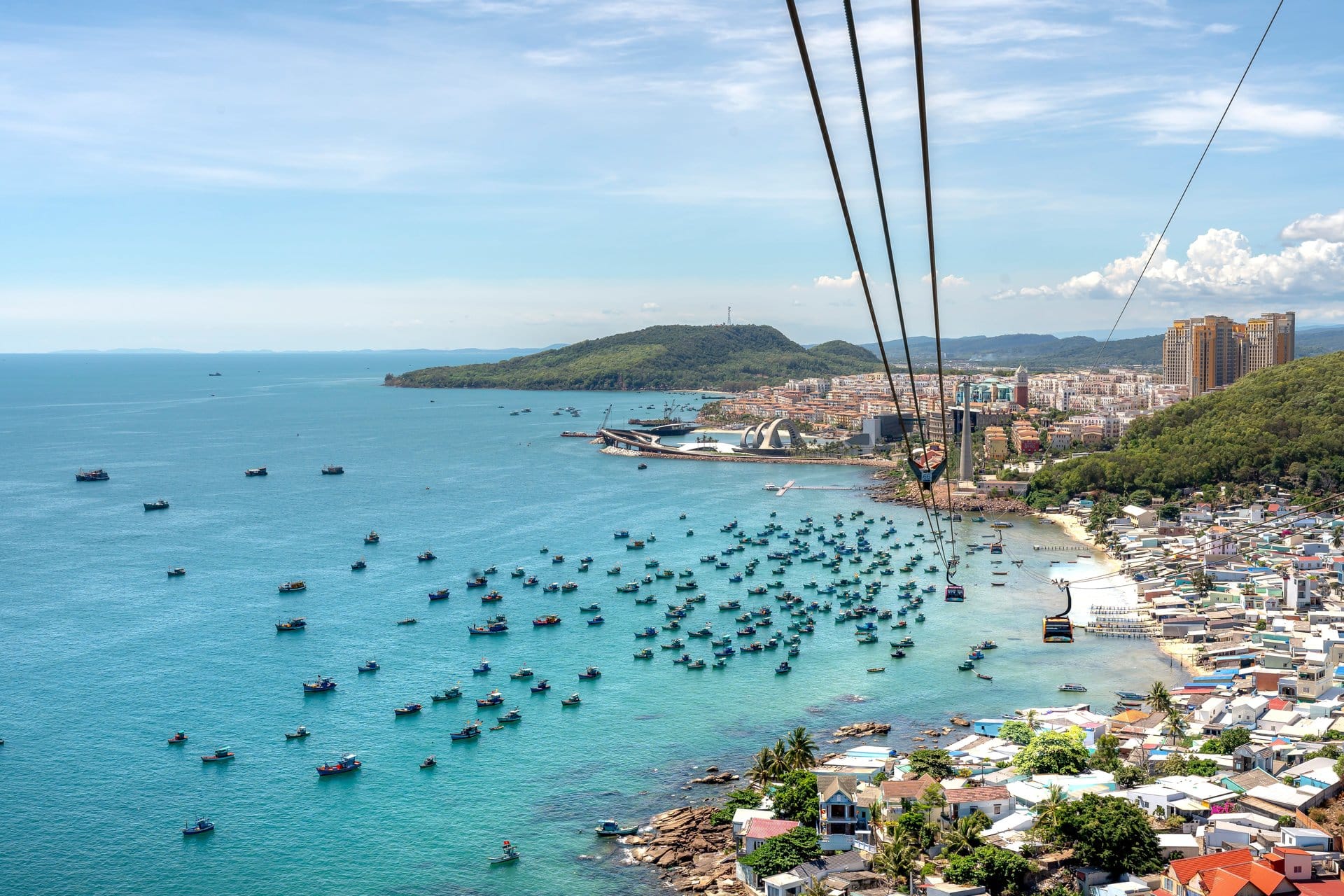
View from the Hon Thom cable car overlooking An Thoi, Phu Quoc
Pick the Hour, Then Pick the Spot
The hour you arrive changes more than the month you come.
Window | Crowd | Light | Best for |
|---|---|---|---|
Before 9am | Nearly empty | Low sun rising over the water | Swimming, photos, a full quiet morning |
10am - 2pm | Peak, heavy on weekends | Harsh and overhead | Water sports, which run at full capacity |
After 4.30pm | Thinning out | Soft, no sunset over the sea | Long calm swims once the heat breaks |
Weekdays are consistently quieter than weekends, because the beach draws a lot of domestic day-trip traffic on Saturdays and Sundays.
The Ends of the Beach Are a Different Beach
Sao Beach works as three sections, and where you put your bag matters more than most people realise.
Section | Character | Best for |
|---|---|---|
Centre | Jet ski and parasail operators, lounger rows, vendors, restaurants | Food, drinks and water sports within reach |
North end, about 10 minutes' walk | Quieter; a small point screens the engine noise; the leaning palm photo spot | Quiet swimming and photographs |
South end, about 10 minutes' walk | Shallow gradient, water stays knee-deep well out, almost no vendors | Small children and long wades |
The walk to either end takes under ten minutes and removes most of the crowd. Neither end has motorised watercraft.
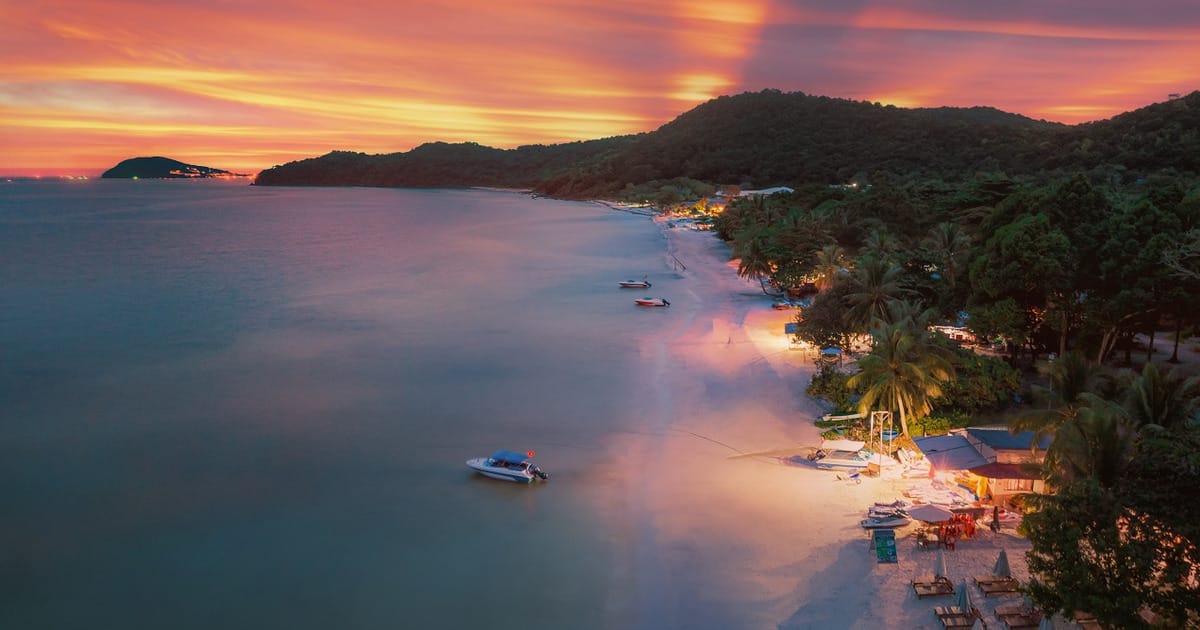
Quiet southern end of Sao Beach with no vendors
Getting There
Sao Beach is roughly 25 to 28 km south-east of Duong Dong and about 7 km from An Thoi. The drive takes 30 to 40 minutes on a paved road.
Taxi or Grab. Around 400,000 VND one way from Duong Dong, around 300,000 VND from the airport, which is closer. Grab operates island-wide. Book your return before you go down to the sand, since coverage in the far south thins out after peak hours.
Motorbike. About 120,000 to 200,000 VND per day in Duong Dong. The road south is direct and well signposted for An Thoi and Bai Sao. You need a valid licence.
Private car with driver. Worth it if you are combining the beach with An Thoi and the Hon Thom cable car in one day.
Public bus. There is no fixed public bus route serving the beach. VinBus is free but runs only between specific Vin properties. Do not plan a return on it.
Phu Quoc is hosting APEC in 2027, so large construction sites and road works are active across the island through 2026. Allow extra time on the southern route during the day.
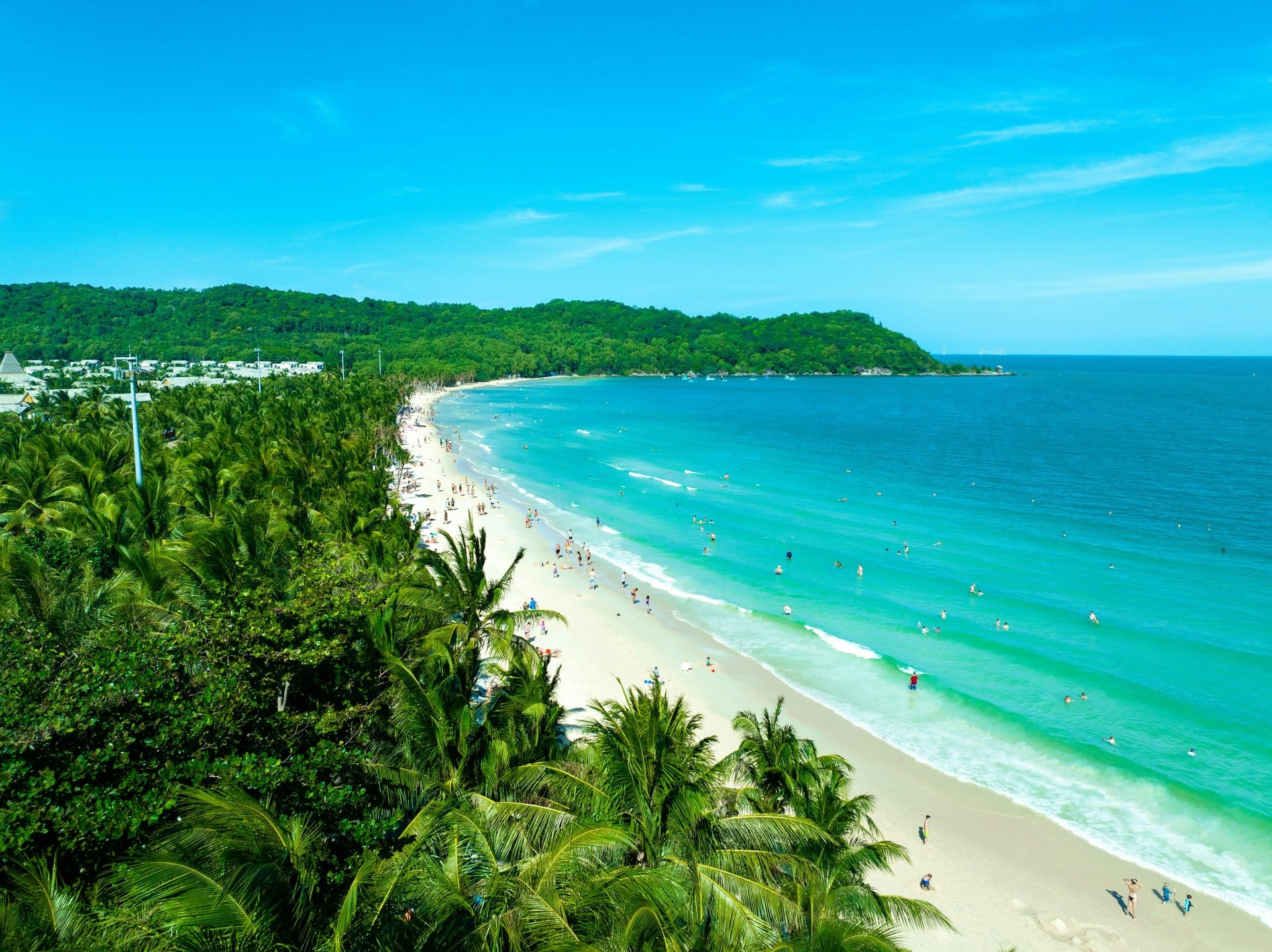
Coastal road from Duong Dong to Sao Beach on Phu Quoc
Three Dishes Worth Ordering
The beachfront restaurants run near-identical seafood menus. Three dishes are genuinely local rather than generic grill:
Goi ca trich, herring salad with coconut. Raw herring cured briefly in lime, tossed with shredded fresh coconut, roasted peanuts and dill, wrapped in rice paper with Phu Quoc fish sauce. The version served off the island is a different dish.
Com chien ghe, crab fried rice. Day-boat crab meat through rice with garlic. The one dish that arrives hot enough to warm you up after two hours in the water.
Coi mai nuong, grilled scallop adductors. Small, sweet, chewy, cooked over charcoal with scallion oil. The best cheap thing on most menus.
Fresh coconut and sugarcane juice are both better value than the bottled drinks. If you are staying in town, our Phu Quoc night market eating guide covers the same seafood in a walkable setting.
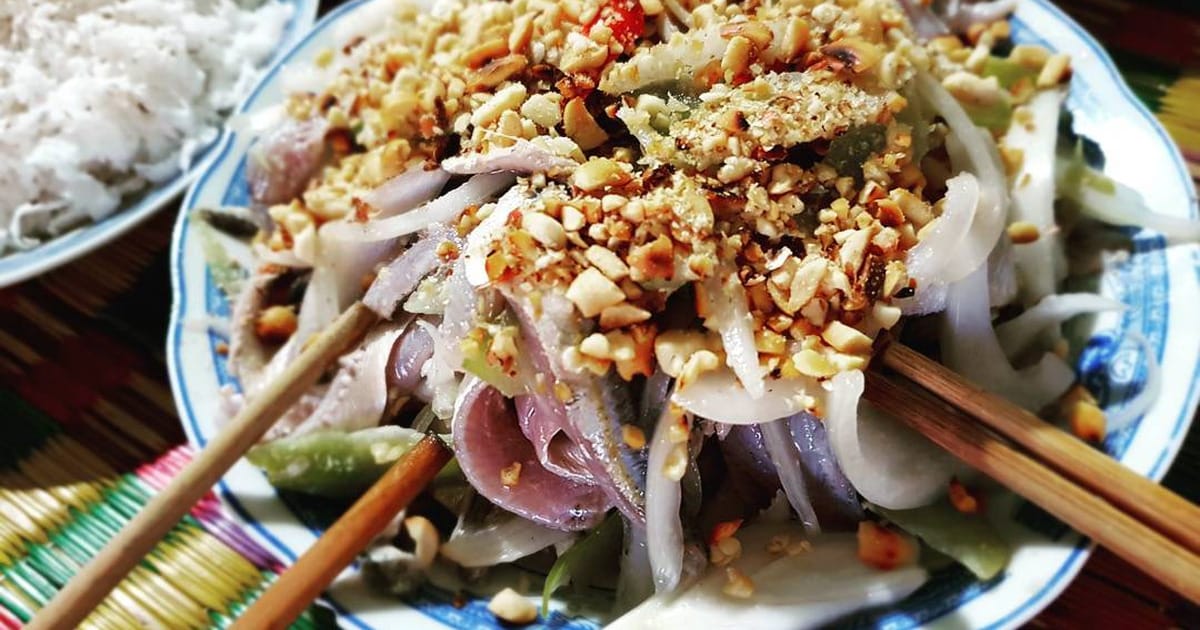
Grilled seafood served at a beachfront restaurant on Sao Beach
Practical summary
Free and public. No official entry ticket. One restaurant charges a refundable service voucher at its own gate; other access points exist, and Khem Beach nearby has open access.
The dry season, November to March, is also the gio chuong debris season. April to early June is the cleanest stretch.
Arrive before 9am or after 4.30pm, and walk ten minutes to either end of the beach.
East-facing: excellent morning light, no sunset. For sunset, go back to Long Beach or Ong Lang.
Bring insect repellent. Sandflies are a known nuisance in still, warm conditions.
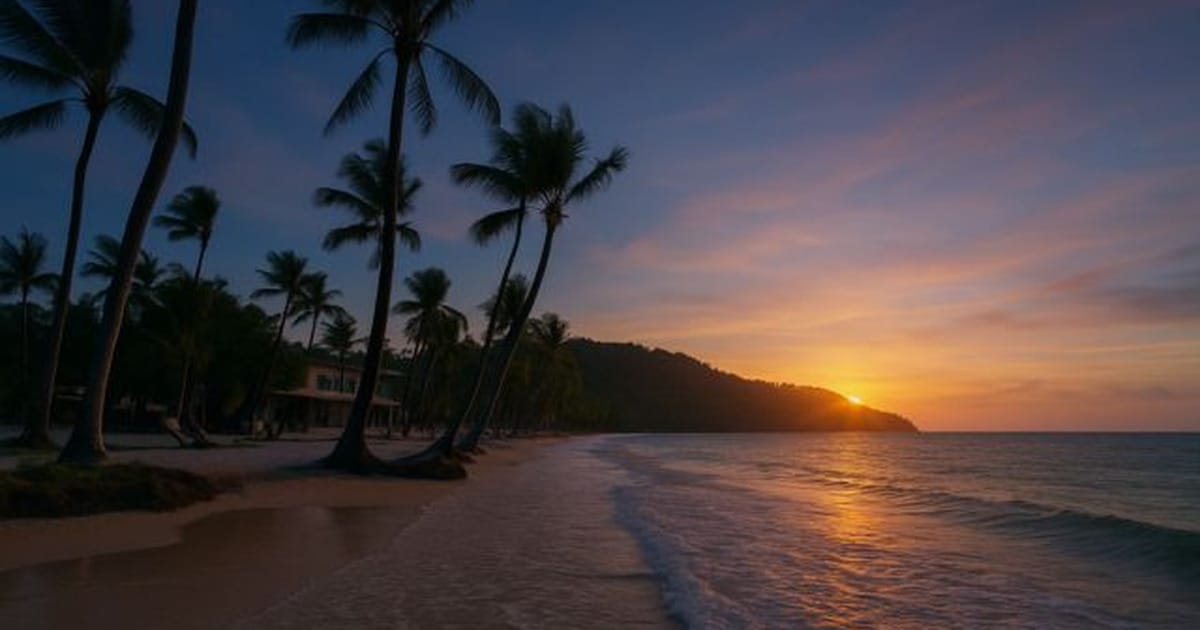
Morning light on the east-facing shoreline of Sao Beach
Sao Beach is 30 to 40 minutes from town, which is far enough to filter out visitors who pick beaches by proximity. The sand is genuinely fine and the water is genuinely calm. What decides your day is the wind and the hour, not the reputation. Check what the sea is doing that morning, come early, and walk away from the parking area before you put your bag down.
For how a Phu Quoc stop fits into a longer route, see our Vietnam Ultimate Guide 2026, or our Phu Quoc travel guide for the accommodation zones.