
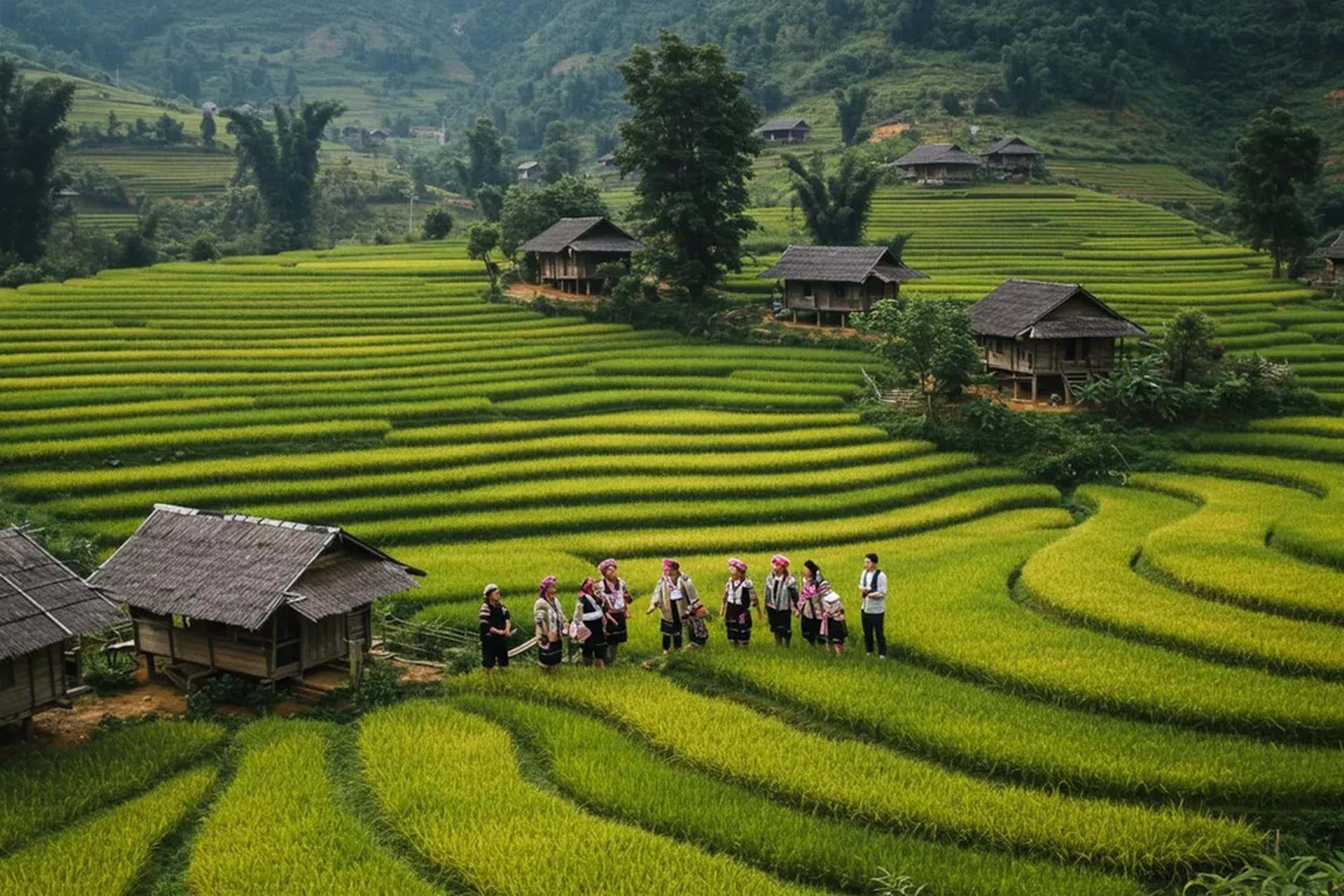
Best Time to Visit Sapa: A Local's Honest Month-by-Month Guide
The best time to visit Sapa is mid to late September, when the rice terraces turn gold and the summer rain starts to ease, or March to May, when the fields flood green, wildflowers open, and trekking weather is mild. Winter (December to February) is beautiful in a cold, foggy, cinematic way and holds the outside chance of snow, while July and August give you the greenest hills of the year at the cost of the heaviest rain.
One thing every honest local will tell you: Sapa has microclimates and the weather changes hour by hour. Two ridges can wear different jackets on the same afternoon. So the real question is not "what month has good weather", it is "what do you want to see".
This guide answers that question month by month, from a Lao Cai (new expanded Lao Cai, formerly separate Lao Cai + Yen Bai after the 2025 merger) perspective, and gives you the packing, timing, and expectations to plan without disappointment.
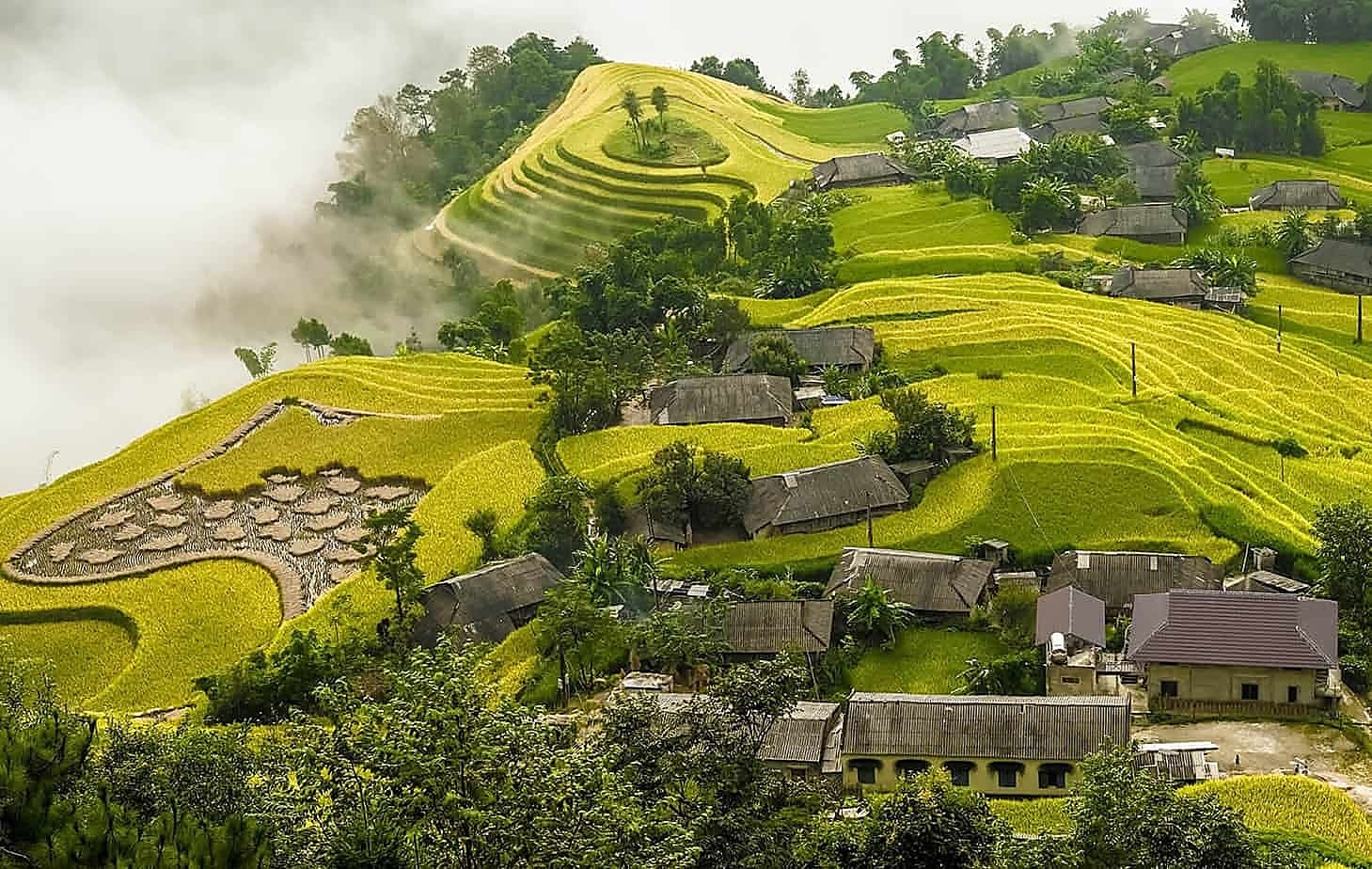
Terraced rice fields around Sapa in Lao Cai province
Sapa quick reference
Detail | Value |
|---|---|
Elevation | ~1,500 to 1,600 m above sea level |
Coordinates | ~22.34°N, 103.84°E |
Administrative status | Sapa ward (formerly Sapa town) in Lao Cai province |
Distance from Hanoi | ~315 km northwest |
Getting there | Overnight sleeper train Hanoi to Lao Cai station + 45 min minibus to Sapa, or 5-6 hr limousine van door-to-door |
Annual temperature range | Average ~6°C to ~23°C; rare extremes from about -4°C to 29°C |
Best months (all-round) | Mid to late September, and March to May |
Weekly market highlights | Love Market (Sapa, Saturday nights, year-round), Bac Ha Market (Sunday morning weekly) |
Reference price for 2-day trek + homestay | ~2,500,000 to 3,800,000 VND per person (reference only, private guided, low season) |
What is the weather like in Sapa year-round?
Sapa sits at around 1,500 to 1,600 metres in the Hoang Lien Son range, so it runs roughly 7 to 11 degrees cooler than Hanoi at any given time, with a wet season running from around May to September and a dry, cold winter from December to February. Locally we split the year into four moods rather than four seasons, because the shoulders (April, October) feel more distinct than "spring" and "autumn" ever do down in the delta.
Here is the year in one table. All figures are long-term averages and round numbers, so treat them as patterns rather than guarantees for any single week. One thing worth knowing up front: the genuinely dry months are November to February. September and October are drier than midsummer, but they still see rain on plenty of days.
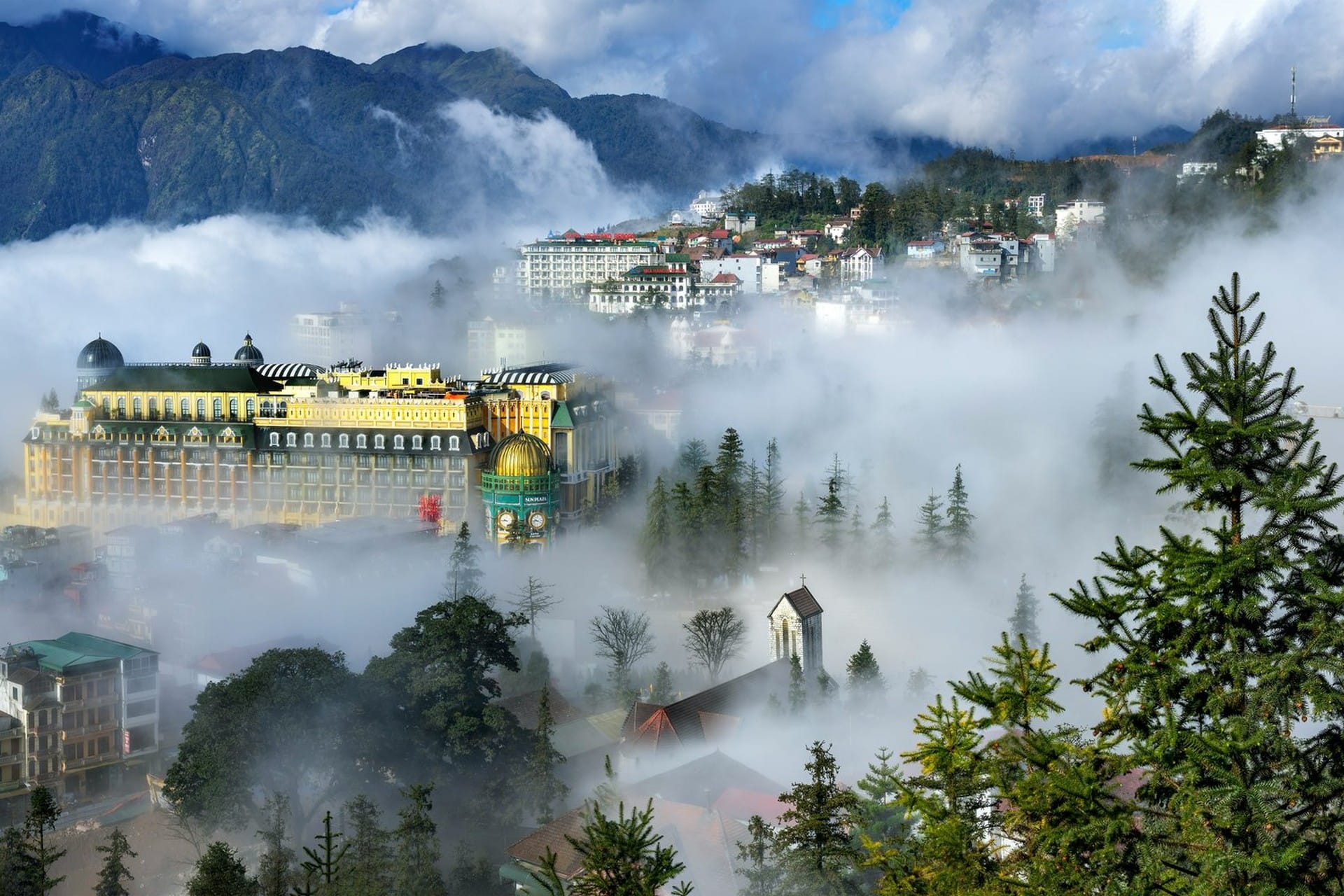
Fog rolling across the Sapa valley
Month | Avg high / low | Rainfall | Fog frequency | Verdict |
|---|---|---|---|---|
January | ~13°C / ~6°C | Low (~65 mm) | Very high | Cold, atmospheric, brown terraces |
February | ~14°C / ~8°C | Low (~80 mm) | Very high | Similar to Jan, chance of Tet events |
March | ~18°C / ~11°C | Low-moderate (~105 mm) | Moderate | Spring bloom, terraces waking up |
April | ~21°C / ~14°C | Moderate (~215 mm) | Moderate | Prime trekking, green shoots |
May | ~22°C / ~16°C | High (~345 mm) | Moderate | Water-mirror terraces from mid-May |
June | ~23°C / ~18°C | High (~410 mm) | Moderate | Peak green, heavy rains |
July | ~23°C / ~18°C | Very high (~465 mm) | Low-moderate | Wettest month, lush but slippery |
August | ~23°C / ~17°C | Very high (~450 mm) | Moderate | Rain continues, rivers full |
September | ~22°C / ~16°C | High (~315 mm) | Low-moderate | Gold harvest, rain easing late month |
October | ~19°C / ~14°C | Moderate (~215 mm) | Low-moderate | Cooler, clearer spells, harvest tail |
November | ~16°C / ~10°C | Low (~110 mm) | Moderate | Quiet, cool, driest trekking of the year |
December | ~13°C / ~7°C | Low (~65 mm) | Very high | Cold, mist, empty trails |
Because of the microclimate, ridges above 1,800 m can be 3-5 degrees colder and much windier than Sapa ward centre, so treat these numbers as valley baselines.
What is the absolute best month to visit Sapa?
If forced to pick one month it is September, for the window when the rice terraces around Muong Hoa valley turn gold before harvest, usually peaking mid-month. For everyone else it depends on your priority.
Photographers: September, aiming for the days before harvest cuts start (exact dates shift year to year and by valley, so ask a local operator for the current-year window)
Hikers who hate sweating: April, mild days, dry-enough trails, green shoots
General first-time traveler who wants blue sky + village atmosphere: October
Budget travelers who accept some rain: late May or early June, before peak monsoon
Atmosphere seekers, mist-and-tea travelers: January (cold, empty, dramatic)
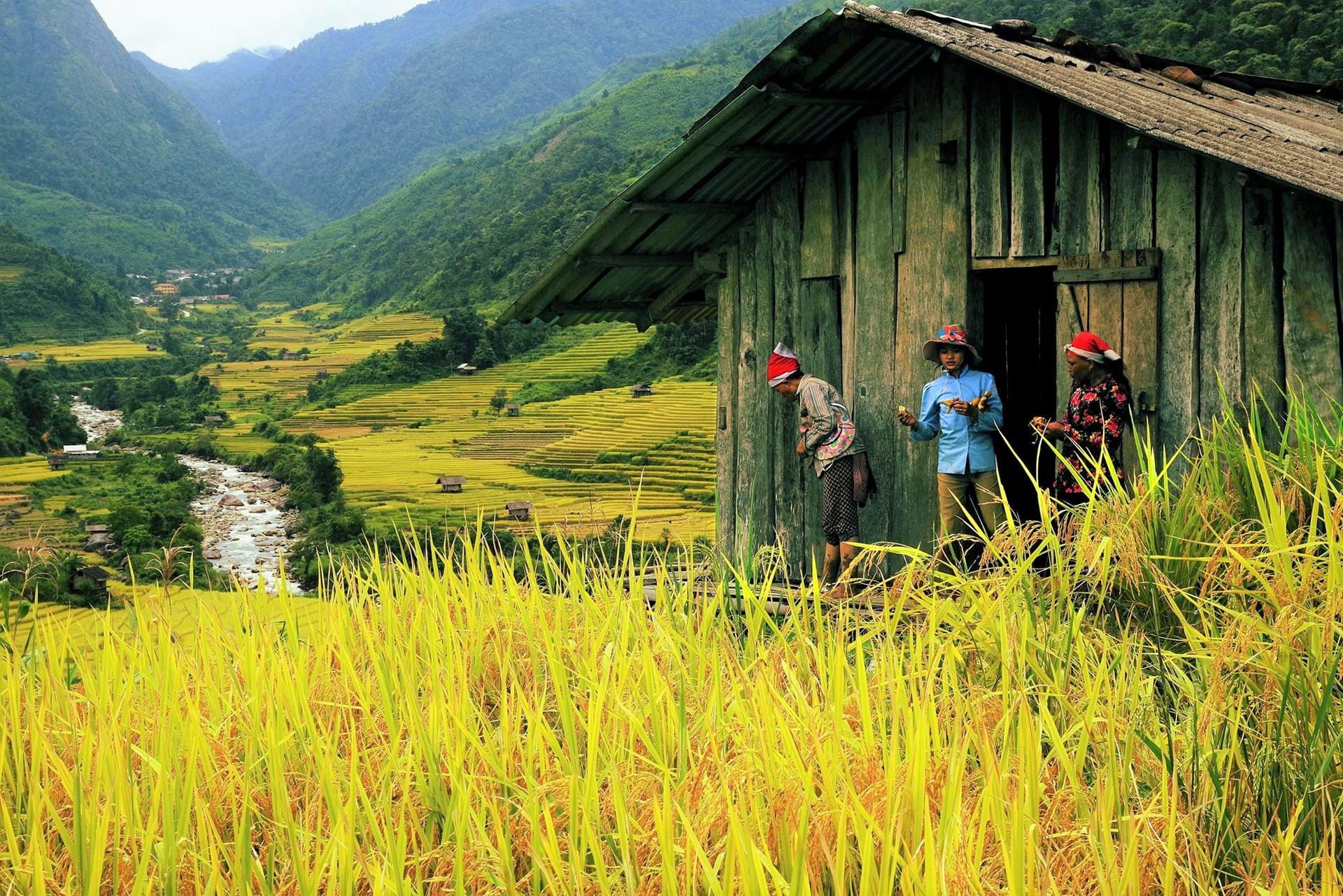
Golden rice terraces in Sapa during the harvest
I would never send a first-time Sapa visitor in mid-July unless they specifically said "I want it green and I don't mind rain". The photos look incredible; the reality is wet socks.
Ready to book?* Meetup Travel's 3-day Sapa harvest trek with private H'mong guide, Ta Van homestay, and Muong Hoa valley trekking runs from VND 4,500,000/person* (group of 4, reference price). See Sapa tours →
Season-by-season breakdown
Spring in Sapa (March to May)
Spring is my personal pick for trekking. Days sit in the high teens to low twenties, the terraces start filling with water and reflecting the sky, and by late April everything is thick green shoots.
What you see: cherry and plum blossom in early March, water-mirror terraces from around mid-May, wildflowers along trails
What to wear: light layers, long trekking pants, waterproof shell for surprise showers, buff or light beanie for morning starts
Typical weather: around 11-22°C, light rain in March building through May, moderate fog that often burns off by mid-morning
Trekking difficulty: easy to moderate, trails still firm before the heavy monsoon
Festival / market timing: Bac Ha Market every Sunday, Love Market every Saturday night, spring Hmong new year celebrations tail off in early March.
Verdict: ✅ excellent for hiking and photography, especially late April.
Summer in Sapa (June to August)
Summer is the wet season and also the greenest, so trade-offs everywhere. Expect proper monsoon rain, often in dramatic evening downpours rather than all-day grey.
What you see: deep green paddies at peak growth, waterfalls at full volume, mist rolling through the pines
What to wear: quick-dry synthetics, real waterproof jacket (not "water-resistant"), sandals for camp plus trekking shoes with grip, insect repellent
Typical weather: around 17-23°C, heavy rain most days, especially afternoons and nights
Trekking difficulty: moderate to hard, mud is the enemy, leeches on off-trail sections
Festival / market timing: markets run as normal, occasional flash floods can cut the Bac Ha route
Verdict: ⚠️ green is unbeatable but expect wet gear and possible landslides on the higher passes.
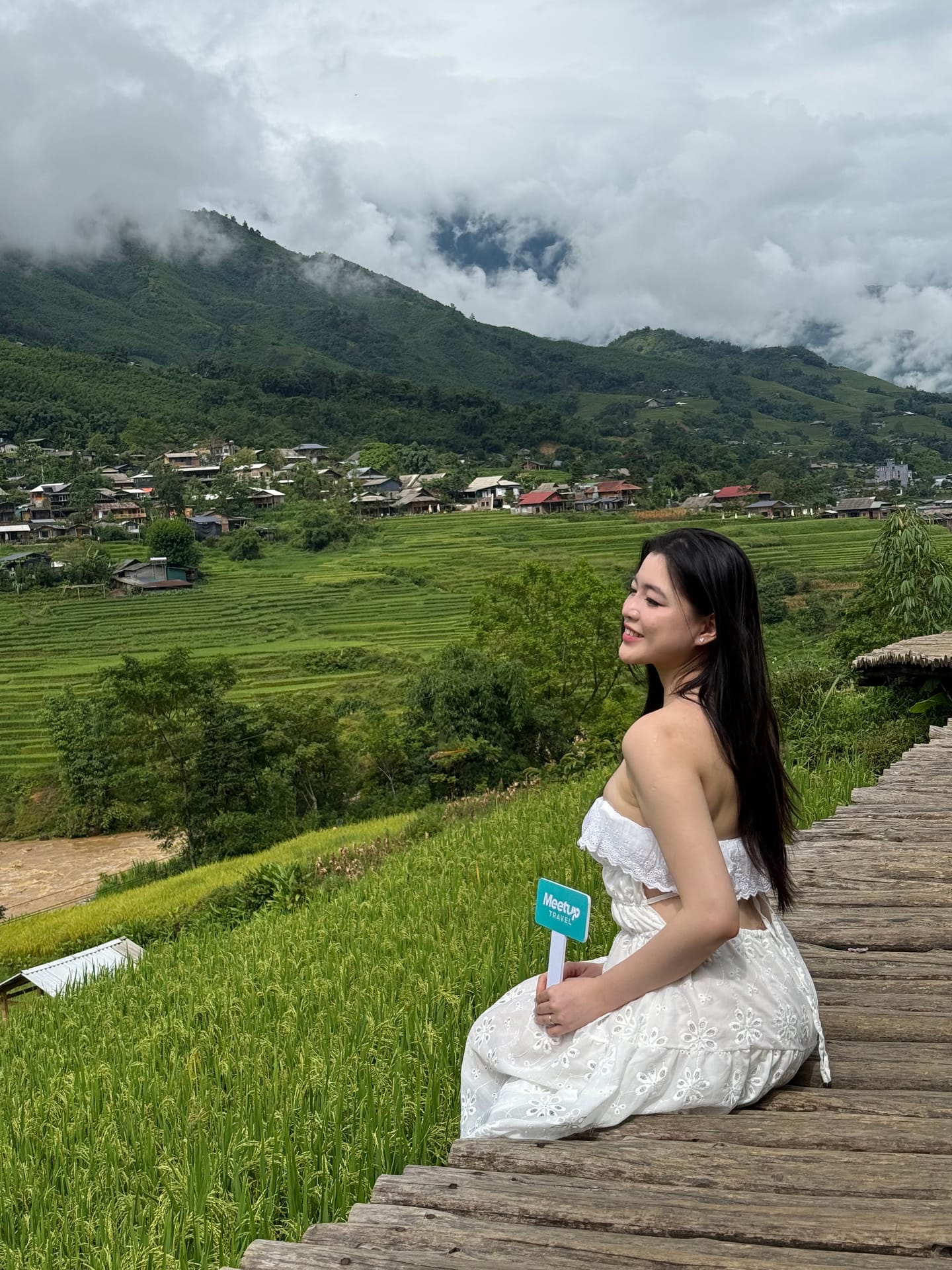
Bright green rice terraces in Sapa during summer
Autumn in Sapa (September to November)
Autumn is the postcard season. Mid to late September is when the terraces peak in gold, and October brings cooler, crisper air with more clear spells as the monsoon backs off.
What you see: golden rice ready for harvest from around late August in some valleys and mid to late September in most, farmers cutting and threshing into early October, then stubble fields and quiet villages through November
What to wear: layered long sleeves, fleece for evenings, light rain jacket just in case, comfortable trail shoes, sunglasses (altitude sun is fierce)
Typical weather: around 10-22°C, rain easing steadily through the season, fog dropping off, blue-sky mornings more common from October
Trekking difficulty: easy to moderate, trails drying out through the season and firmest in November
Festival / market timing: Muong Hoa Terrace Festival roughly in September, harvest activities in villages, weekly markets running
Verdict: ✅ the classic best-time-to-visit Sapa answer, book early because prices and crowds also peak
Winter in Sapa (December to February)
Winter is Sapa at its most cinematic and its most divisive. The town wears fog like a coat, tea shops fill up, and once every few years Fansipan gets a snow dusting that makes national news.
What you see: empty trails, mist-draped pines, brown terraces waiting for the next spring, warm lights in wooden homestays
What to wear: thermal base layer, insulated mid-layer, down jacket, waterproof shell, gloves, warm hat, wool socks; a hot-water bottle from your homestay is not optional in January
Typical weather: around 6-14°C on an average day, dropping to near or below 0°C in cold snaps, the lowest rainfall of the year but persistent mist, chance of frost, extremely rare snowfall on Fansipan and highest ridges
Trekking difficulty: moderate, cold rather than technical, visibility can be poor
Festival / market timing: Tet (Lunar New Year) usually in late January or February closes many services for 3-5 days, Gau Tao Hmong new year in the same window.
Verdict: ⚠️ magical for atmosphere seekers, wrong choice if you came for the terraces
When are the Sapa rice terraces green vs gold?
The Sapa rice terraces turn gold from around late August to late September, usually peaking mid-September, and they are green from June through August, with a magical water-mirror phase from around mid-May to mid-June. Most valleys around Sapa run a single annual harvest, so once fields are cut, they sit stubble-brown until the next spring flooding.
Month | Terrace state | Photo verdict |
|---|---|---|
January-February | Brown / dormant | Poor for terraces, good for atmosphere |
March | Preparing, first field work | Fair, patchy |
April | Preparing, early flooding in places | Fair, mirror effects starting |
May | Water-mirror from around mid-May | Excellent, especially late May |
June | Water-mirror into mid-June, then green shoots | Very good, weather-dependent |
July | Deep green, tall growth | Excellent green, rain interrupts |
August | Peak lush green, earliest valleys turning late month | Excellent green, rain interrupts |
September (early) | Green to gold, early harvest in some valleys | Very good, building to peak |
September (mid-late) | GOLD, main harvest window | Peak, the jackpot window |
October (early) | Cut and drying, patchy gold | Still good, mixed fields |
October (mid-late) | Mostly stubble | Fair, dry blue-sky compensation |
November-December | Stubble / dormant | Poor for terraces |
A note on double-harvest valleys: a few lower plots in Muong Hoa see a second, smaller cycle, but relying on this for photos is a gamble. If gold rice is the whole reason you booked the trip, message a local operator two weeks out for the current-year harvest read; the window shifts by a week or more between valleys and between years, depending on spring rainfall and altitude.
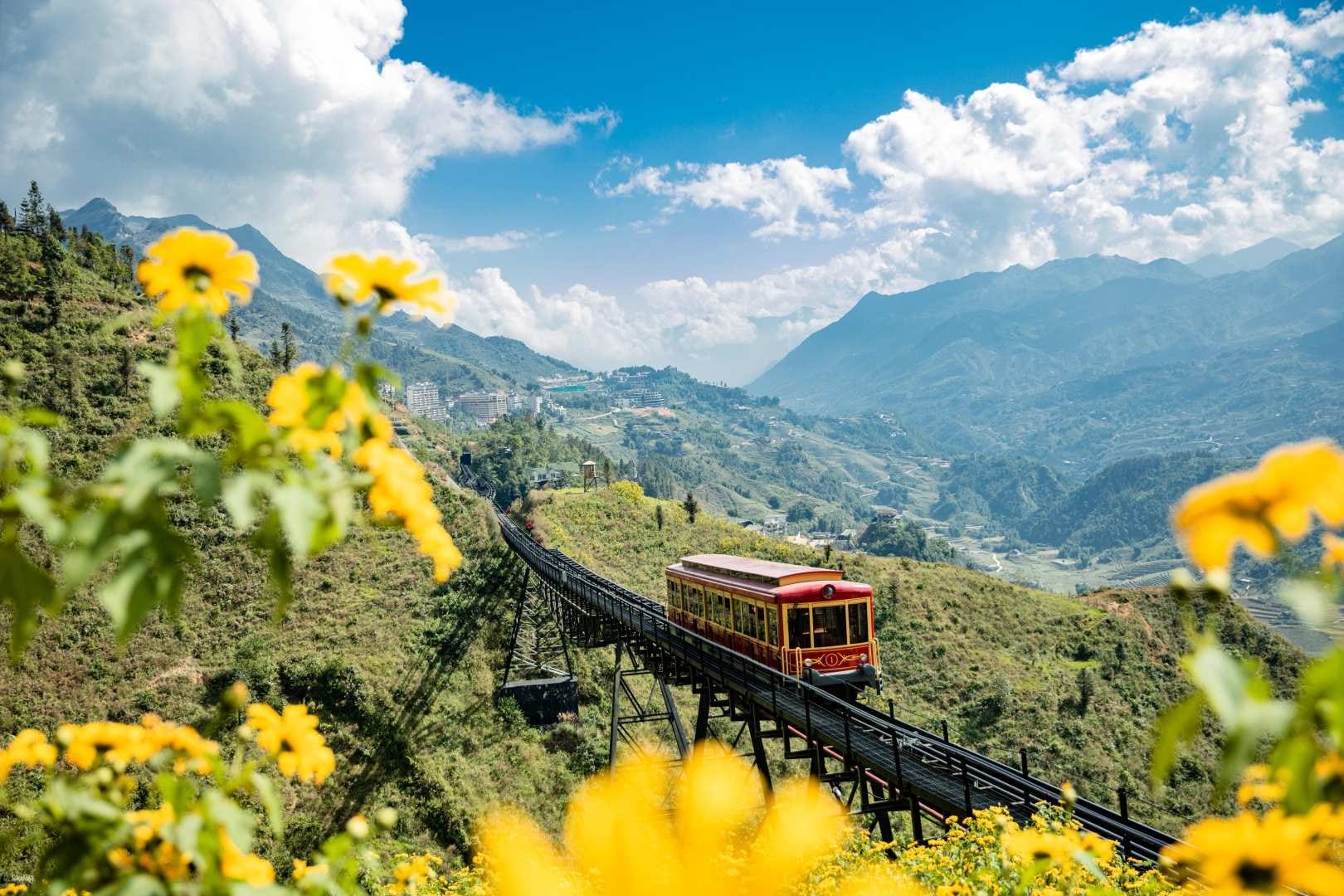
Sapa rice terraces turning from green to gold
Is Sapa worth visiting in winter?
Yes, if you want empty trails, dramatic fog, cheaper rooms, and the outside chance of the rare snow event that happens every few years; no, if you came for the terraces or long-range mountain views. Winter Sapa is a destination for atmosphere, not scenery.
Winter pros: - Trails nearly empty, homestays much quieter and more personal - Prices soften outside Tet week - Fog and pine forest photography opportunities you cannot get in summer - Fansipan cable car is often quieter (still verify daily fog cancellations) - Genuine chance of a snow event on the highest ridges (rare, do not plan around it; snow at Sapa town centre appears roughly every few years, more often as light frost on Fansipan summit).
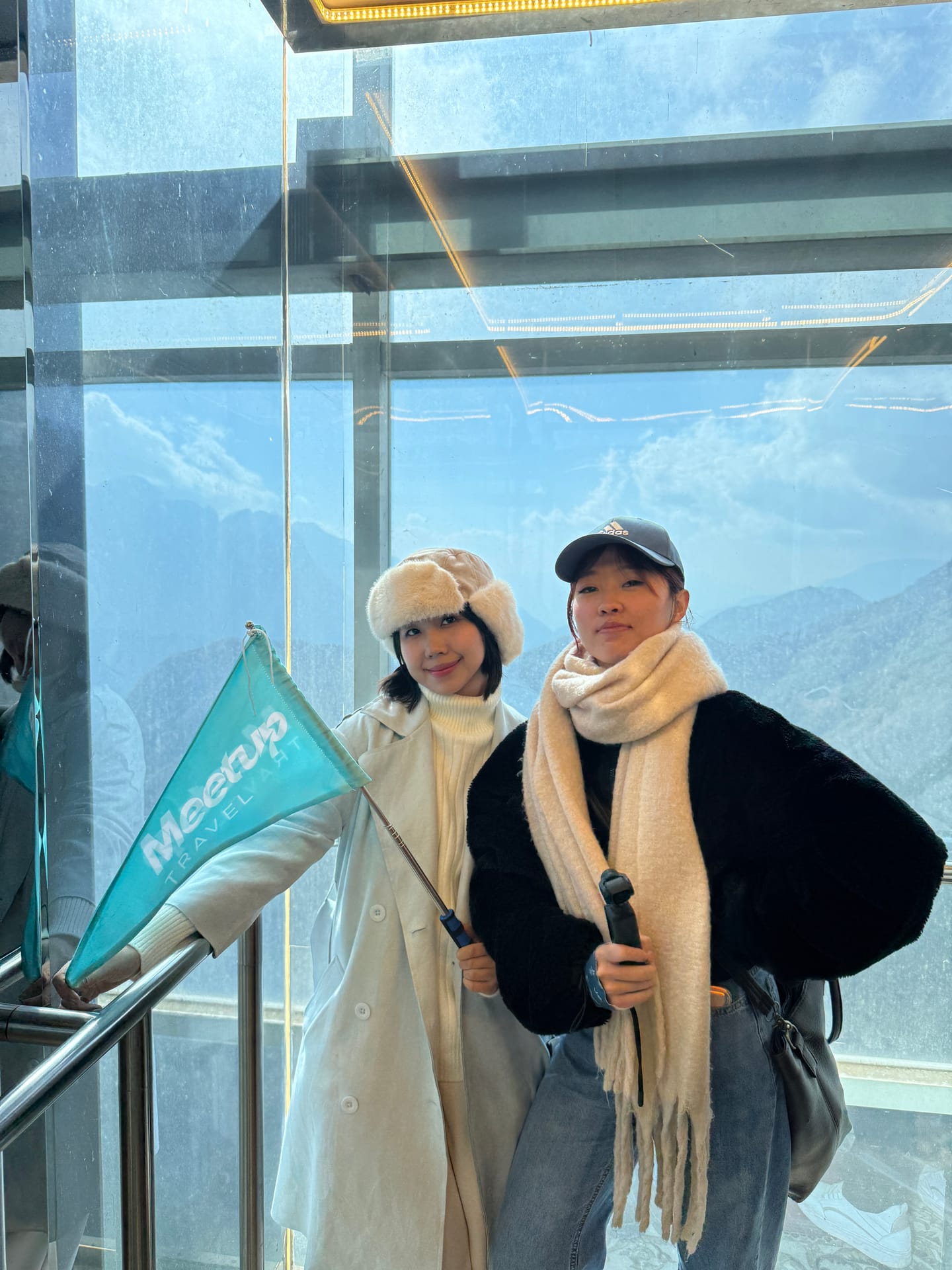
Cold winter fog over Sapa town
Winter cons: - Terraces are bare and brown, so classic Sapa photos are off the table - Near-freezing mornings in cold snaps, damp cold that goes through thin jackets - Tet closures usually run 3-5 days when many restaurants and small homestays shut - Some longer treks are cut short by poor visibility or slippery frost - Sunset views from Ham Rong or O Quy Ho pass are hit and miss.
Winter packing add-ons: - Real insulated jacket, not a "puffer style" thin one - Thermal base layer top and bottom - Waterproof outer shell (fog is basically drizzle) - Warm hat, gloves, wool or synthetic socks - Traction, at least sturdy grippy hiking shoes, in case of icy trail sections.
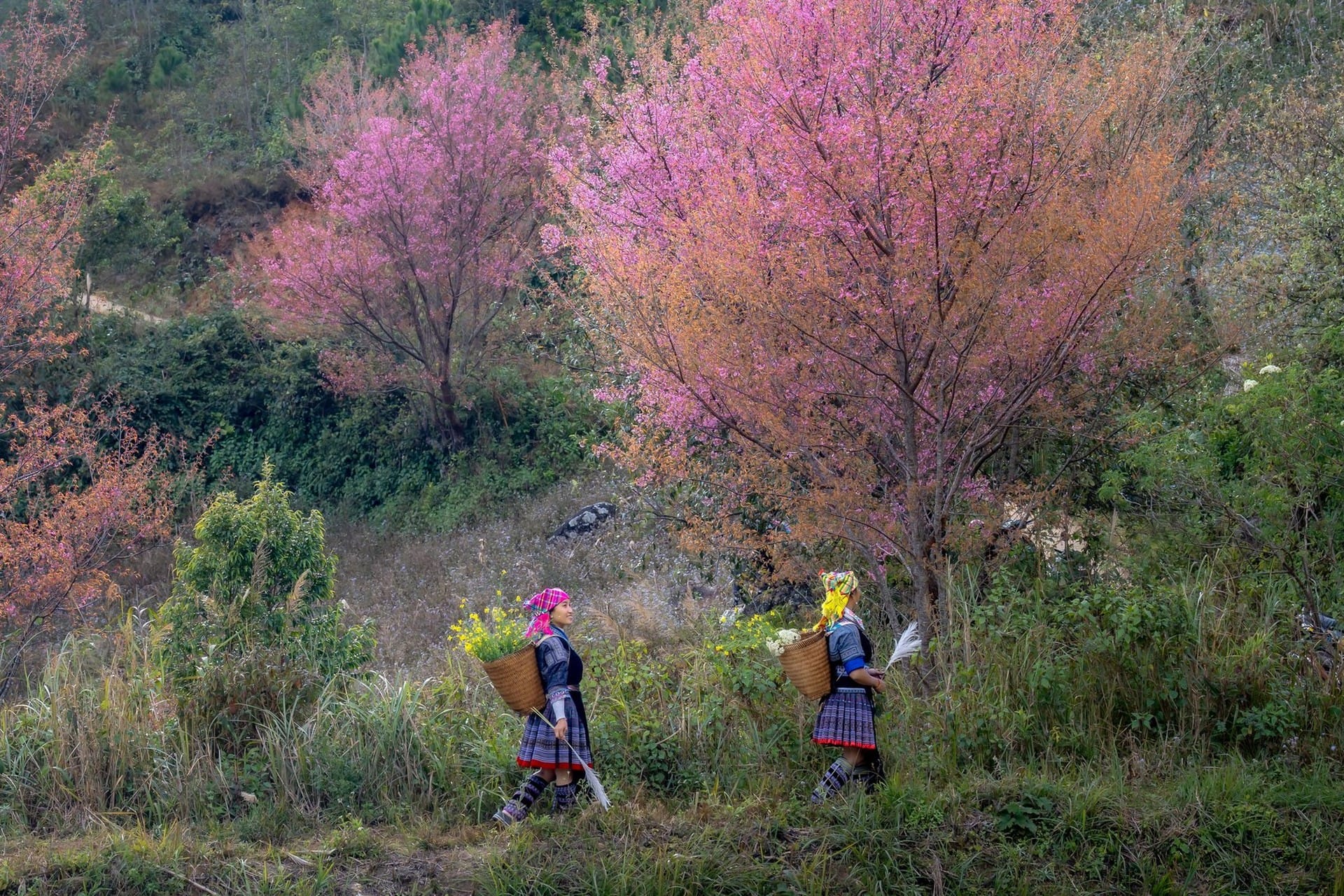
Hmong women walking under cherry blossoms in Northern Vietnam
What about the fog and cloud in Sapa?
Sapa is cloud-forest terrain, which means fog is a normal daily feature and often rolls in and out within an hour; even on a day that looks fully covered in fog, you typically get thirty-minute windows of clear light, especially just after sunrise and again in late afternoon. The trick is to plan around the fog rather than fight it.
Practical tips I give every guest:
Start hikes early. Between 6am and 9am often has the best light and the highest chance of a clear ridge window.
Be patient at viewpoints. Wait 20 minutes before writing off a view; the wind almost always shifts.
Prioritize valley walks (Muong Hoa, Cat Cat, Lao Chai) on low-visibility days; ridge lookouts and Fansipan cable car on clearer days.
Watch the wind direction. Wind pushing up-valley from the southeast usually clears mid-morning; still, damp air often stays.
Do not trust standard weather apps that pull data from lowland Lao Cai city. Use apps that let you set elevation and coordinates, or just ask your homestay host.
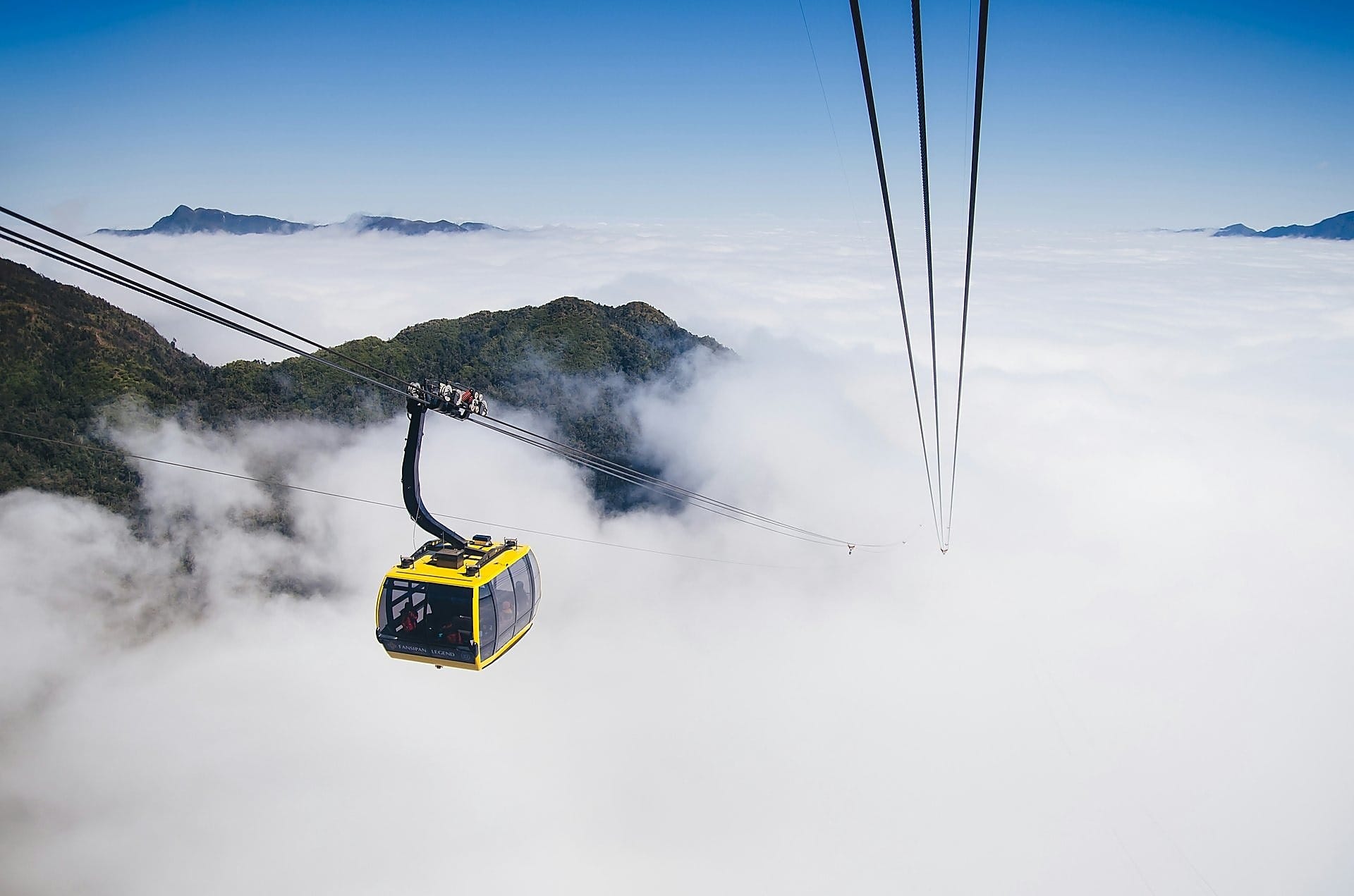
Cloud forest conditions on the trails above Sapa
Which festivals and markets time your trip well?
Weekly markets are the easiest wins, festivals are the less predictable extras. Both can shape when you actually book.
Event | When | What it is |
|---|---|---|
Love Market (Sapa town) | Saturday nights, year-round | Traditional courtship gathering, now touristy but atmospheric, best combined with a weekend homestay |
Bac Ha Market | Sunday mornings, every week | Largest and most colourful ethnic market in the region, around 3 hr from Sapa by road (~110 km) |
Can Cau Market | Saturday mornings, every week | Smaller, more local alternative near Bac Ha |
Muong Hoa Terrace Festival | Roughly September | Harvest celebration in the valley, food and cultural performance |
Gau Tao (Hmong new year) | January-February | Lunar-timed Hmong festival, sacred pole ceremony, community games |
Tet (Vietnamese Lunar New Year) | Late January or February each year | Nationwide, expect closures for 3-5 days |
Roong Pooc festival (Giay ethnic) | Lunar January | Fertility and harvest ritual in Giay villages |
If your only free Saturday is Bac Ha Sunday, restructure. Missing Bac Ha because you arrived Monday is the single most common regret I hear from guests.
What should I pack based on when I go?
Pack by season, not by month name, because Sapa's shoulder seasons blur across the calendar. This four-column table covers the four most useful profiles.
Season | Essentials | Do NOT forget | Skip |
|---|---|---|---|
Spring (Mar-May) | Layers, light waterproof, trail shoes, sunglasses, sunscreen SPF 50 | Buff for cool mornings, small daypack rain cover | Heavy down, snow gear |
Summer (Jun-Aug) | Quick-dry clothes, real waterproof jacket, grippy waterproof shoes, insect repellent, dry bag | Spare socks, poncho for camera, waterproof phone pouch | Cotton hoodies, suede shoes |
Autumn (Sep-Nov) | Layered long sleeves, fleece, trail shoes, sunglasses, camera plus extra battery | Light hat, small windbreaker for ridge tops | Umbrella (wind kills them) |
Winter (Dec-Feb) | Thermal base, mid-layer fleece, down jacket, waterproof shell, gloves, warm hat, thick socks | Hand warmers, thermos, moisturizer (air is dry-cold) | Shorts, flip flops for outside use |
Year-round non-negotiables: sunscreen (altitude UV hits harder than you expect, even in fog), a proper reusable water bottle, and cash in small VND notes for markets and village stops.
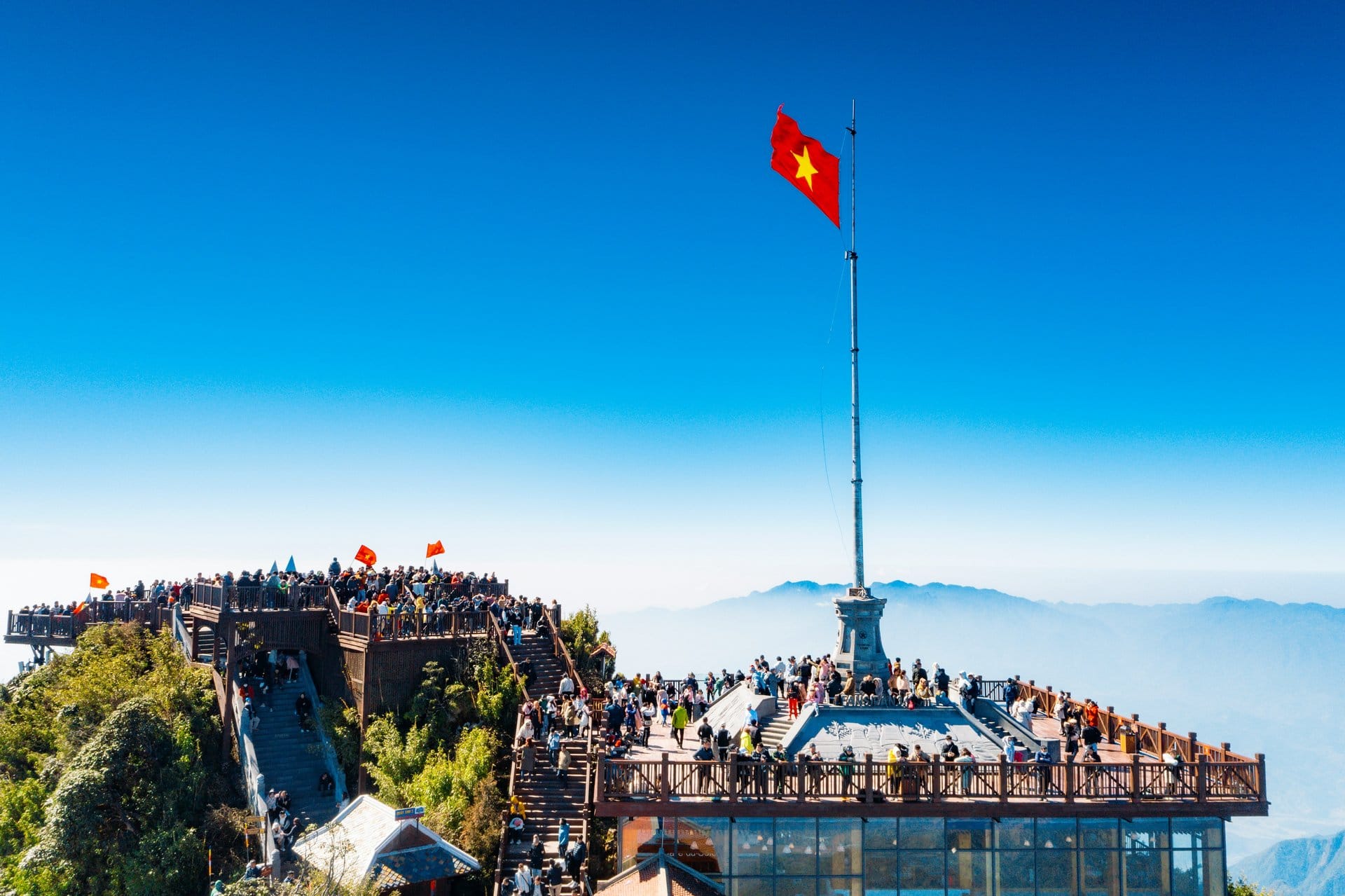
Travelers taking in panoramic mountain views from the
summit of Mount Fansipan
How do I get to Sapa and how long should I stay?
The two main options from Hanoi are the overnight sleeper train to Lao Cai station plus a 45-minute minibus up to Sapa, and the direct limousine van door-to-door in 5-6 hours; for most travelers 2 nights is the workable minimum and 3-4 nights is ideal.
Option | Time | Comfort | Notes |
|---|---|---|---|
Sleeper train (Hanoi to Lao Cai) | ~8 hr overnight + 45 min transfer | Good in soft sleeper | Saves a hotel night, atmospheric, book early for peak season |
Limousine van | 5-6 hr direct | Very good, reclining seats | Most popular now, expressway makes daytime travel practical |
Private car with driver | 5-6 hr direct | Excellent, flexible stops | Best if you want to break the drive or add Bac Ha |
Motorbike | 1-2 days | Adventurous | Only for experienced riders, mountain roads are serious |
Suggested trip lengths:
- 2 nights: one guided trek + one village or market, tight but workable
- 3 nights: one full-day trek + Fansipan cable car + a market day, the sweet spot for most first-timers
- 4-5 nights: add Bac Ha weekend, an overnight homestay in a quieter valley (Ta Van village or Ta Phin), and a slow day for Ham Rong / cafes / massage recovery
- 1 week+: combine Sapa with Bac Ha and, in the right season, extend to Ha Giang.
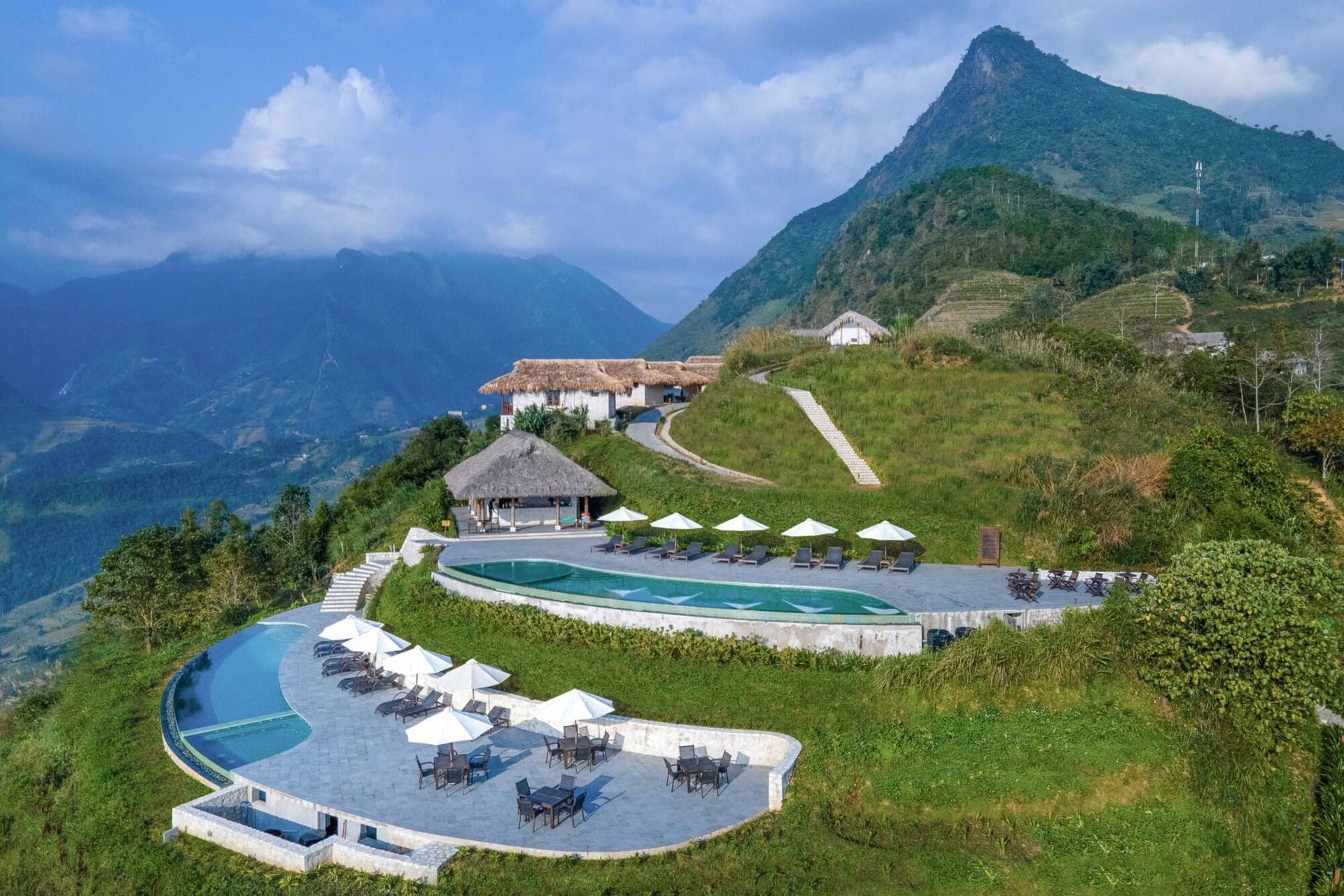
Infinity pools overlooking the mountains at Topas Ecolodge, Sa Pa
Sapa vs Ha Giang, which for my dates?
Sapa is easier to reach, softer to trek, and better set up for first-time travelers; Ha Giang is a remote motorbike-loop destination with fewer tourists, harder terrain, and a different mix of ethnic minority communities. One admin note before you search for it: Ha Giang is no longer a province of its own. It merged into Tuyen Quang province in the 2025 reorganisation, so maps and official sites now say Tuyen Quang, while everyone in travel still calls the region and the loop Ha Giang. If your window is September to October both work beautifully; if it is peak monsoon (July to August) Sapa is the safer pick because the Ha Giang loop can be dangerous in heavy rain.
Factor | Sapa | Ha Giang |
|---|---|---|
Access from Hanoi | 5-6 hr limousine or overnight train | 6-7 hr limousine to Ha Giang city (Tuyen Quang province), then loop by bike |
Trekking style | Village-to-village day hikes | Motorbike loop with hike stops |
Crowds | Moderate to high in peak | Low to moderate |
Main ethnic groups | Hmong (Black), Dao (Red), Giay, Tay, Xa Pho | Hmong (White, Flower), Lolo, Dao, Tay |
Best months | Mid Sep - early Oct, Mar - May | Late Sep - Nov, Mar - May |
Rainy season risk | Slippery trails | Landslides on the loop, more serious |
Winter mood | Fog, rare snow, quiet trails | Very cold, some passes get icy |
Ideal traveler | First-time in northern Vietnam, hiker, photographer | Repeat visitor, motorbike-comfortable, off-grid seeker |
For most people asking "Sapa or Ha Giang", the honest answer is "Sapa this trip, Ha Giang next trip".
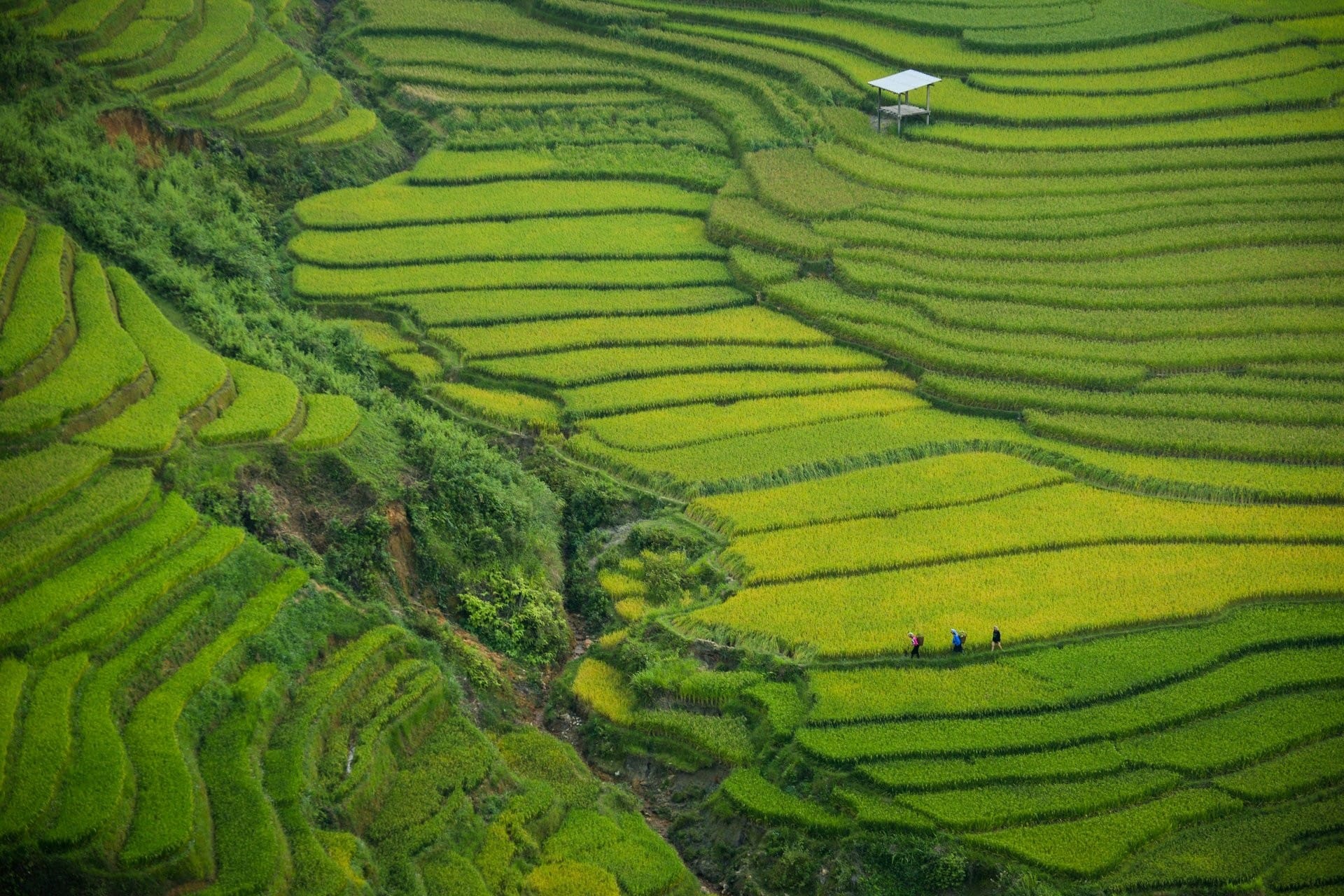
Trekking through the terraced rice fields in Northern Vietnam
Common mistakes and myths about timing Sapa
The direct answer to "what do people get wrong about Sapa timing" is: they treat it like a single-climate destination, and they trust weather apps built for the delta. Here are the six mistakes I see most often.
Assuming autumn = gold everywhere at once. Different valleys and altitudes harvest on different weeks, and the whole gold season stretches from around late August to late September. The famous Muong Hoa peak is a short window; higher valleys cut earlier, lower valleys later.
Believing winter guarantees snow. Snow at Sapa town centre appears roughly every few years, more often as light frost on Fansipan summit, and is never a certainty. Come for fog and quiet, treat snow as a bonus.
Over-relying on weather apps that lump Sapa in with lowland Lao Cai city. The valley city sits at about 100 m elevation, Sapa sits at around 1,500 to 1,600 m, and the two forecasts are effectively different countries.
Not accounting for weekend crowds in shoulder season. Vietnamese domestic tourists fill Sapa hard on Friday and Saturday nights. Sunday to Wednesday arrivals feel more like the Sapa in the photos.
Trying to see Bac Ha Market on the wrong day. It runs Sunday morning. If you arrive Sunday afternoon it is already packed up. Plan your Sapa arrival Friday or Saturday so Sunday morning is free.
Booking around Tet without knowing local closures. During Tet (late January or February each year), many restaurants and small homestays close for 3-5 days. Great for atmosphere, tough for logistics; check current-year Tet dates before booking.
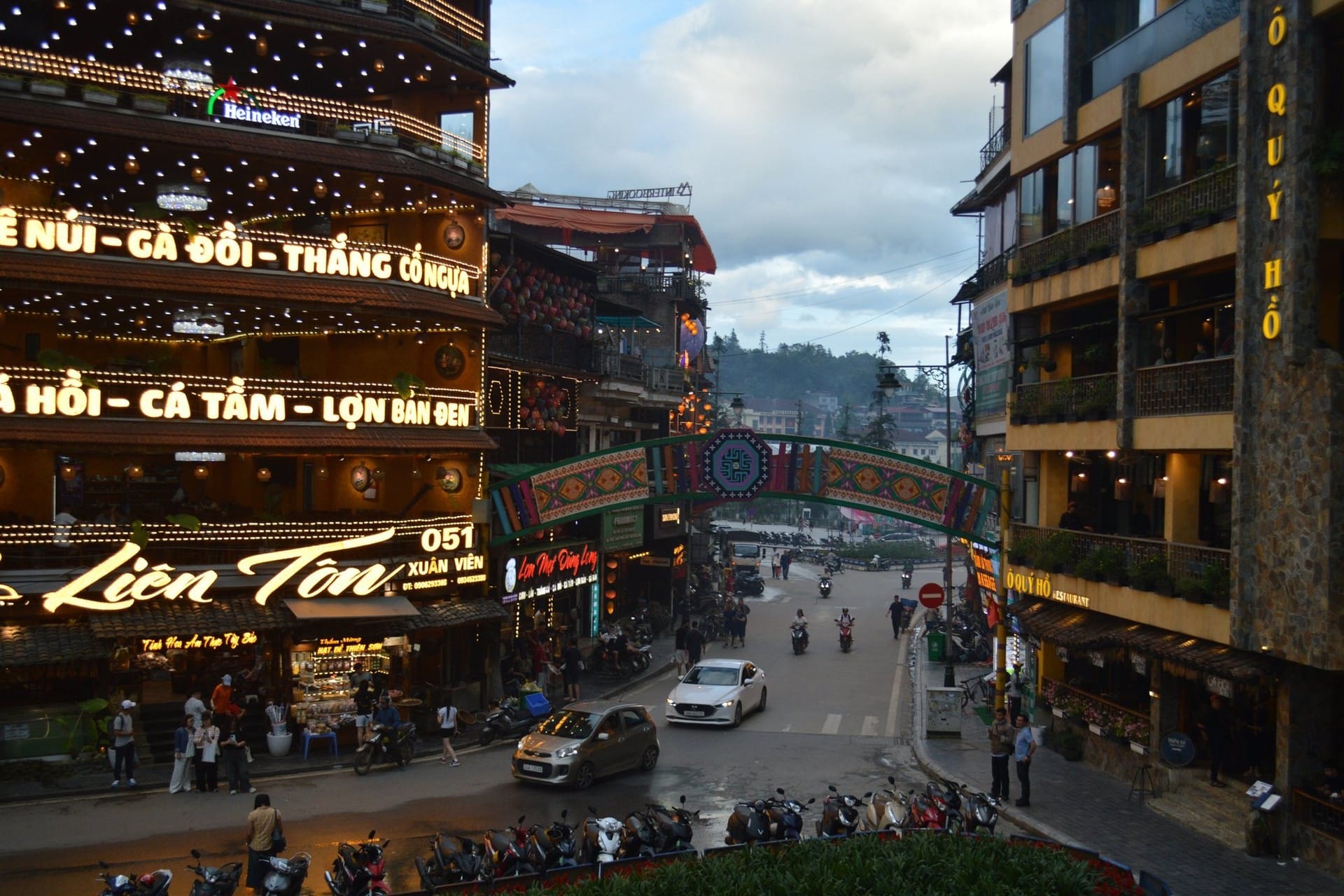
Sapa town centre during a quiet season
In short, a month-by-month verdict
Here is the whole year distilled into one table, with the traveler profile each month suits best.
Month | Landscape | Weather | Verdict | Best for |
|---|---|---|---|---|
January | Dormant, misty | Cold, dry, foggy | ⚠️ | Atmosphere seekers, budget travelers |
February | Dormant, misty | Cold, foggy, Tet closures | ⚠️ | Cultural festivals (Tet, Gau Tao) |
March | Waking, first field work | Mild, low rain | ✅ | Spring bloom, quieter shoulder trekking |
April | Terraces filling | Mild, rain building | ✅✅ | Hikers, photographers who hate crowds |
May | Water mirror from mid-month | Warming, wet | ✅✅ | Photographers, terrace reflections |
June | Deep green | Warm, wet | ✅ | Green-obsessed travelers, budget shoulder |
July | Peak green | Warm for Sapa, wettest month | ⚠️ | Rain-tolerant photographers only |
August | Peak green, first fields turning | Very wet, humid | ⚠️ | Same, plus lush waterfalls |
September (early) | Green to gold | Rain easing | ✅ | Early gold, fewer crowds |
September (mid-late) | GOLD harvest | Cooler, drier spells | ✅✅✅ | Everyone, especially photographers |
October | Cut fields, clearer spells | Cool, moderate rain | ✅✅ | First-time travelers, general audience |
November | Stubble | Cool, driest trekking | ✅ | Quiet trails, low prices |
December | Dormant | Cold, foggy | ⚠️ | Atmosphere, empty homestays |
The one-paragraph summary I would give a friend: if you can only travel in one two-week window all year, aim for mid to late September, book six to eight weeks out, and accept that gold-harvest week is when everyone else wants to come too. If you already know your dates and they are not September or April, the good news is Sapa has a defensible answer every month of the year; you just have to travel for the version of Sapa that month actually offers, not the postcard.
Plan your Sapa trip
Ready-made 2-night and 3-night Sapa itineraries with homestay, private guide, and transport included: Meetup Travel's Sapa tours. Prefer to build a private Sapa + Bac Ha or Sapa + Ha Giang combo? Ask us to design it around the terrace window, and we will time it to your dates instead of the other way around.