
Son Tra Peninsula Da Nang: The Forest at the City's Edge
The first time I drove up Son Tra Peninsula, I went directly to the Linh Ứng Pagoda without stopping once on the way. The road through the forest was something I passed through rather than something I visited. I arrived at the statue, took in the view, and left - in about an hour total. It took two more visits to understand I had the logic exactly backwards.
The statue at the top is visible from the Da Nang coastline. It is a landmark and a navigational reference for fishing boats. It is not the reason to come. The forest that the summit road passes through for 10 kilometres is the reason to come. The road is the destination, not the endpoint.
Forest road along Son Tra Peninsula above Da Nang
Son Tra Peninsula rises to 696 metres from the East Sea, also known internationally as the South China Sea, 4 kilometres northeast of Da Nang's city centre. The peninsula covers ~4,400 hectares. It was placed under restricted-forest protection in 1977 by Decision 41-TTg, formally recognised as a nature reserve in 1992, and had ~1,056 hectares rezoned for tourism development in 2016. What protection remains still covers a forest that has no equivalent in this proximity to a Vietnamese city. The density of the canopy, the species diversity transitioning from coastal scrub at the water level to mature forest at the ridgeline, and the wildlife the intact habitat supports are specific to this place in a way that few urban-adjacent sites in Southeast Asia can match.
Ideal Time | Estimated Cost | Getting There |
|---|---|---|
6–8am (langur sightings) or before 9am (pagoda before crowds) | Free road access; free entry and parking at Linh Ứng | Pagoda ~10km from the city centre along Hoàng Sa Street - motorbike recommended for forest stops |
What is the best thing to do on Son Tra Peninsula?
The best thing to do on Son Tra is drive the forest road between 6am and 8am for red-shanked douc langur sightings, then visit Linh Ứng Pagoda before the tour buses arrive. The statue at the top is the landmark. The 10-kilometre road through the forest is the actual experience.
The 6am–8am wildlife window
The red-shanked douc langur (voọc chà vá chân đỏ) is most active in the early morning and late afternoon. Son Tra holds one of the world's most significant remaining populations of this species and is one of the very few places it can be reliably observed in a semi-urban context. The colour pattern is specific: grey torso, white forearms, chestnut-orange lower legs, pale face with a white beard. A family group moving through the canopy at 6am is not a replaceable experience.
The forested section of the summit road, between approximately kilometre 3 (past the Linh Ứng Pagoda turnoff) and kilometre 7 (before the military exclusion zone), is where sightings are most consistent. The technique that works: stop the motorbike at a forest edge section, turn off the engine, and wait 10–15 minutes in quiet. Langurs move in family groups of 8–15 individuals, and the motion of a group crossing from one canopy tree to another is visible from 40–50 metres before the animals themselves are identifiable. Slow driving produces fewer sightings than patient waiting.
The macaques - smaller, less striking than the doucs - are visible at roadsides throughout the peninsula. They are fully habituated to motorbikes. Feeding them is prohibited within the reserve and counterproductive to the langur population's habituation to humans.
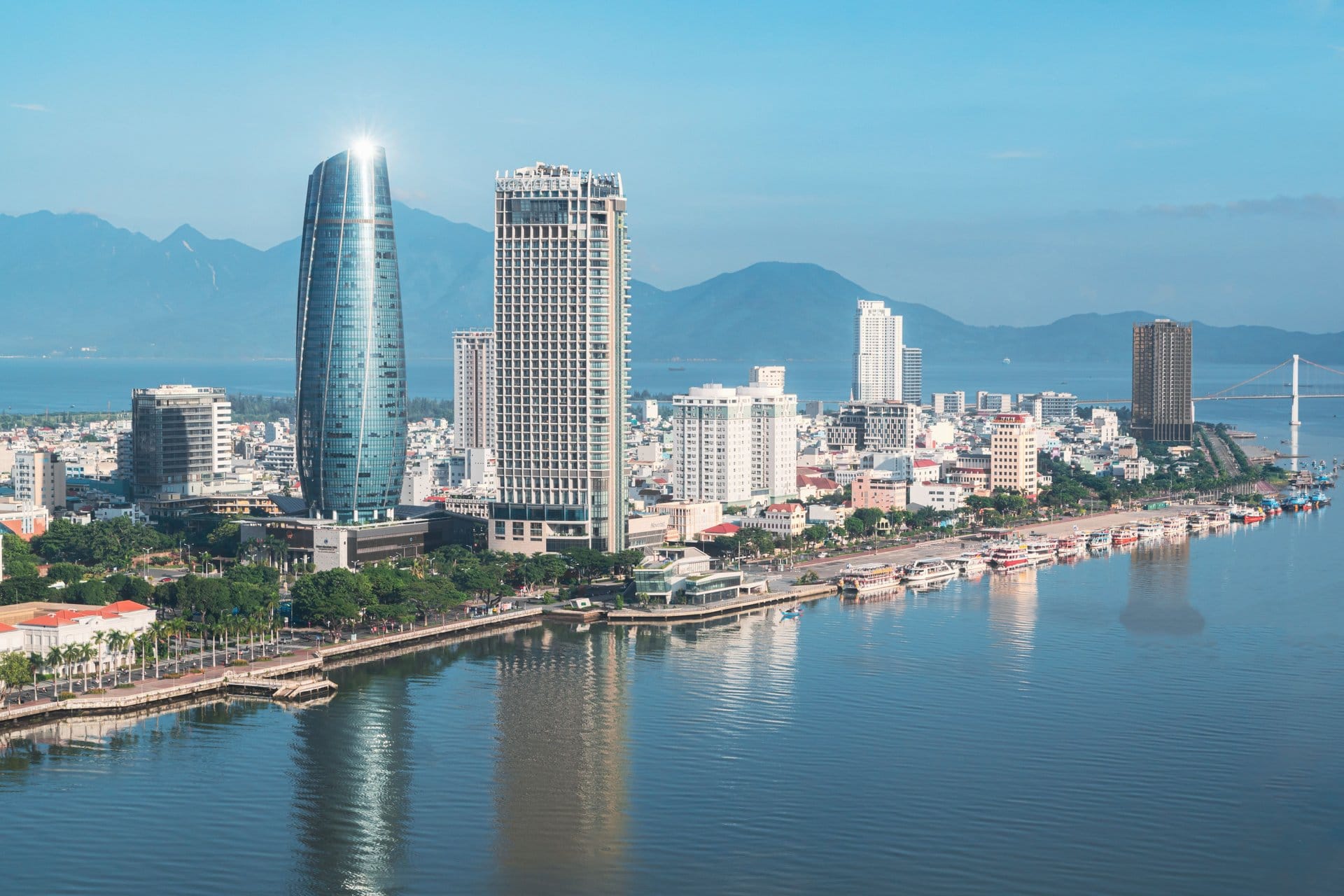
Da Nang cityscape viewed from Son Tra Peninsula
What the forest canopy actually looks like
Son Tra's forest is unusual in the Vietnamese coastal context because it is genuinely multi-layered - emergent trees reaching 25–30 metres, a dense sub-canopy at 15–18 metres, and an understory that includes medicinal plants and orchid species absent from secondary-growth forests of comparable age elsewhere in central Vietnam.
The tree species include dipterocarps - the tall, straight-trunked family that defines Southeast Asian primary rainforest structure - and fig varieties whose fruiting cycles sustain much of the langur population. These figs are visible along the forest road sections as large trees with aerial roots; the langurs feed heavily on their fruit during peak fruiting periods.
This is a forest that rewards a slow pace. Driving the 10km to the summit without stopping produces a scenic road. Stopping every kilometre and spending time at the forest edge produces encounters with the living system the road passes through.
What makes Linh Ứng Pagoda worth visiting on Son Tra?
The pagoda terrace, not the 67-metre Lady Buddha statue, is what makes Linh Ứng worth the trip. From the terrace you see the full arc of Đà Nẵng Bay in a single view, and if you arrive before 9am you get it without the tour-bus density that fills the site by mid-morning.
The Linh Ứng Pagoda complex at the base of Son Tra's summit road is an active Buddhist temple, not a tourist attraction appended to a viewpoint. The Lady Buddha statue - 67 metres tall, facing seaward - occupies a traditional guardian position for a coastal community's relationship with the sea. Understanding its function changes how you read the site.
The statue's interior contains multiple floors of worship space, though these are not publicly accessible. The base complex includes lotus pools, ornamental gardens, and subsidiary halls used by practitioners rather than by tour groups.
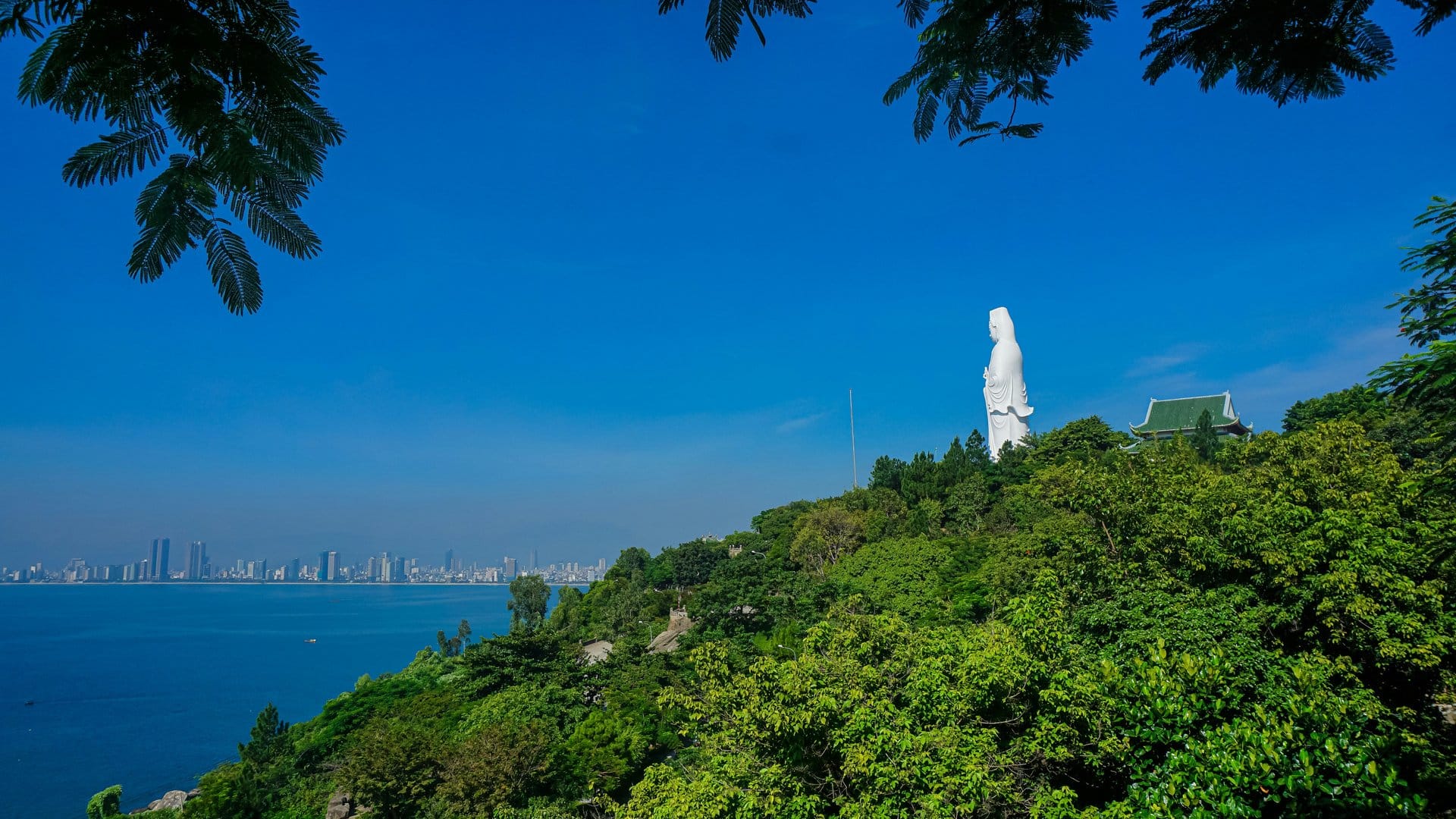
Lady Buddha statue at Linh Ung Pagoda on Son Tra
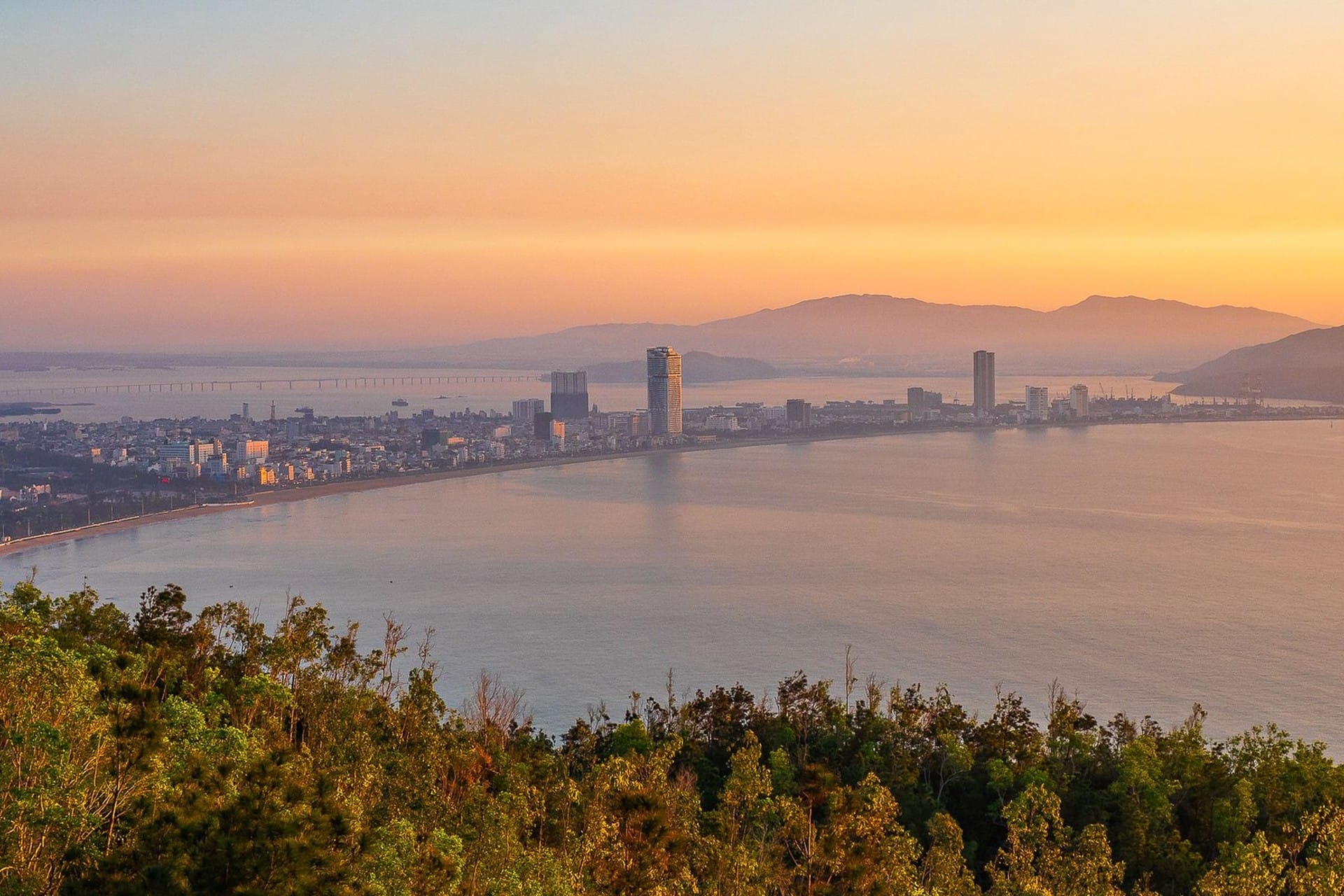
What the Linh Ứng site provides that is not replicable elsewhere in Da Nang: the pagoda terrace looks southwest across the full arc of Đà Nẵng Bay - the city, My Khe Beach running south, the five limestone peaks of the Marble Mountains rising from the flat coastal plain at the midpoint of the view, and the Hải Vân Pass ridge at the northern horizon. The scale of Da Nang's coastal geography becomes readable from this position in a way that no map communicates.
The pagoda opens at 6am, and both entry and parking are free. Arriving before 9am means access to the terrace without the tour group density that accumulates from mid-morning. On weekends during the dry season (February–August), the car park is full by 9:30am.
Which beaches are on Son Tra Peninsula?
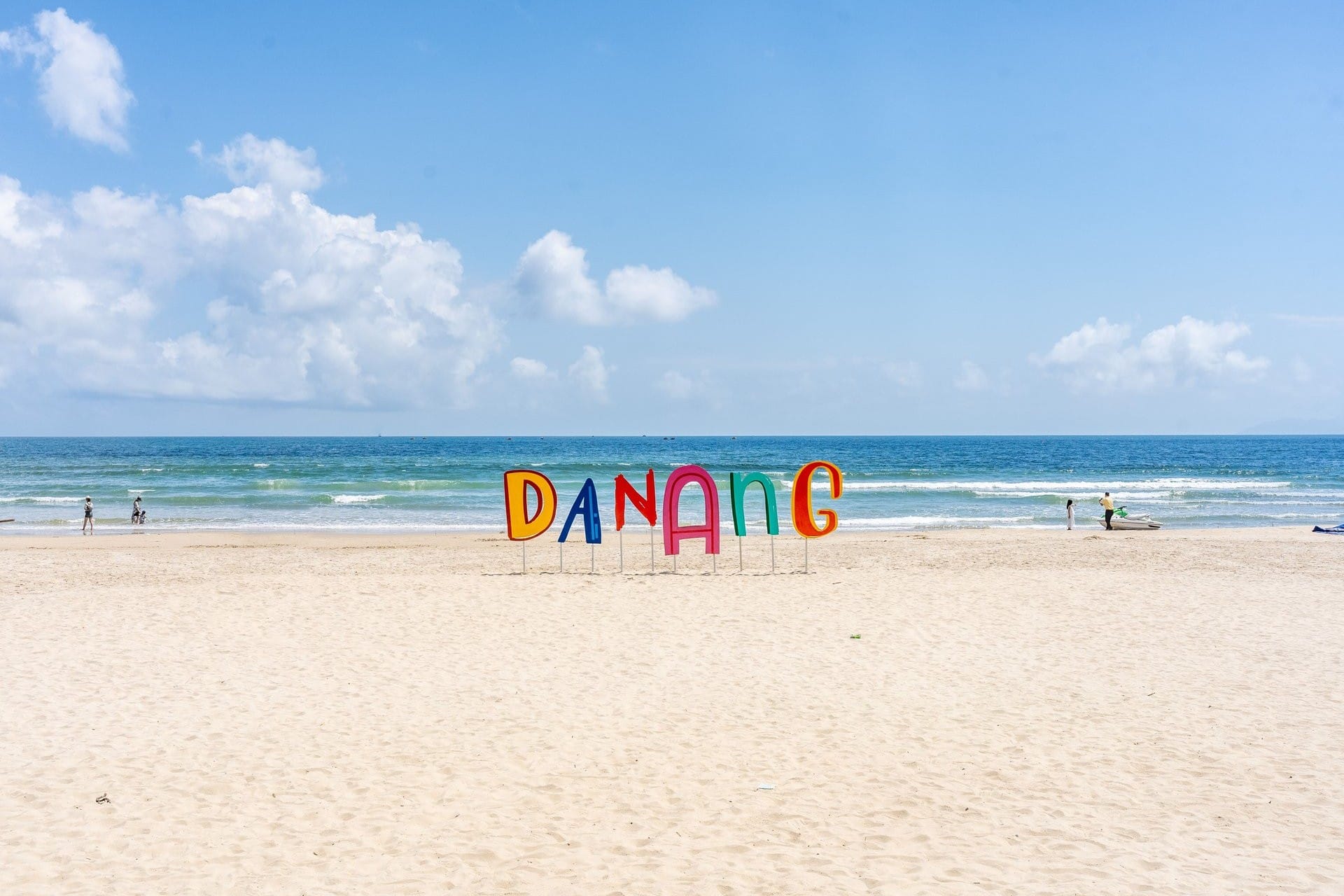
Son Tra Peninsula has two accessible cove beaches, Bãi Bụt and Bãi Nam, both on the southern face. Bãi Bụt is the cove below Linh Ứng Pagoda, so most visitors stand above it without registering that it has a name. Neither has resort development, and both are more useful as scenic stops on the summit drive than as swimming destinations. For an actual beach day in Da Nang, head to My Khe at the peninsula's southwestern base.
Beyond these two, the peninsula's eastern face has several small beaches that are not part of the Da Nang tourist circuit.
Bãi Bụt (south-facing): The cove that the Linh Ứng Pagoda complex sits above, about 10km from the city centre along Hoàng Sa Street. Rocky-to-sandy transition, calm water protected by the peninsula's geography. Because it shares its access road with the pagoda, this is the busiest part of the peninsula's coast from mid-morning onward.
Bãi Nam (south-facing): Further along the same southern side, past the pagoda, with a wider sandy section and far fewer visitors. No facilities, and the approach road is narrow.
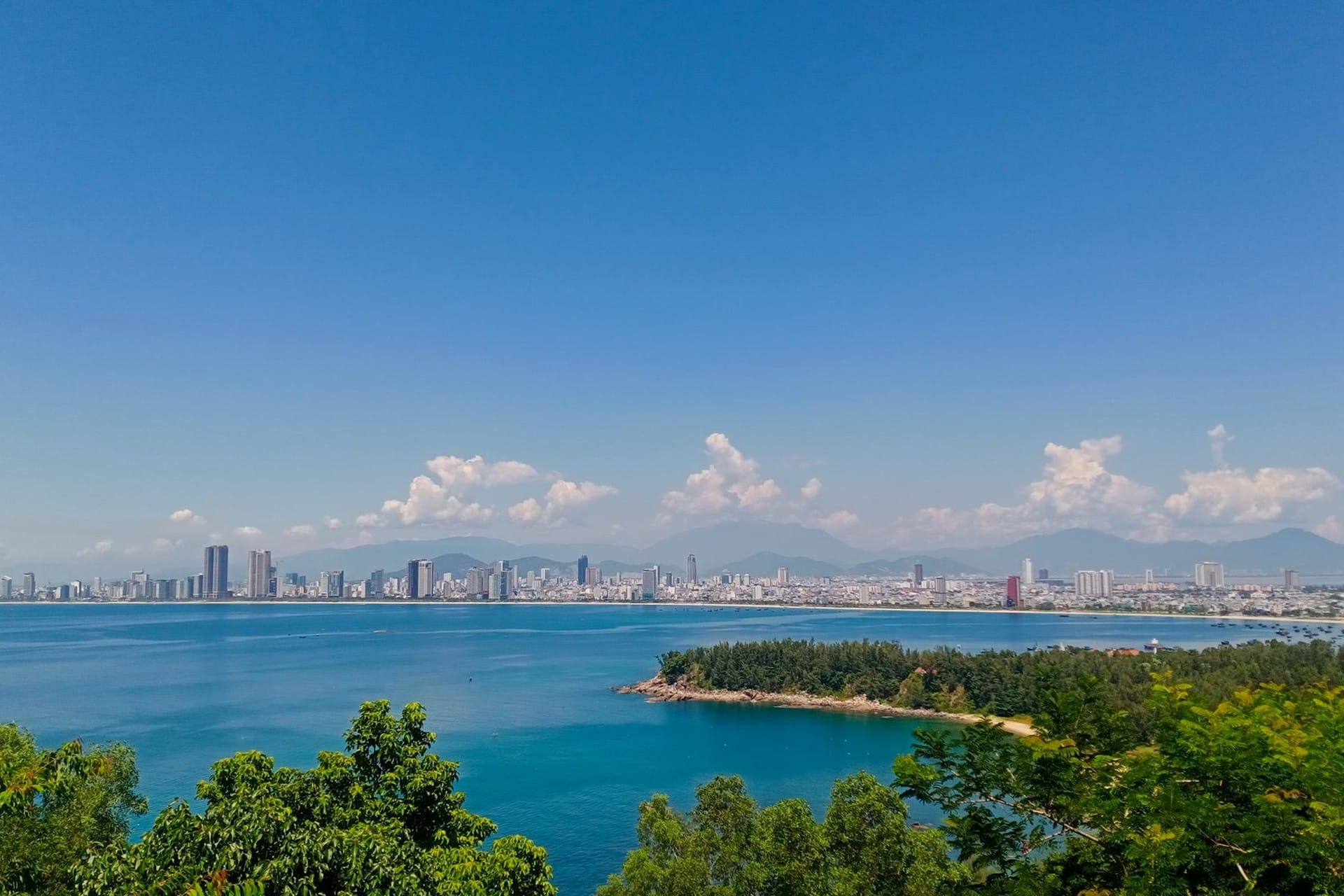
Bai Nam beach on the southern side of Son Tra Peninsula
These are not destinations in themselves. They are stops for people who want to understand the peninsula's full geography rather than only its summit. The primary beach experience in Da Nang belongs to My Khe - 9km of accessible, lifeguarded shoreline beginning at the southwestern base of Son Tra and running south toward Non Nuoc. The sunrise from My Khe is visible along the full beach length as the sun clears the Son Tra ridge, which is directly behind the northern section.
Where should I stay if I want a Son Tra Peninsula resort experience?
The InterContinental Danang Sun Peninsula Resort at Bãi Bắc is the peninsula's flagship stay. It sits directly inside the nature reserve on the north face, with private villas terraced down the hillside toward a secluded beach cove, and a funicular that runs between the ridgeline restaurants and the sea level. The resort is designed by Bill Bensley, and the property itself is part of what many guests fly in to experience.
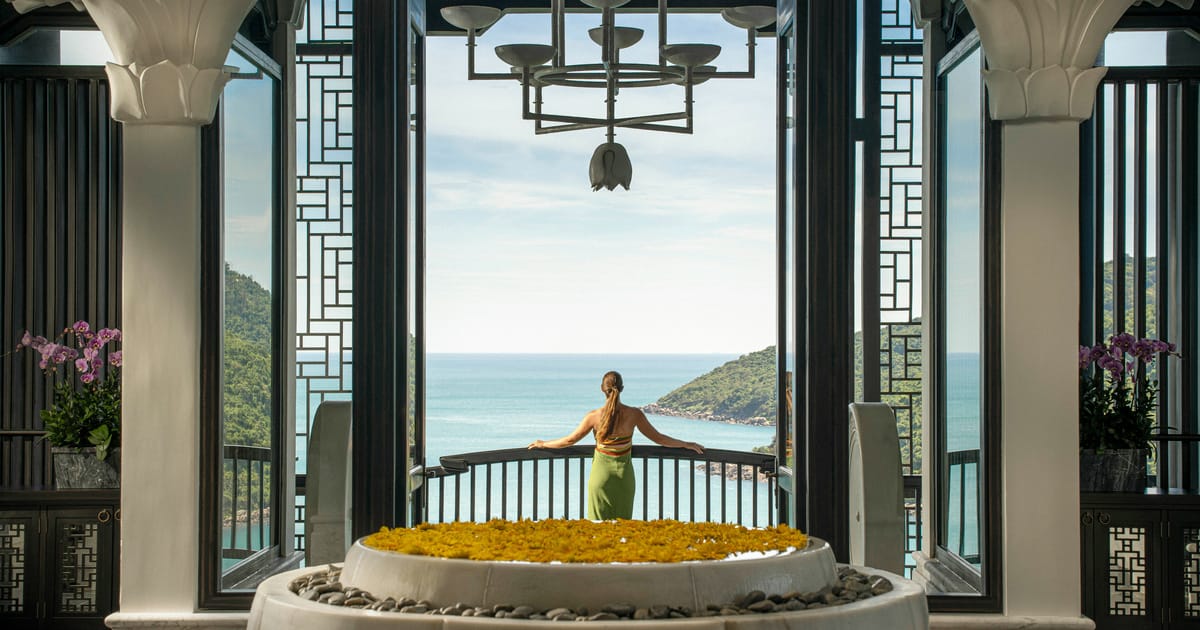
InterContinental resort at Bai Bac on Son Tra Peninsula
What makes Son Tra work as a resort base rather than a city stay:
You wake up inside the forest, langur calls audible from the villa balconies at dawn
Private cove access means the beach stays quiet all day, no vendors, no crowd rotation
The drive to My Khe or Da Nang city centre is 20 to 30 minutes when you want it, but the peninsula is self-contained enough that most guests do not leave for two or three days
The view from the higher villas covers the full Đà Nẵng Bay arc, the same view as the Linh Ứng terrace but private
This is a slower, quieter side of Da Nang than the beach-strip hotels along Võ Nguyên Giáp Street. It suits honeymoons, family retreats, and travelers who want the peninsula's nature as a lived-in setting rather than a morning excursion. If you would like to build your Da Nang trip around this stay, Meetup Travel handles the booking on request and coordinates transfers, restaurant reservations, and the excursion planning around it.
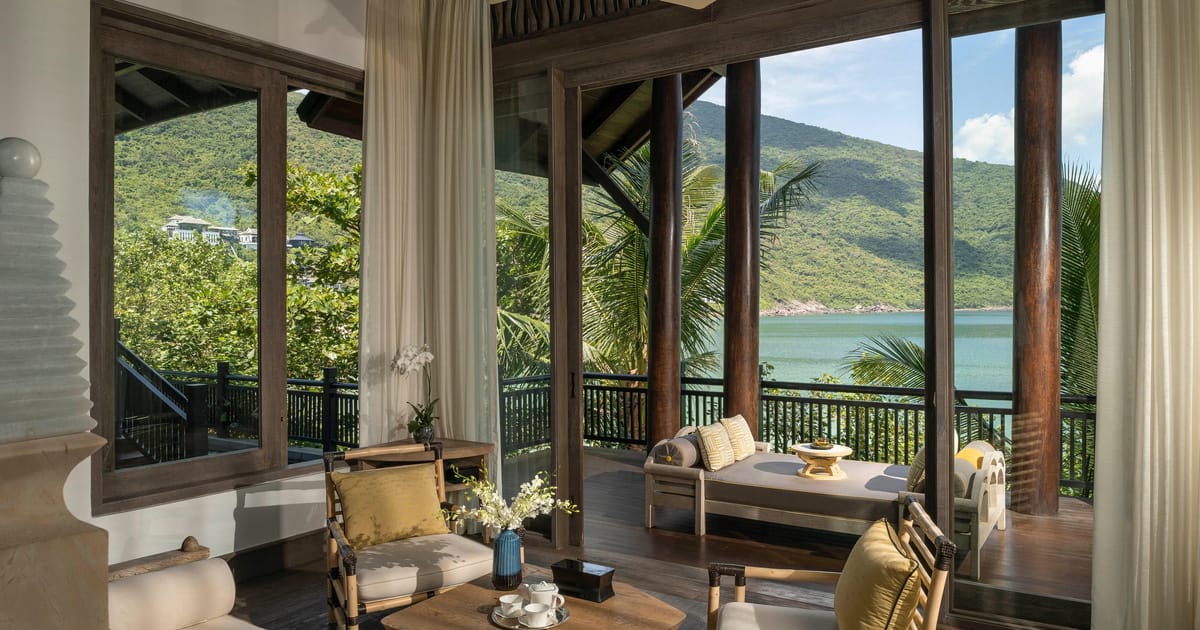
Ridgeline resort view over the bay at Son Tra
What is the best 3-day Da Nang itinerary from the InterContinental Son Tra?
The strongest 3-day plan from an InterCon base uses Day 1 for the peninsula's forest and pagoda, Day 2 for the private cove and resort facilities, and Day 3 for a Bà Nà Hills excursion. This sequence keeps most days close to the resort, uses one day for a genuine off-property adventure, and never asks you to check out early or handle a long transfer at the wrong moment. For more ideas across the city, see our guide to things to do in Da Nang.
Day 1: Son Tra Peninsula exploration morning
The exploration day, all inside the peninsula and short drives from the resort.
6:00am: Private car or resort transfer up the summit road. From Bãi Bắc it is only 10 to 15 minutes to reach the km 3 to km 7 forest section where the douc langur sightings happen. Plan on 90 minutes of slow driving with several stops.
7:30am: Linh Ứng Pagoda. Thirty to forty-five minutes for the terrace view before tour buses arrive. The light on Đà Nẵng Bay at this hour, particularly in the dry season (February to August), hits the water surface at a low angle that disappears entirely by 9am.
9:00am: Descend to the resort. Optional stop at Bãi Nam on the way if the cove appeals. Back at the property by 9:30am for a proper breakfast on the terrace.
Late morning onward: Pool, spa, or a slow walk along the resort's forest paths. The dry-season afternoons on Bãi Bắc are strong sun; most guests time their beach hours for the last two hours before sunset.
Sunset: From the ridgeline restaurants or the villa balcony. The west-facing view catches the sun going down over the bay.
Sunset over the bay from the Son Tra ridgeline
Day 2: Resort beach and rest day
The recovery day. The reason to book Bãi Bắc in the first place.
Morning: Slow start. Breakfast on the terrace, then down to the private cove by funicular. The beach is calm-water, protected by the peninsula's geography, no waves comparable to My Khe. Good for swimming, not for surf.
Midday: Beachside lunch at the resort. Water sports (kayak, paddleboard, snorkel) are available on request.
Afternoon: Spa, or a quiet walk on the coastal forest trails. Guests who want a change of pace can arrange a short trip into Da Nang city, roughly 30 minutes each way, for a coffee in the An Thượng district or a walk over the Dragon Bridge.
Evening: Dinner at one of the resort's dining outlets, or return from a city dinner by 10pm.
Private cove beach day on Son Tra Peninsula
Day 3: Bà Nà Hills excursion
The set-piece day. This is the longer transfer of the trip, so plan the early start.
7:00am: Depart the resort. Allow 60 to 75 minutes to reach the Bà Nà Hills cable car station, roughly 45km via the coastal road and city bypass.
8:30am: Cable car up. The ride is 20 minutes and covers a vertical rise of over 1,000 metres.
10:30am to 11:00am: Golden Bridge photo window is best before the noon crowd wave. French Village and Fantasy Park sit at the summit for the middle of the day.
Midday: Lunch at the summit, French Village has several options across price levels.
3:00pm: Descend to avoid the tour-group return wave. Back at the InterCon by 4:30pm to 5pm, in time for a swim before dinner.
If you are staying in Da Nang city rather than at the InterCon: the same three days work with two tweaks. Add a 20 to 25-minute transfer from the city to the Son Tra road entrance on Hoàng Sa Street on Day 1, and swap Day 2's private cove for My Khe Beach and a walk around the Marble Mountains caves.

Ba Na Hills excursion from Da Nang
Frequently Asked Questions
Why is Son Tra Peninsula called Monkey Mountain? Son Tra is colloquially called Monkey Mountain because of the populations of red-shanked douc langurs (voọc chà vá chân đỏ) and macaques living in its forests. The douc langur, identified by its grey torso, white forearms, chestnut-orange lower legs, and white beard, has one of the world's most significant remaining populations here. Sightings require early morning visits to the forested road sections between approximately kilometre 3 and kilometre 7 on the summit route.
How do you get to Son Tra Peninsula from Da Nang? The peninsula begins 4–6km northeast of Da Nang city centre, and Linh Ứng Pagoda is about 10km out along Hoàng Sa Street. A rented motorbike gives full flexibility to stop at the forest sections where wildlife sightings occur - the critical advantage over Grab or taxi. A Grab car or taxi to the pagoda costs approximately 150,000–200,000 VND one way, but limits your ability to stop on the forested road sections en route. No entrance fee applies to the road access, and entry and parking at Linh Ứng are free.
What beaches are on Son Tra Peninsula? Bãi Bụt (south-facing, the cove below Linh Ứng Pagoda) and Bãi Nam (south-facing, wider sand, much quieter) are the two most accessible. These are local beaches without resort development - stops for geography, not primary beach destinations. Da Nang's primary beach is My Khe, which begins at the southwestern base of Son Tra.
What time is best for seeing the red-shanked douc langurs? 6am to 8am, in the forested sections between kilometre 3 and kilometre 7 on the summit road. Late afternoon (4pm–6pm) is the second active period. Midday is the least productive. Stop the motorbike, turn off the engine, and wait 10–15 minutes in quiet - the group's canopy movement is visible before the animals are identifiable.
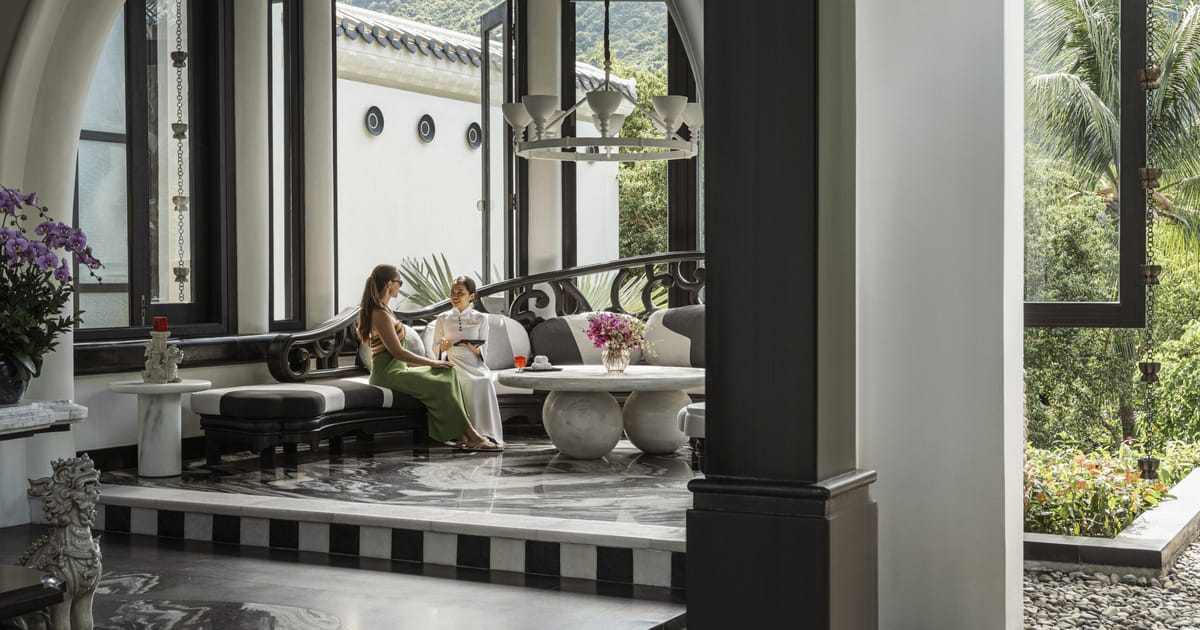
Enjoying afternoon tea amidst the tropical landscape of Son Tra Peninsula.
Practical Summary - The forest road between km 3 and km 7 is the destination; the pagoda and summit are endpoints of the drive, not the reason for it. - 6am to 8am is the window for red-shanked douc langur sightings, one of the world's most significant remaining populations of the species. - Linh Ứng Pagoda opens at 6am with free entry and parking; the terrace view and the car park both fill between 9am and 10am.
Son Tra is the only place in Vietnam where a forest of this quality begins 4 kilometres from a city centre. The road through it is available every morning. Come before 8am. Turn off the engine at the forest sections. Wait.
Written by Hynnee, a Vietnamese local born and raised in central Vietnam, and part of the Meetup Travel expert team. Hynnee covers the outdoor and nature side of Vietnam travel, from forest reserves and coastal drives to the mountain routes travelers actually come here for. Last updated: August 2026.