
My Khe Beach Da Nang: A Realistic 2026 Guide
In 2005, Forbes called My Khe one of the six most attractive beaches in the world. You will see this line in almost every article about Da Nang, so let us deal with it first, then move on. That beach now has a wide seaside road, a long row of resort hotels, and all the services of a big tourist spot. Many visitors come expecting the old photo from the Forbes list, and then feel let down. But the beach is not the problem.
Here is what My Khe really is in 2026: a long, clean, easy-to-reach city beach. It has lifeguards, good swimming for most of the year, and busy times that change through the day. So the time you visit matters more than the hotel you choose. Come before 8am and it feels like a different beach: the same sand, far fewer people, and a soft light you will not get at noon.
Ideal Time | Estimated Cost | Getting There |
|---|---|---|
6–8am (locals) or after 5pm (light and cooler air) | Free to enter; a lounger and umbrella are free if you buy a drink at a beach café | 4km east of Da Nang centre. Grab 10 min; bicycle 20–25 min on a flat coast road |
The Beach in Sections: What's Where Along 9km
My Khe runs about 9 kilometres, from the foot of Son Tra Peninsula in the north to the Non Nuoc area in the south, next to the Marble Mountains. All of it is public. The feel changes across three parts.
Northern Section (Near Son Tra Peninsula)
The north, near Son Tra, is the least built-up. There are fewer hotels behind the beach, fewer stalls on the sand, and the shore is wider in some parts. The waves are a bit stronger than in the middle, so it is less good for small children but more fun if you swim well.
The view here is also different from the hotel area to the south. The Son Tra headland rises right behind the beach, and you can see it from the sand. At sunrise the sun comes up over the Son Tra ridge, and in the dry season the whole beach is in full light by about 6:15am. The north gets this light first.
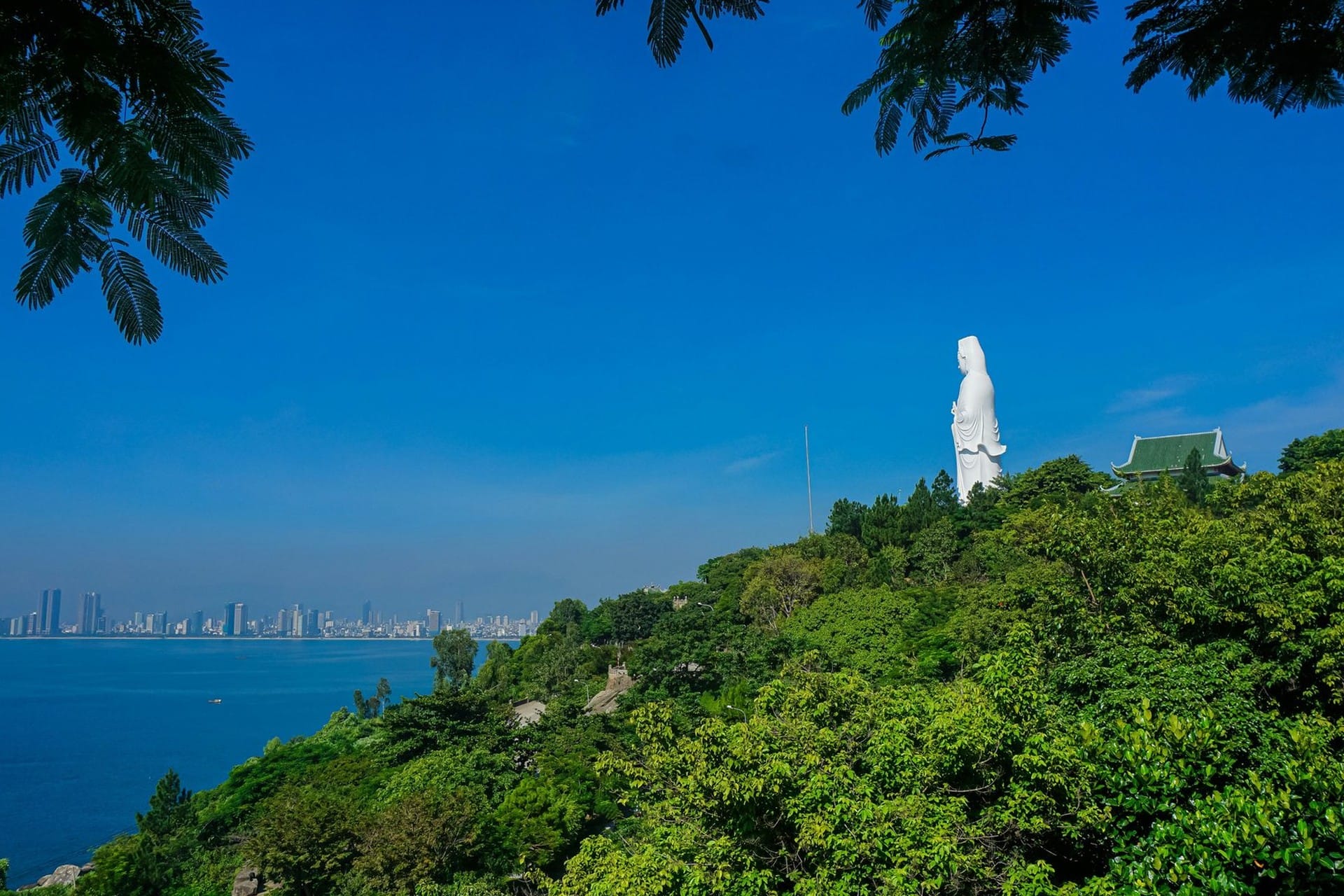
Lady Buddha statue at Linh Ung Pagoda, Son Tra Peninsula
Central Section (The Hotel Corridor)
The central part runs along Vo Nguyen Giap Street, roughly between Pham Van Dong and Truong Sa. This is where most of the hotels and services are. Resorts face the beach, lounger vendors cover most of the sand in front of the main hotels in busy hours, and lifeguard points are spread out during swimming times.
This part is the easiest for people staying in the city centre or near the beach. It is also the busiest from 9am to 4pm, mostly on weekends. Two busy seasons stack up: Vietnamese families come in the summer school holidays, about June to August, and most foreign visitors come from October to March. Summer is louder. Winter is cooler, wetter, and quieter on the sand.
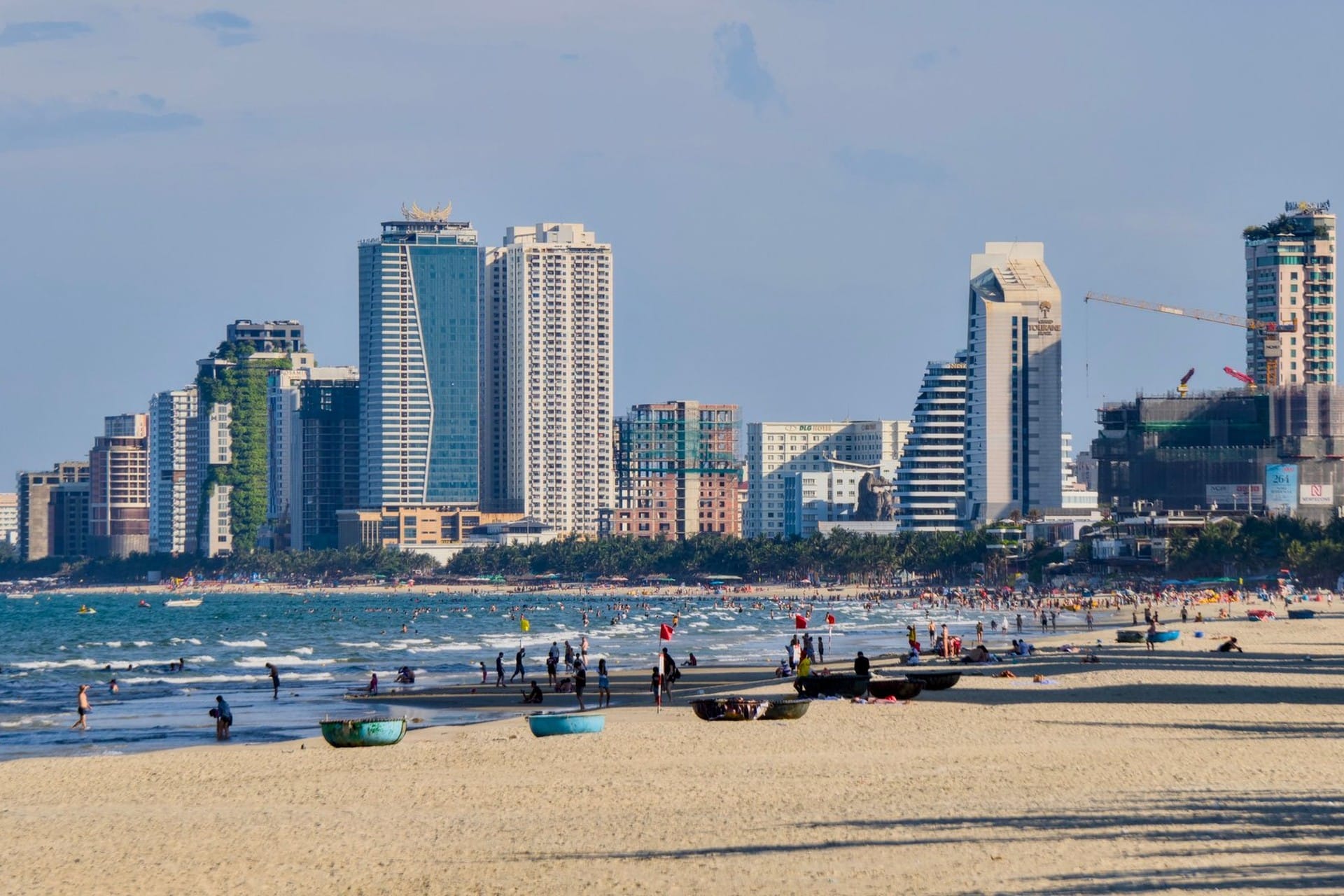
Hotel corridor along Vo Nguyen Giap Street at My Khe Beach
Southern Section (Non Nuoc and the Marble Mountains)
The south end turns into Non Nuoc Beach as it nears the Marble Mountains, about 9km from the city centre. It is clearly quieter here, with fewer international hotels and more local Vietnamese visitors. You can hear the marble carving workshops on the road behind the beach in the morning, and you can see the five limestone peaks of Ngu Hanh Son rising from the flat land about 500 metres back.
A morning at the Marble Mountains and then time on Non Nuoc Beach works well. Both are on the same stretch of coast, so you can do them one after the other by Grab, without going back to the city.
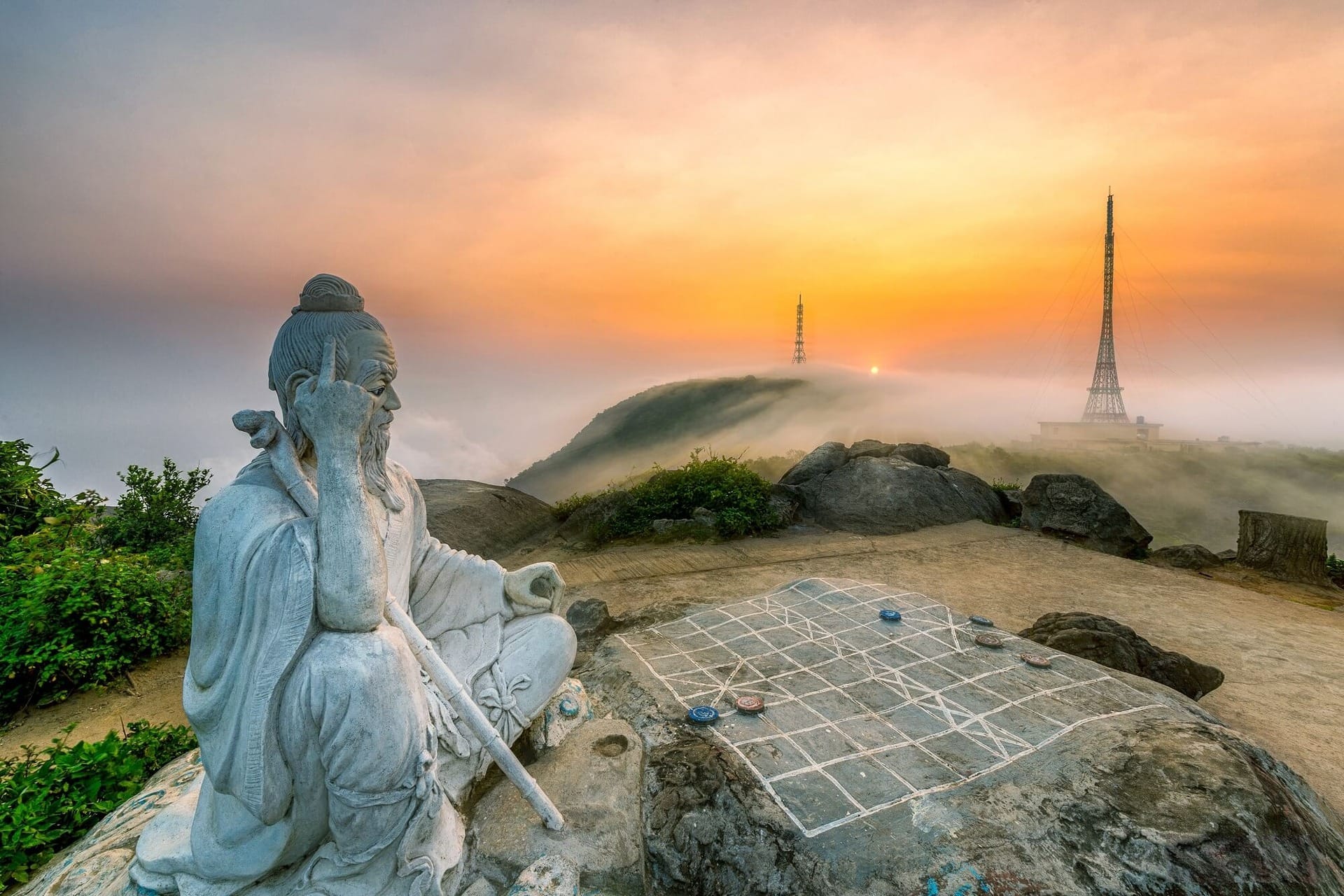
Ban Co Peak (Chessboard Peak) on Son Tra Peninsula, Da Nang
The Crowd Pattern Through the Day
6–8am: The Beach Belongs to Locals
Before 8am, My Khe is a local beach, not a tourist one. Da Nang residents, many of them older people, do morning exercise on the sand: badminton, walking, and stretching. Early on, fishing boats may still be coming back from the night. The light at this hour, mostly in the dry season (March to August), hits the water at a low angle and is gone by 9am.
The water is as warm as it is at noon, but the crowd is much smaller. Set an alarm.
9am–4pm: Peak Hours
By 9am, the central beach becomes a tourist beach: loungers full, vendors working the sand, hotel guests arriving after checkout. From late morning to mid-afternoon, this part is at its most crowded. In high season, from 11am to 2pm, it can be hard to find an empty spot in the hotel area unless you come early or walk toward the quieter north end.
If you can only visit in these hours, the north or south parts have the same good swimming with fewer people.
After 5pm: The Light Shifts
Late afternoon feels very different from midday. The light behind the city hits the buildings and the sand in a nicer way, and it gets cool enough to sit on the beach without shade again. Vendors slow down after 5pm, and the beach turns to evening exercise: joggers, couples walking, and the start of the sunset crowd on the main promenade.
The beach at 5:30pm looks more like 6:30am than like noon. Both times are worth it.
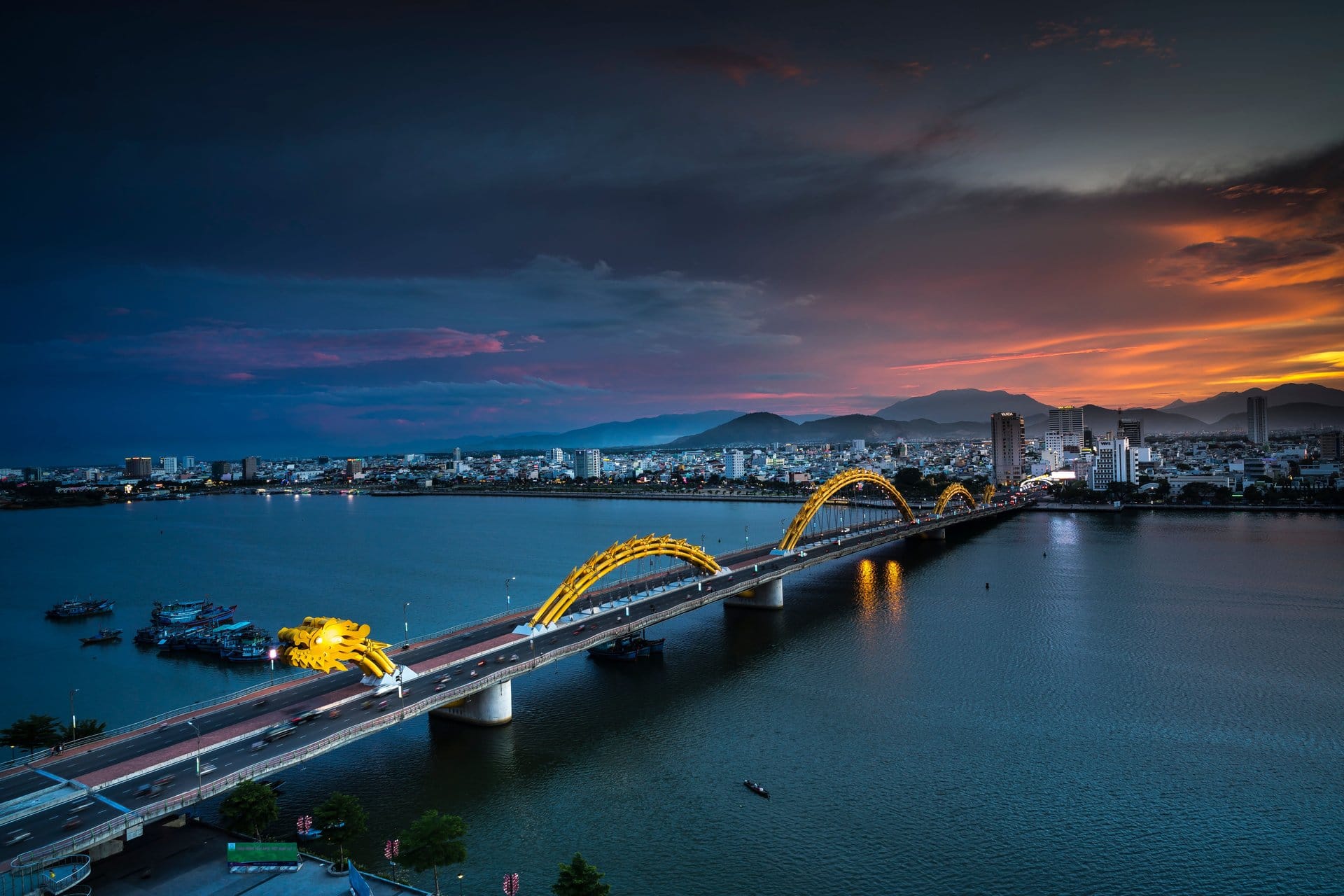
Dragon Bridge crossing the Han River at twilight, Da Nang
Water Safety: Swim Inside the Buoys
The rule at My Khe is simple. The city puts floating buoy lines in the water to mark the safe, watched swimming zones, and marks them with yellow and red flags. Here, yellow and red together means safe and watched, not danger. Swim between the buoys and you are fine. Outside them, no one is watching, and separate boards mark places where swimming is not allowed.
Lifeguards work 4:30am to 7pm in summer, from 15 March to 30 September, and 5am to 6:30pm the rest of the year. Two parts also stay open at night, with lights and lifeguards from 7pm to 10pm: the part north of Bien Dong Park, and My An, just south of the hotel area. Outside these hours and these two beaches, no one watches the water.
The main danger here is rip currents, not big waves. The city has put up more than a hundred warning boards. Most drownings each year are people who swim outside the hours or outside the buoys. Flat, calm water with no waves is often where the current runs. Stay away from it.
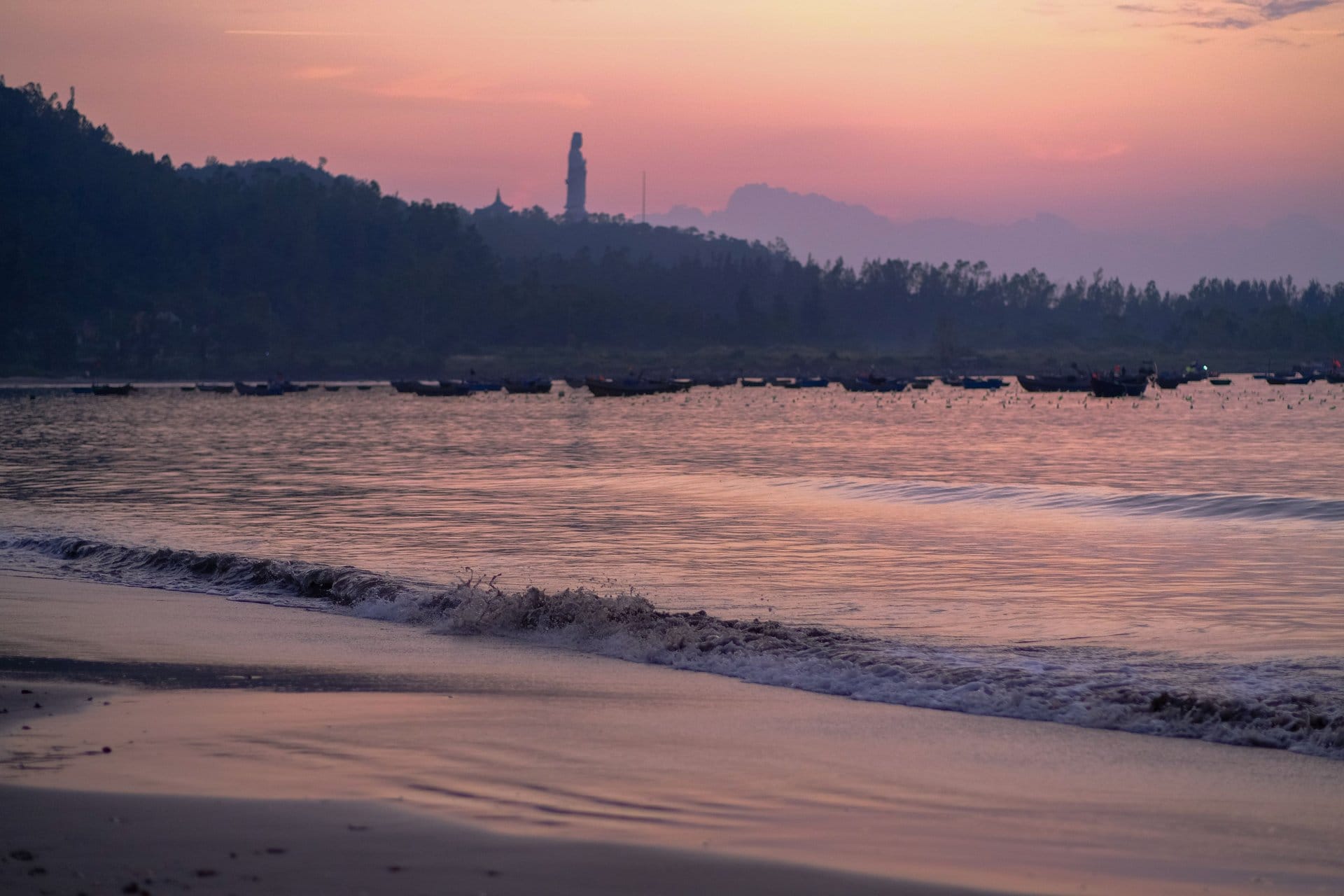
Pastel twilight over the beach with views of Lady Buddha, Da Nang
Practical Guide
One thing to know before you book: on 1 July 2025, Da Nang and Quang Nam province joined into one city, and the old district level was removed. My Khe is now in An Hai ward, not Son Tra district, and Hoi An is no longer a separate province. Some old hotel confirmations and map pins still show the old addresses. Nothing has actually moved.
Getting There from Da Nang City Centre
By Grab: 10 to 12 minutes from the central shopping area, and about 8 minutes from beach hotels. The coast road (Vo Nguyen Giap) runs along the beach with many entry points, so ask for the part you want.
By bicycle: A flat road goes straight from central Da Nang to the beach. It takes about 20 to 25 minutes. Guesthouses and rental shops on Vo Nguyen Giap rent bicycles for 50,000 to 80,000 VND a day, and motorbikes for 100,000 to 150,000 VND.
On foot: From the Han River bridge area to the central beach is about 35 to 40 minutes on flat ground.
Sun Lounger Logic
Do not pay the vendors who come to you on the sand. Walk to any beach café or restaurant, buy a coconut or a coffee, and you get the lounger and umbrella for free. Same chair, same spot, and you get a drink for your money. This is how locals use the beach, and it is the most useful thing to know before you sit down.
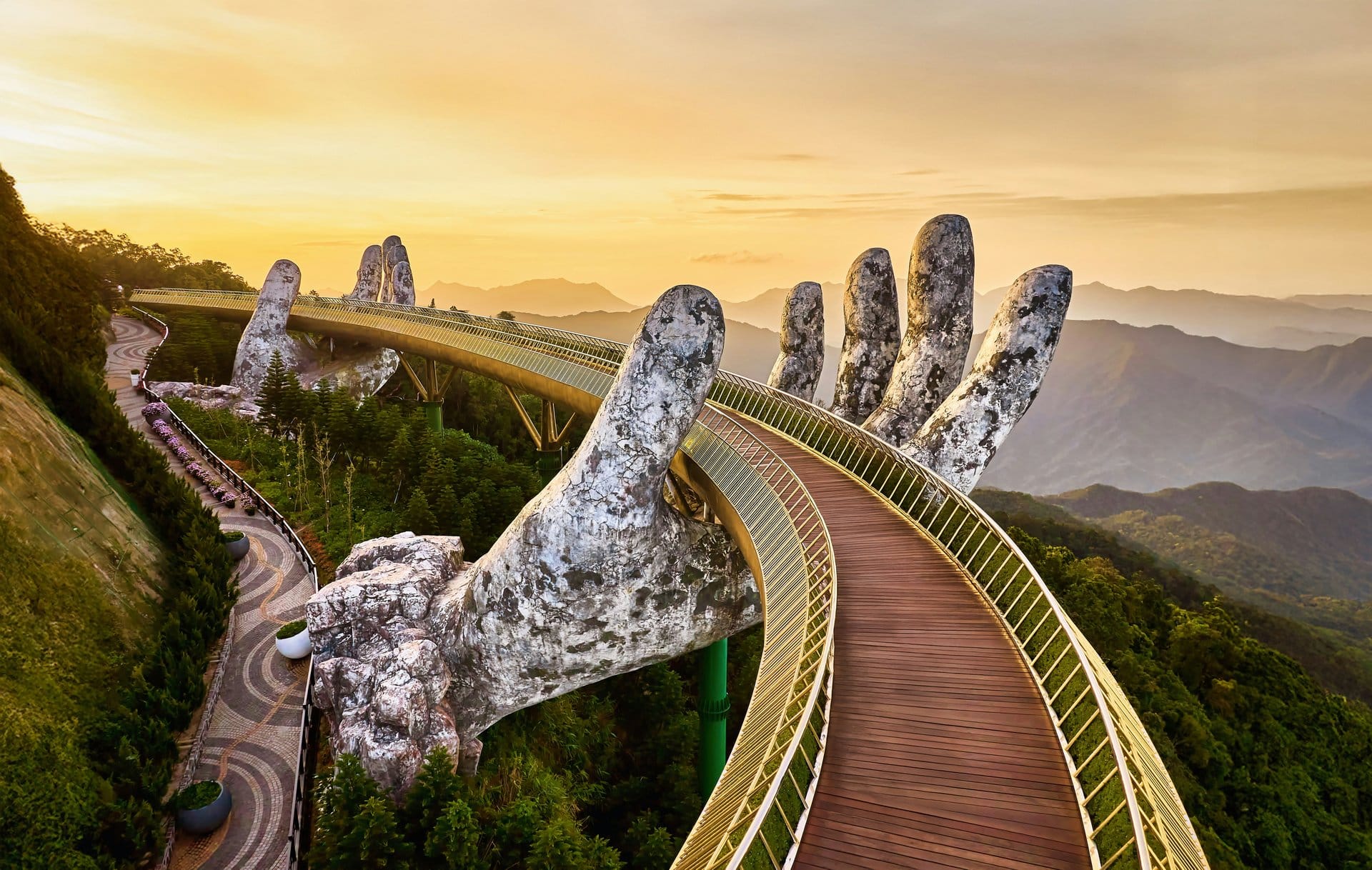
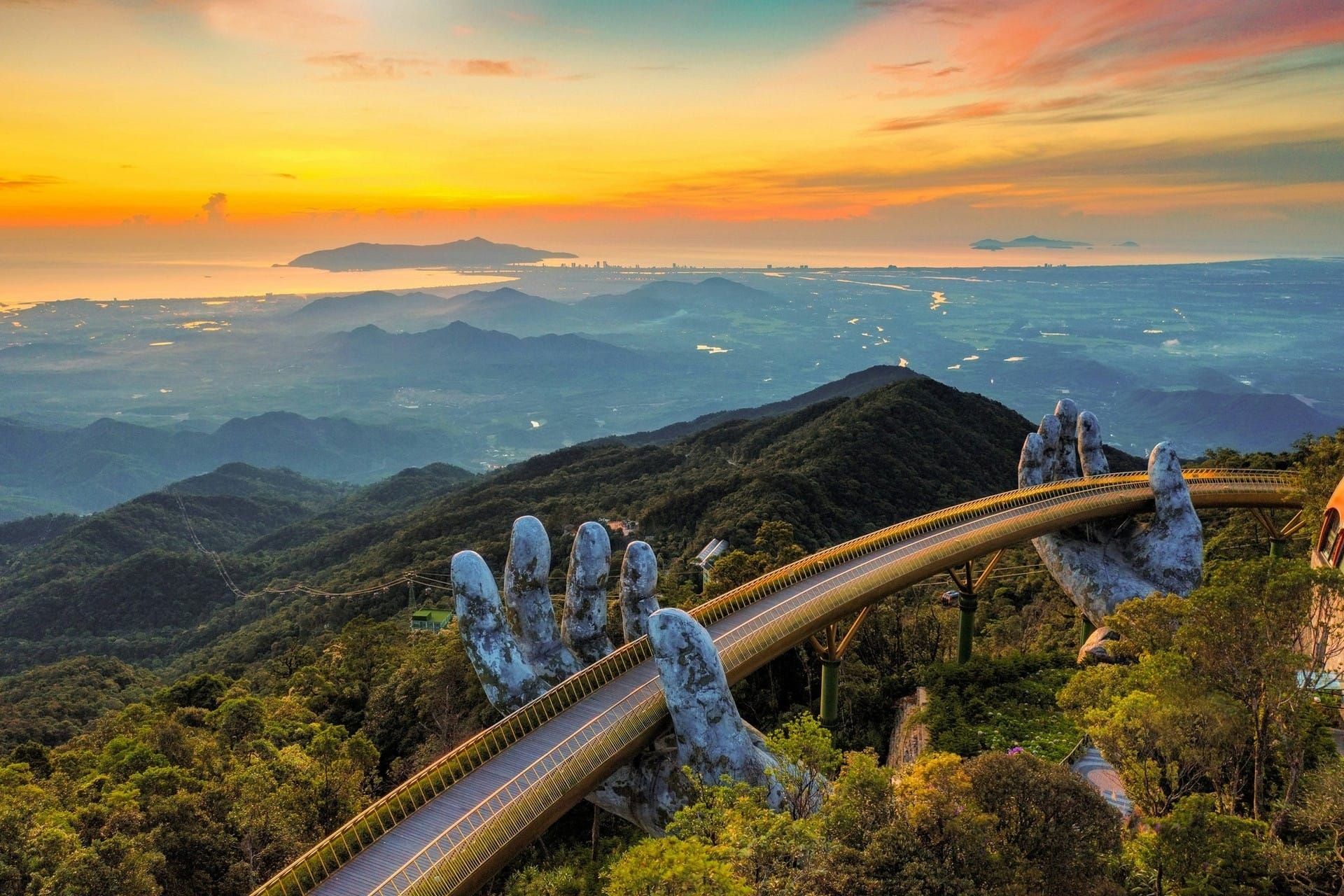
The iconic Golden Bridge at Sun World Ba Na Hills, Da Nang
Practical Summary
My Khe runs 9km, from Son Tra in the north to Non Nuoc in the south. It has three parts with different crowds, services, and feel.
Before 8am or after 5pm gives the best mix of cool air, few people, and good light.
Swim between the buoys. Yellow and red flags mark the safe zone, lifeguards work from 4:30am to 7pm in summer, and rip currents are the real danger.
My Khe is best when you stop trying to make it into something it is not. The Forbes title was true for an older version of this beach. Now it is a long, useful city beach that is great early in the morning and in the late afternoon, and busy at midday. The sand is the same at 6am and at noon. The feeling is not.