
Ho Chi Minh City weather: a month-by-month travel guide
Ho Chi Minh City is hot year-round. Temperatures stay between 25-35°C in every month. The deciding factor is rain. The city has two seasons: a dry season from December to April and a wet season from May to November. The best time to visit is December to April, with January being the coolest and April being the last dry month before the rains arrive. This guide covers what to expect month by month.
Period | Conditions | Verdict |
|---|---|---|
Dec-Feb (peak) | 25-33°C, low rain, low humidity | Best overall: coolest, driest, holiday crowds |
Mar-Apr | 28-35°C, dry but warming | Good: last chance before wet season |
May-Jun | 28-33°C, rain starts | OK: afternoon showers, still manageable |
Jul-Sep (wettest) | 27-32°C, 200-300 mm/month | Avoid if possible: heavy afternoon rain |
Oct-Nov | 27-32°C, rain tapering | Mixed: wetter than dry season, improving |

Ho Chi Minh City's two seasons
Ho Chi Minh City sits at roughly 10 m above sea level with no mountains to moderate the climate. Unlike Hanoi or Sapa, there is no cool season: the low is typically 23-26°C even in January, the coldest month. What changes is rainfall and humidity.
Dry season: December to April
Northeast monsoon keeps rainfall minimal. Total rainfall across all five months is around 100-200 mm combined: less than a single September day's average. Humidity drops noticeably; the air feels cleaner. Evenings are pleasant enough to sit outside.
Wet season: May to November
Southwest monsoon brings 1,500-1,800 mm of annual rainfall, almost entirely in these months. Rain falls most days, typically as intense afternoon storms that clear within an hour or two. Mornings are usually dry. The streets flood quickly in heavy rain, and traffic slows. Carry an umbrella or lightweight rain jacket.
Humidity follows the rain
February and March, deep in the dry season, are the least humid months, often averaging around 61-70%. From June through October, during the wettest stretch, average humidity climbs to 82-85%, part of why the afternoon heat feels heavier in the wet season even on days with similar temperatures to the dry months.
Skip outdoor plans for 2 to 5 pm during the wet season. Afternoon storms hit fast most days from May through November, and the streets can flood within the hour.

Ho Chi Minh City weather in April
April is the last dry month and also the hottest. Temperatures average 28-35°C with heat index values that can push the perceived temperature above 40°C on humid afternoons (checked September 2026 against historical Vietnam Meteorological and Hydrological Administration data). Rainfall is still low by wet season standards, typically under 50 mm for the month, but occasional pre-season storms are possible in the final week of April.
Why April still works
April is a good time to visit if you want the dry season and cannot travel in December-March. The upside: prices are slightly lower than peak December-February, and school group tourism that peaks in December around Christmas is absent. Plan outdoor activities before 10 am or after 4 pm.
Where to go when it's too hot outside
District 1 museums (War Remnants Museum, Reunification Palace) and Ben Thanh Market are better midday options when outdoor walks become uncomfortable, and air-conditioned malls in District 1 are a practical retreat between stops. Save the heat for after dark: see our Ho Chi Minh City nightlife guide for where to go once the sun is down.
Around April 30 and May 1
The national holiday period around April 30 (Reunification Day) and May 1 (Labor Day) brings heavy domestic travel. If you are visiting this window, book accommodation at least 2-3 weeks ahead.
Skip full days of walking in April unless you build in shade breaks. UV levels run high to extreme, so the trade-off for lower prices and thinner holiday crowds is a schedule built around air-conditioned stops before 10 am and after 4 pm.
January and February: the coolest months
January is the most comfortable month in Ho Chi Minh City. Temperatures average 25-33°C; evenings drop to 23-25°C, which is as cool as the city gets. Rainfall is near zero: typically 5-15 mm for the whole month. Humidity is low. This combination makes January the easiest month for extended outdoor sightseeing, long walks, and street food exploration.
Tet and the last week of February
February follows similar conditions until the final week, when temperatures start climbing toward March's higher averages. Tet (Lunar New Year, usually late January or early February; Tet 2027 falls on February 6) is Vietnam's most important holiday. During Tet week, Ho Chi Minh City shuts down in a way unlike any other time of year: most restaurants, markets, and local businesses close for 3-7 days. The city empties of its residents visiting families elsewhere; streets are unusually quiet.
Ho Thi Ky Flower Market
Ho Thi Ky Flower Market in District 10 has operated 24 hours a day since 1987, busiest between 2 and 8 am when wholesalers restock for the day's flower shops. In the days before Tet it turns into one of the city's most colorful scenes, packed with peach blossom, kumquat trees and marigolds.
Skip counting on restaurants and markets during Tet week itself, most close for 3 to 7 days and the city empties out. Ho Thi Ky Flower Market is one of the few places that keeps running, though it gets more crowded than usual in the days before Tet.
May to November: the wet season in practice
The wet season is not a reason to avoid Ho Chi Minh City. Millions visit year-round, but it changes how you plan your days. Rain falls most heavily from July to October, averaging 200-300 mm per month. August and September are the wettest single months. Storms typically arrive in the afternoon (2-5 pm), last 30-90 minutes, then clear.
How to plan your days around the rain
Schedule museums and indoor attractions for early afternoon; save markets and walking tours for morning; keep a compact umbrella handy. The Cu Chi Tunnels and Mekong Delta day trips are better in the morning regardless of season, so wet season changes little for those activities. Cu Chi's closer Ben Dinh site sits about 50 km northwest of the city center (Ben Duoc, the other main entrance, is roughly 70 km out); combined admission runs around 135,000 VND per person as of early 2026, and most day tours leave by 7-8 am to beat both the heat and the afternoon rain.
July and August: the hottest, heaviest months
July and August feel hot and heavy: 27-32°C with high humidity. Outdoor photography has a distinctive dramatic-sky quality on wet season evenings that dry season lacks. Air conditioning is aggressive in malls and restaurants; bring a thin layer if you run cold indoors.
Skip staying near Nguyen Huu Canh Street in Binh Thanh during peak wet season months if you can help it. Poor drainage there means floodwater can rise higher than the Saigon River itself, and as recently as October 2025 it stranded cars and motorbikes for hours.
Train from Ho Chi Minh City to Da Nang
If you are planning a central Vietnam leg after Ho Chi Minh City, the train to Da Nang (the entry point for Hoi An) is worth knowing. The SE1 and SE2 express trains cover the route in approximately 15-18 hours (checked September 2026; confirm the exact schedule with Vietnam Railways).
The overnight train
Soft sleeper berths on the overnight service are the most comfortable option; departure times from HCMC's main station (Ga Saigon, in District 3) are typically afternoon to evening, arriving in Da Nang the following morning. Soft sleeper fares on this route run roughly 630,000 to 1,350,000 VND one way, depending on class and how far ahead you book; prices climb closer to departure and during Tet.
Flying instead
Flying is faster (75-90 minutes) and comparable in cost on popular routes: budget carriers advertise fares from around 500,000 VND when booked well ahead, though a typical one-way price closer to your travel dates lands nearer 1,000,000-2,000,000 VND, in the same range as a soft sleeper berth. The train is still a genuine experience along a coastal rail line that passes through Da Nang's port and the Hai Van Pass section north of the city.
Skip trying to cover both directions by train if you are short on time, most travelers take the train one way and fly the other. Da Nang is 30 km from Hoi An, a 30 to 40 minute transfer by car; see our Hoi An guide for what to do once you arrive, and the district guide covers where to stay back in Ho Chi Minh City.
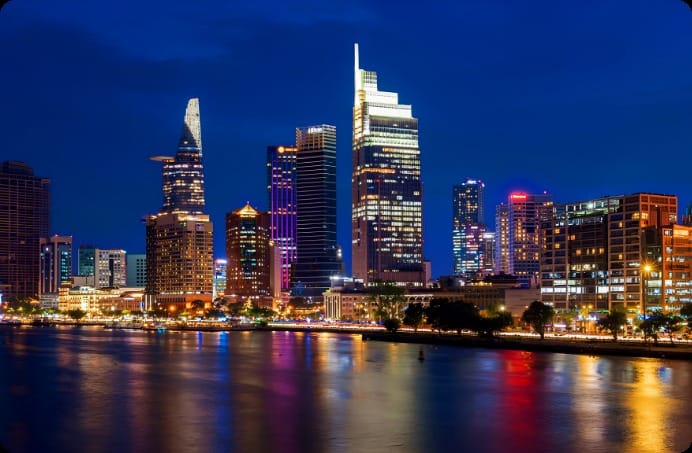
Our 3-day Mekong Delta tour departs from Ho Chi Minh City and runs year-round, with a sunset cruise on the Hau River, the Cai Rang floating market at dawn, and the coconut canals of Ben Tre and Vinh Long. Early starts keep you ahead of the afternoon rain in the wet season.
Jasmine is a Meetup Travel local expert, born and raised in Vietnam, who plans family trips to Ho Chi Minh City and always checks the wet season forecast before locking in outdoor days with kids.