
Bai Tu Long Bay: guide to Vietnam's quieter bay
Bai Tu Long Bay sits immediately northeast of Ha Long Bay in Quang Ninh province. The two bays share similar limestone karst scenery, but Bai Tu Long Bay is generally quieter than the main Ha Long Bay routes. If avoiding crowds matters more than convenience, this is where you go instead.

Bai Tu Long Bay at a glance | Detail |
|---|---|
Location | Quang Ninh province, northeast of Ha Long Bay |
Access port | Cai Rong, Van Don |
Distance from Hanoi | ~200 km, 3.5-4h by road |
Typical cruise duration | 2 nights (optimal); 1-night also available |
Cruise cost | USD 120-450 per person for 2 nights, budget to premium boats (checked September 2026) |
Best time to visit | October to April (dry season, calm seas) |
Key highlight | Vung Vieng floating fishing village, Thien Canh Son cave |
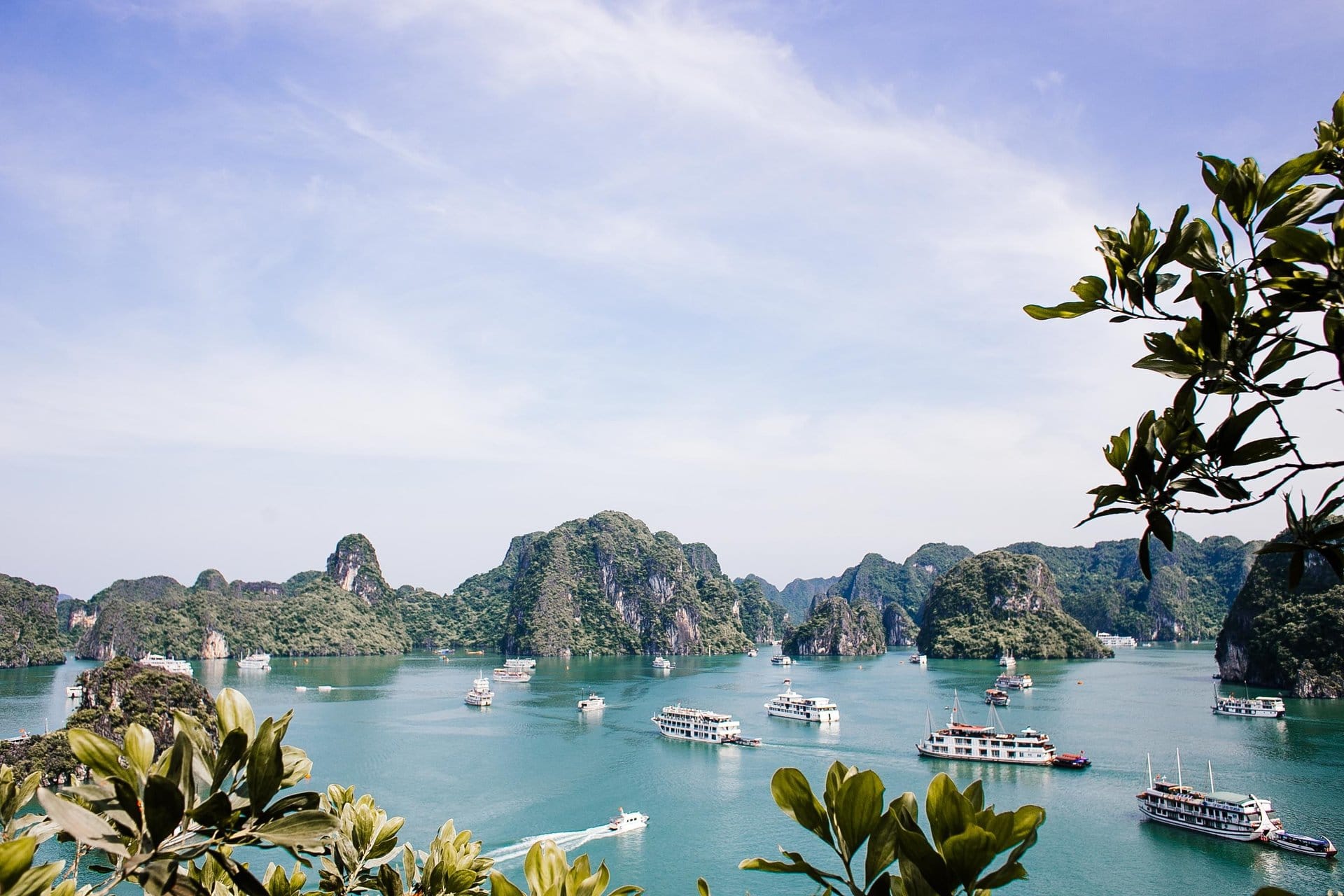
Bai Tu Long Bay vs Ha Long Bay
The two bays form a continuous stretch of the Gulf of Tonkin, the boundary between them is administrative, not geographical. Both have the same limestone karst formations, the same emerald-green water, and the same weather patterns. The practical differences come down to boat numbers, distance from Hanoi, and which caves and villages each route reaches.
Fewer boats, longer transfer
Fewer boats: Ha Long Bay has hundreds of cruise boats operating at any time; Bai Tu Long has a fraction of that fleet. On a typical weekday in peak season, the difference in perceived solitude is significant. Further from Hanoi: the main port (Cai Rong, Van Don) is about 50 km past Ha Long City, adding roughly 1-1.5h to the Hanoi transfer. Total transfer from Hanoi Old Quarter: 3.5-4h.
Different caves and floating villages
Different caves: Ha Long Bay's famous caves (Sung Sot, Thien Cung) are large and well-developed; Bai Tu Long's signature cave, Thien Canh Son, is less visited and equally impressive. Floating villages: Vung Vieng is a still-inhabited floating fishing village, one of the last in the region, reachable only by boat.
Choosing a boat class by price
Operators on this route differ mainly by boat class and how much of the itinerary they spend away from the main channel. Budget operators such as Ethnic Travel keep prices down partly by swapping a cabin night for a homestay night on Quan Lan island, with cycling and a cooking class added to the standard cave and kayak stops. Mid-range operators, Swan Cruises among them, price a 2-night cabin cruise from around USD 158 per person and stick closer to the standard Vung Vieng and Thien Canh Son route. Premium boutique boats add private balconies, spa treatments, and slower stops at each site, which is where the top of the USD 120-450 range comes from. See our Ha Long Bay weather guide for the shared seasonal conditions that apply equally to Bai Tu Long.
Skip Bai Tu Long Bay if you only have one day free or need a last-minute budget slot, Ha Long Bay's hundreds of boats and shorter transfer give you more options on short notice, and you trade away only quieter water, not the scenery.
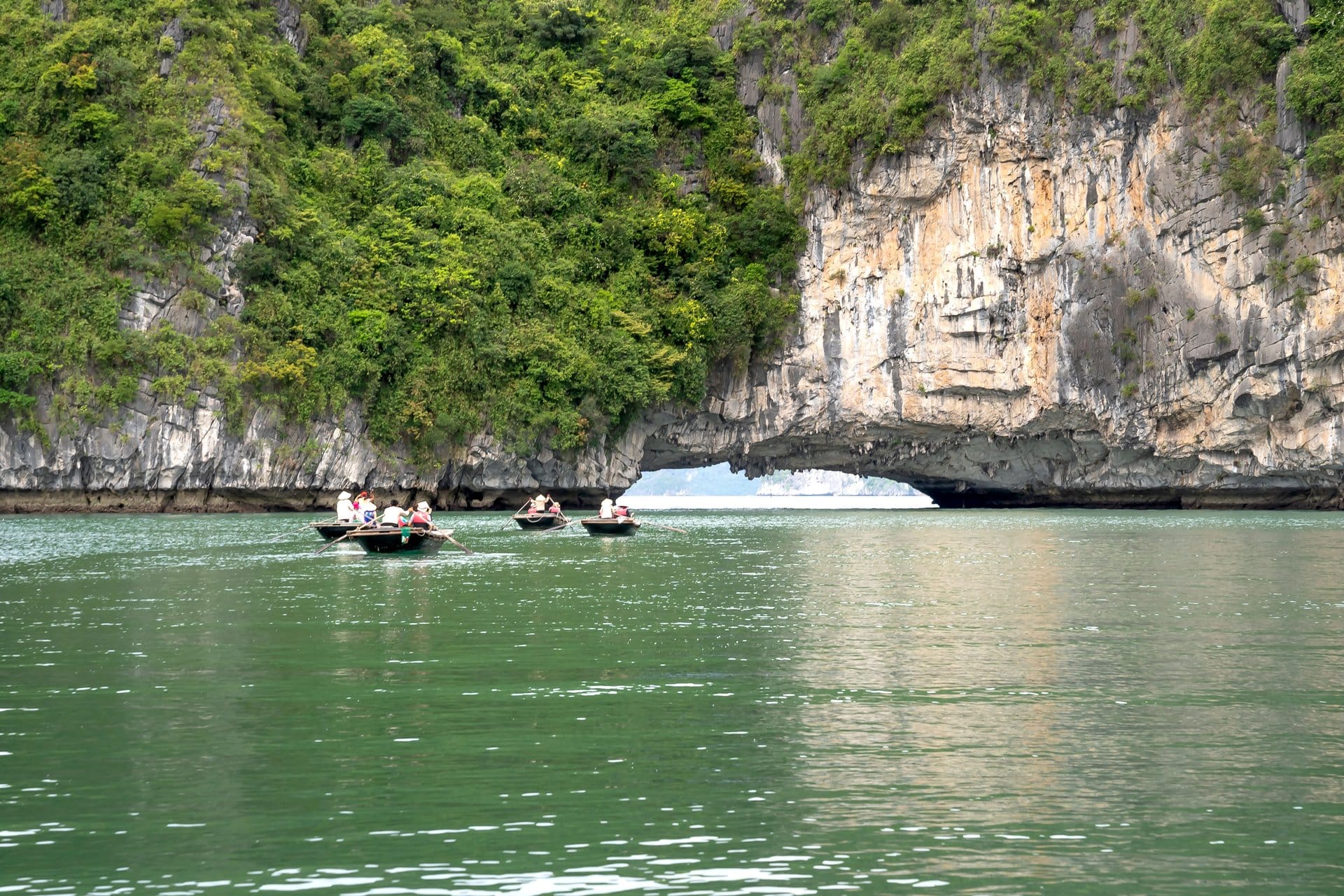
What to do in Bai Tu Long Bay
Bai Tu Long Bay's main activities are the same four you find across the wider bay: a floating village visit, a cave stop, a kayak session, and time on outer islands most cruises skip. Vung Vieng, Thien Canh Son, and the Quan Lan and Ngoc Vung island pair cover most of what a 2-night cruise or an independent trip can fit in.
Vung Vieng floating village and Thien Canh Son cave
Vung Vieng floating fishing village is the most distinctive experience unique to Bai Tu Long. Around 50 families lived here at its peak, about 300 people. Most were resettled to the mainland starting in 2021, and the village now runs mainly as a cultural and aquaculture site, with some fish farms and floating facilities still active. Cruise operators include a rowboat transfer to the village as part of the standard itinerary. Most Ha Long Bay cruises do not reach this far. Thien Canh Son Cave is a dry cave in a karst formation, accessible only by boat. Less crowded than Ha Long Bay's Sung Sot (Surprise Cave) and similarly sized. The cave has stalactites and stalagmites and is visited as part of some cruise itineraries.
Kayaking the karst channels
Kayaking through sea arches and through mangrove channels is available on most multi-day cruises. Bai Tu Long's lower boat traffic makes kayaking quieter, you are less likely to be caught in a wake from passing tour boats. Sessions are usually included in the cruise price, a short 30-60 minute paddle at one stop is standard, though some boats build in a longer 2-4 hour session on the second day for guests who want more time on the water.
Quan Lan, Ngoc Vung and Co To islands
Quan Lan and Ngoc Vung islands sit further out in the bay, next to Minh Chau, and see far fewer visitors than the standard cruise stops. Quan Lan has a long sandy beach, bike rental shops, and homestays, reachable from Cai Rong by high-speed ferry in about 1-1.5h (roughly 195,000-250,000 VND) or a slower public boat in 2.5-4h (roughly 95,000-150,000 VND, checked September 2026). Ngoc Vung, right next door, is quieter still, with its own beach and almost no development. Neither island sits on the standard 2-night cruise itinerary; both work better as an extra day added to a Co To trip or a separate independent visit. Co To Island, about 50 km offshore from Cai Rong port, is an outer-island extension of the Bai Tu Long area with white-sand beaches. It requires an additional ferry leg, the same high-speed or public boat options that serve Quan Lan and Ngoc Vung, and is better suited to a dedicated trip than to a standard bay cruise itinerary.
Skip trying to fit Quan Lan, Ngoc Vung or Co To into a standard 2-night cruise, none of them sit on the main itinerary, and reaching any of them means a separate ferry leg that eats a full day the boat schedule does not have.

Best time to visit Bai Tu Long Bay
Bai Tu Long follows the same weather pattern as Ha Long Bay: a dry northeast monsoon season from October to April and a wet southwest monsoon from May to September. The same typhoon risk applies July-September. See our Vietnam seasonal guide for how this compares to the rest of the country.
October to December: the prime months
Best visibility, calm seas, 20-28°C. These are the prime booking months on this route.
January to April: cool, misty, then warming
January and February run cool (15-20°C) and sometimes misty in the mornings, atmospheric and good for photography. Tet (Lunar New Year, usually late Jan or Feb) is peak domestic travel, book early. March and April turn warm and dry, transitioning to humidity. Good conditions hold through most of April, though days at the very end of the month sit at 25-30°C with humidity building and afternoon haze that softens the karst silhouettes compared to the sharper light of November and December.
May to September: rain and typhoon risk
Higher rainfall and typhoon risk take over. Conditions can change quickly during storms, so cruise schedules depend on official weather and safety guidance.
Skip booking the very end of April expecting the sharp light of November and December, humidity is already building by then and afternoon haze softens the karst silhouettes, even though the season still counts as dry.

How to get to Bai Tu Long Bay
The main gateway is Cai Rong port, Van Don (special zone since July 2025, formerly Van Don District), Quang Ninh province, reached by a 3.5-4h road transfer from Hanoi, by flying into Van Don International Airport, or by joining a cruise that boards at Ha Long City and sails into Bai Tu Long on day one.
By road from Hanoi
From Hanoi by road: approximately 200 km, 3.5-4h by limousine bus or private car. Most cruise packages include the transfer from Hanoi. If arranging yourself, bus and transfer options change over time, so check the current departure point before travelling. If you are basing yourself in Hanoi, the most straightforward option is a 2-night cruise package that handles all transport from the Old Quarter.
Via Van Don International Airport
Via Van Don International Airport: opened in December 2018. Routes have connected to Ho Chi Minh City, Da Nang, and Phu Quoc, though flight frequency is limited and schedules change over time, so check the current airport timetable before relying on it. From the airport, continue to Cai Rong town, about 6 km away (a 10-15 minute taxi or private transfer). This avoids the Hanoi leg entirely if you are combining Bai Tu Long Bay with central or southern Vietnam.
Via Ha Long City
Via Ha Long City then onwards: some cruises board at Ha Long City's Tuan Chau marina and sail through Ha Long Bay into Bai Tu Long Bay on day one, a combined itinerary, longer but popular with travelers who want to see both.
Skip flying via Van Don if your trip is already Hanoi based, flight frequency to the airport is limited and schedules change, while the Hanoi road transfer is a fixed 3.5-4h you can count on any day of the year.
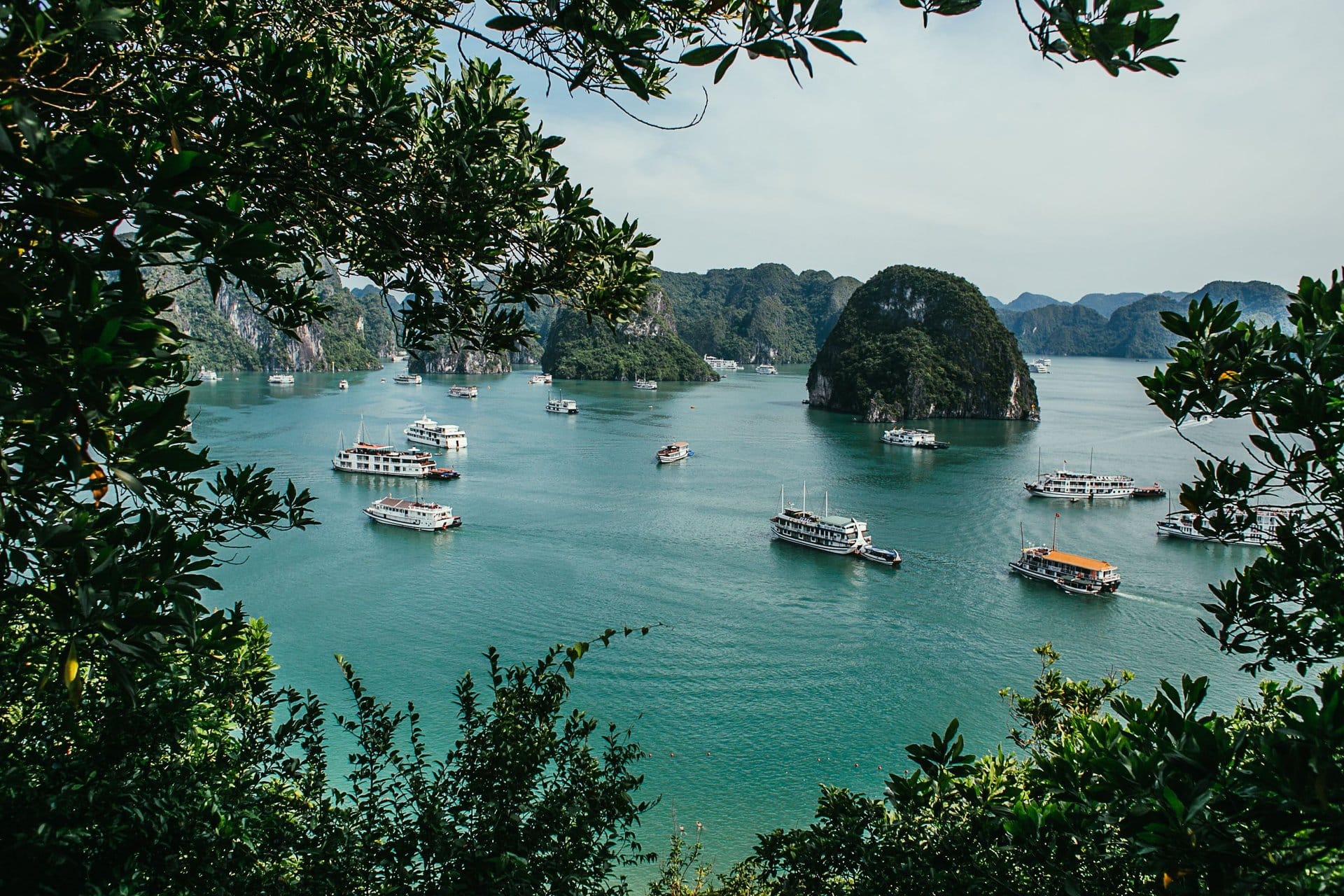
Choosing a Bai Tu Long cruise
Not all Ha Long Bay cruises go into Bai Tu Long Bay. Check the itinerary before booking, look for specific mention of Vung Vieng fishing village or Van Don permit. Cruises that only reach the inner Ha Long Bay area will not enter Bai Tu Long.
Price and boat class
A 2-night cruise costs USD 120-450 per person depending on boat class and season (checked September 2026). Check the operator's current price before booking.
One night versus two nights
One-night cruises exist but are rushed, you lose most of the second day's morning light to the sail back to port. Two nights gives you the floating village visit, a full cave tour, a kayak session, and time to sit on deck in the early morning without anything scheduled.
When to book and what to pack
Book at least 2-3 weeks ahead for October to December sailings, the highest-demand window on this route. Last-minute bookings in this period usually mean settling for a lower boat class or a 1-night sailing instead of the fuller 2-night itinerary. Bring a light jacket for January and February evenings on deck, and motion-sickness tablets if you are prone to seasickness, the crossing out to Vung Vieng and the outer islands can get choppy even in the dry season.
Skip the 1-night option if photos or a relaxed pace matter to you, you lose most of the second day's morning light to the sail back to port, and the floating village stop is the first thing operators trim when the shorter schedule runs tight.
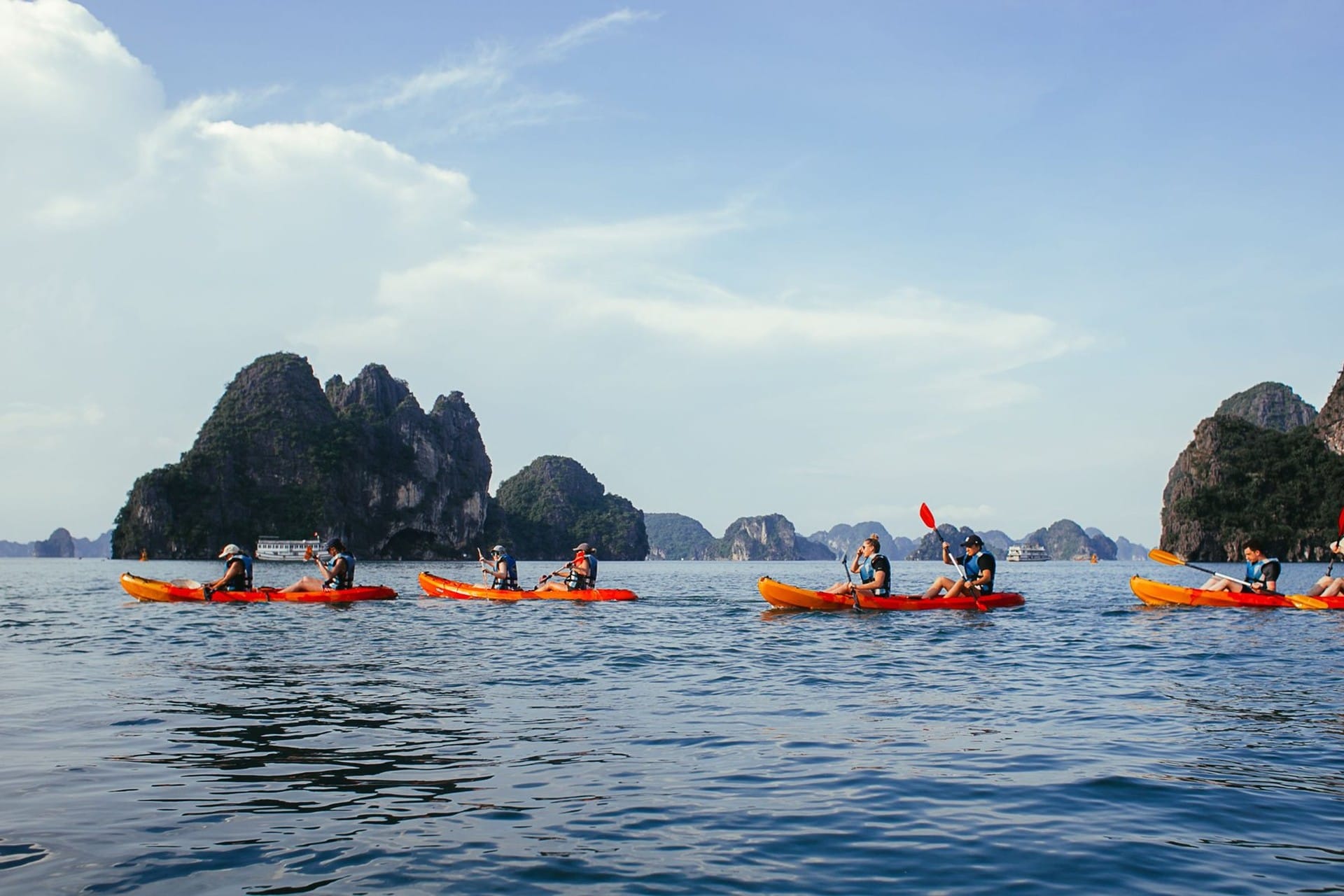
Our Hanoi and Ha Long Bay tour pairs Hanoi's Old Quarter and cultural sites with a day cruise through Ha Long Bay's karst scenery and caves, the same landscape that continues into Bai Tu Long Bay.
Bichan is a Meetup Travel local expert, born and raised in Vietnam, who tracks the budget operators on routes like this one and knows which boat class actually gets you the floating village and cave stops without paying for a private balcony you will not use.