
Ha Long Bay weather: best time to visit and month guide
Ha Long Bay lies in the Gulf of Tonkin, roughly 150-170 km east of Hanoi depending on the route. The bay has two distinct seasons: a dry season from October to April and a wet season from May to September. The best time to visit is October to December, when typhoon season has ended, skies are clear, and sea temperatures stay warm. December is the single clearest month, with rainfall averaging just 30-50 mm for the whole month.

| Month / Period | Conditions |
|---|---|
| Oct-Dec (recommended) | Clear skies, 20-28°C, low rainfall, calm seas |
| Jan-Mar | Cool and dry, 15-22°C, occasional mist, atmospheric |
| Apr-May | Warm transition, 24-30°C, humidity rising |
| Jun-Sep (avoid peak) | Hot and wet, 28-34°C, 200-300 mm rain, typhoon risk Jul-Sep |
| December rainfall | 30-50 mm (vs 250 mm in August) |
| Ha Long Bay UNESCO listing | 1994 (natural landscape); expanded 2000 |
Ha Long Bay seasons at a glance
Ha Long Bay has two seasons and nothing in between. The dry season runs October to April under the northeast monsoon, with calmer seas and sharper limestone views. The wet season runs May to September, humid and rain heavy, with peak typhoon risk in July to September. Annual rainfall averages about 2,300 mm, almost all of it falling May-September.
Dry season: October to April
Northeast monsoon conditions. Seas calmer, visibility better, temperatures moderate. The bay clears after typhoon season ends in late September or early October. This is when limestone formations appear at their sharpest against blue skies.
Wet season: May to September
Southwest monsoon conditions. Humidity rises quickly in May, heavy afternoon rain squalls start in June, and peak typhoon risk runs July to September. Typhoons affecting Quang Ninh province can bring sustained winds of 50-100 km/h and close the bay for 2-4 days. Most reputable cruise operators carry weather cancellation clauses for typhoon disruptions.
The UNESCO core zone
The bay covers about 1,553 km2 and holds roughly 1,969 limestone islets, but the UNESCO-listed core zone that almost every cruise itinerary sticks to is a much smaller 334 km2 with about 775 islets. Weather affects that core zone fairly uniformly, so a forecast for Ha Long City generally holds for the caves and kayak stops further out too.
Skip treating a distant forecast as a firm plan. Peak risk months, July to September, still close the bay for 2-4 days when a storm makes a direct hit, and no forecast a week out is reliable enough to build a non-refundable cruise around, book with a weather cancellation clause instead.
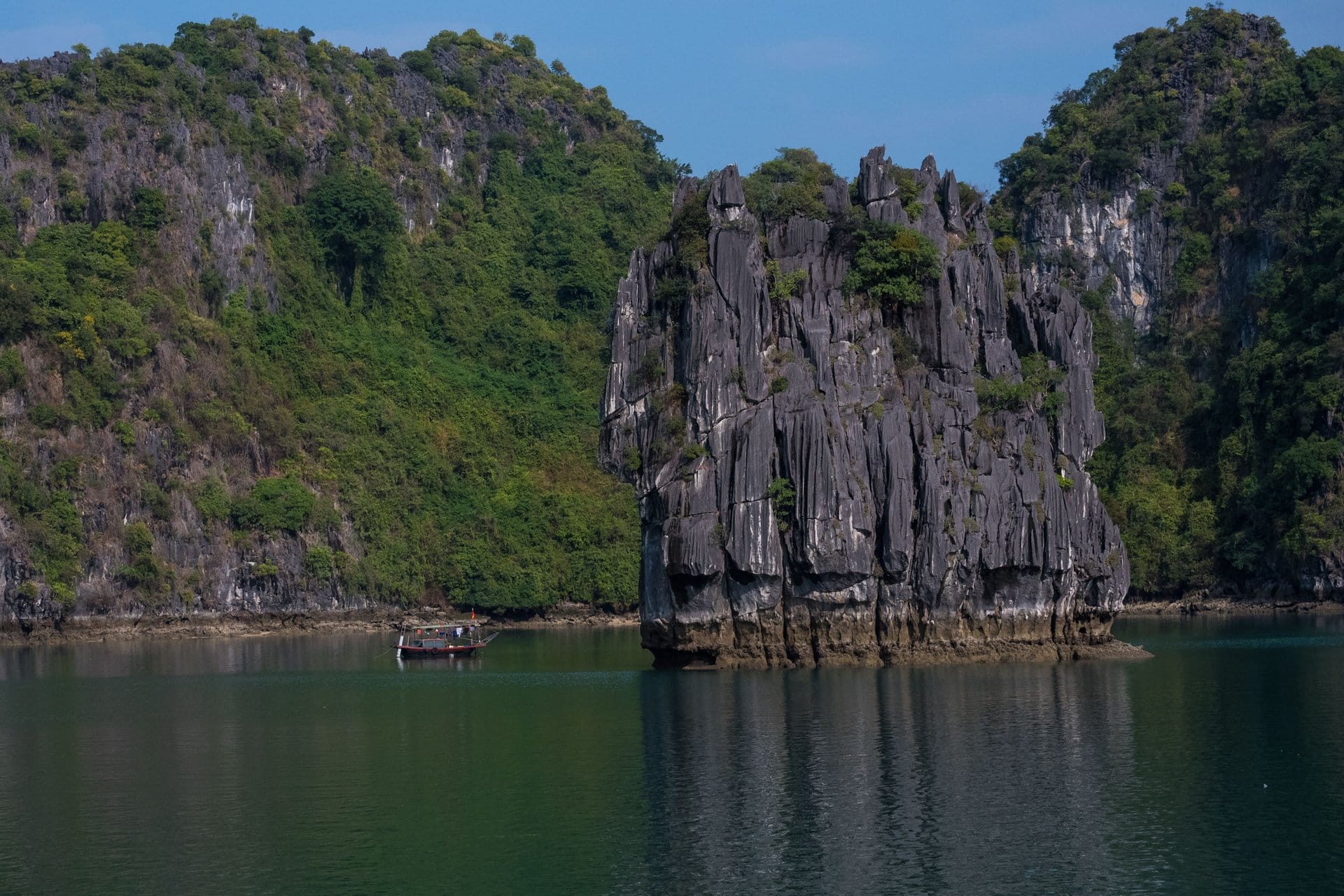
Best months to visit Ha Long Bay
October and November are the best all-round months to visit Ha Long Bay. Typhoon season has just ended, the northeast monsoon clears the air, temperatures sit at 20-28°C, and seas stay calm enough for cave tours, kayaking, and overnight cruises to run without disruption.
December to February: cool, dry, and busier
December cools to 18-22°C, the coolest the bay gets, with rainfall at its annual minimum and the sharpest visibility of the year; the main trade-off is packing a light jacket for evenings on deck. January and February stay dry and cool (15-20°C in January), with light mist drifting through the karst formations most mornings, atmospheric for photography though it clears by mid-morning. Tet, usually late January or February, is Vietnam's busiest travel period; cruises book up 6-8 weeks in advance and prices rise.
March and April: warmer and still dry
March and April are the warmest of the dry months, 22-30°C, and still low-rain. April sees humidity building but stays manageable for most of the month.
Day trip or overnight cruise
A day trip is worth considering if a 2-night cruise does not fit your schedule. Most day-trip boats leave Ha Long City or Tuan Chau marina around 8 am, cover a shortened loop with one cave stop and a kayak or bamboo boat session, and return by mid-afternoon, typically 6-7 hours door to door from Ha Long City. It skips the sunrise and sunset views that make an overnight cruise worthwhile, but it is generally cheaper per person than any overnight package.
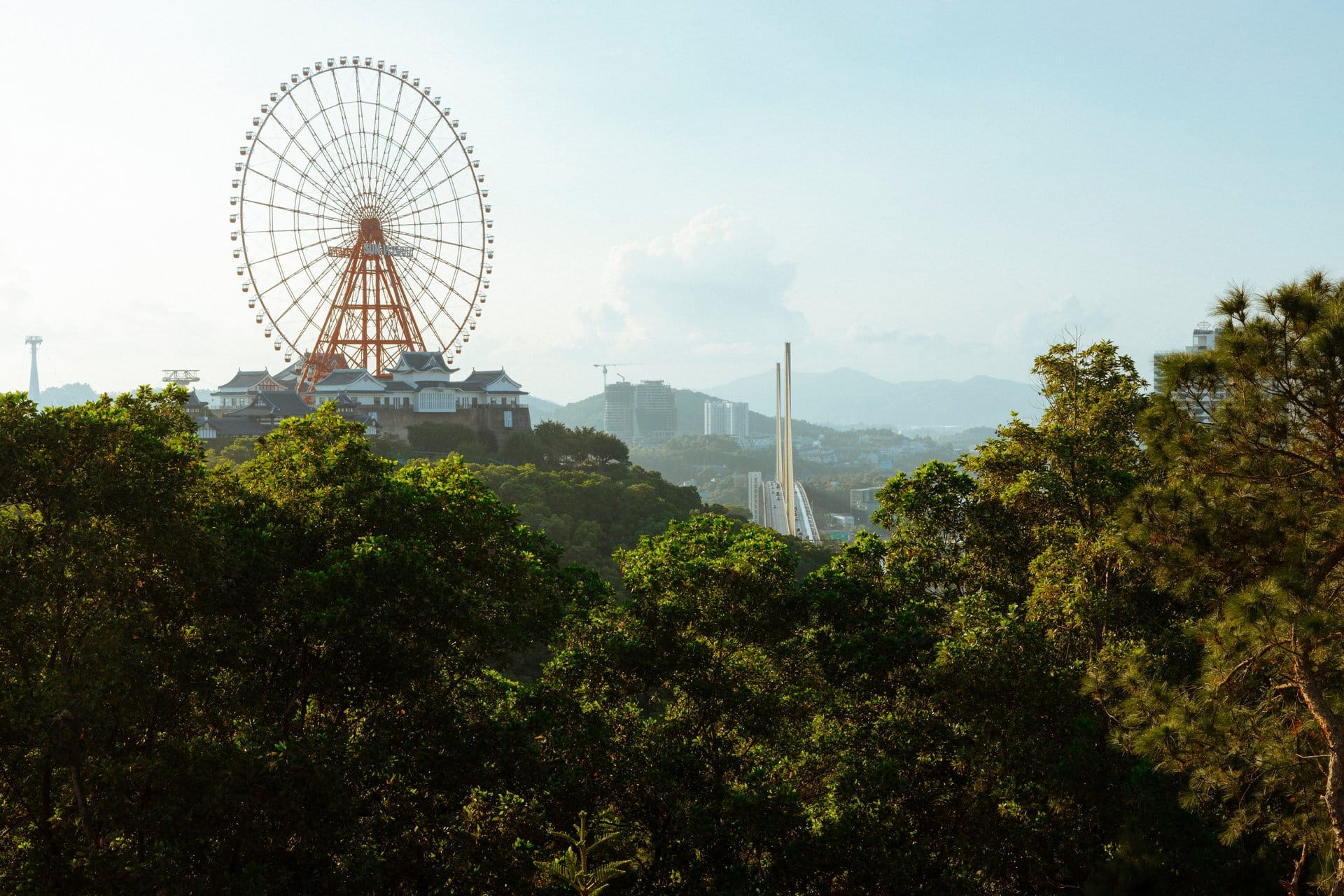
May to September: lower prices, higher risk
Possible to visit but not recommended for first timers. Rain is frequent, typhoon risk is real from July, and the bay can look grey for days at a stretch. Prices are lower, and weekday cruises are less crowded, but weather risk is the limiting factor.
Skip booking a cruise for the week around Tet without planning far ahead. This is Vietnam's busiest travel period, cruises book up 6-8 weeks in advance for that window, and prices rise across every operator, a day trip will not save you from the same crowds.
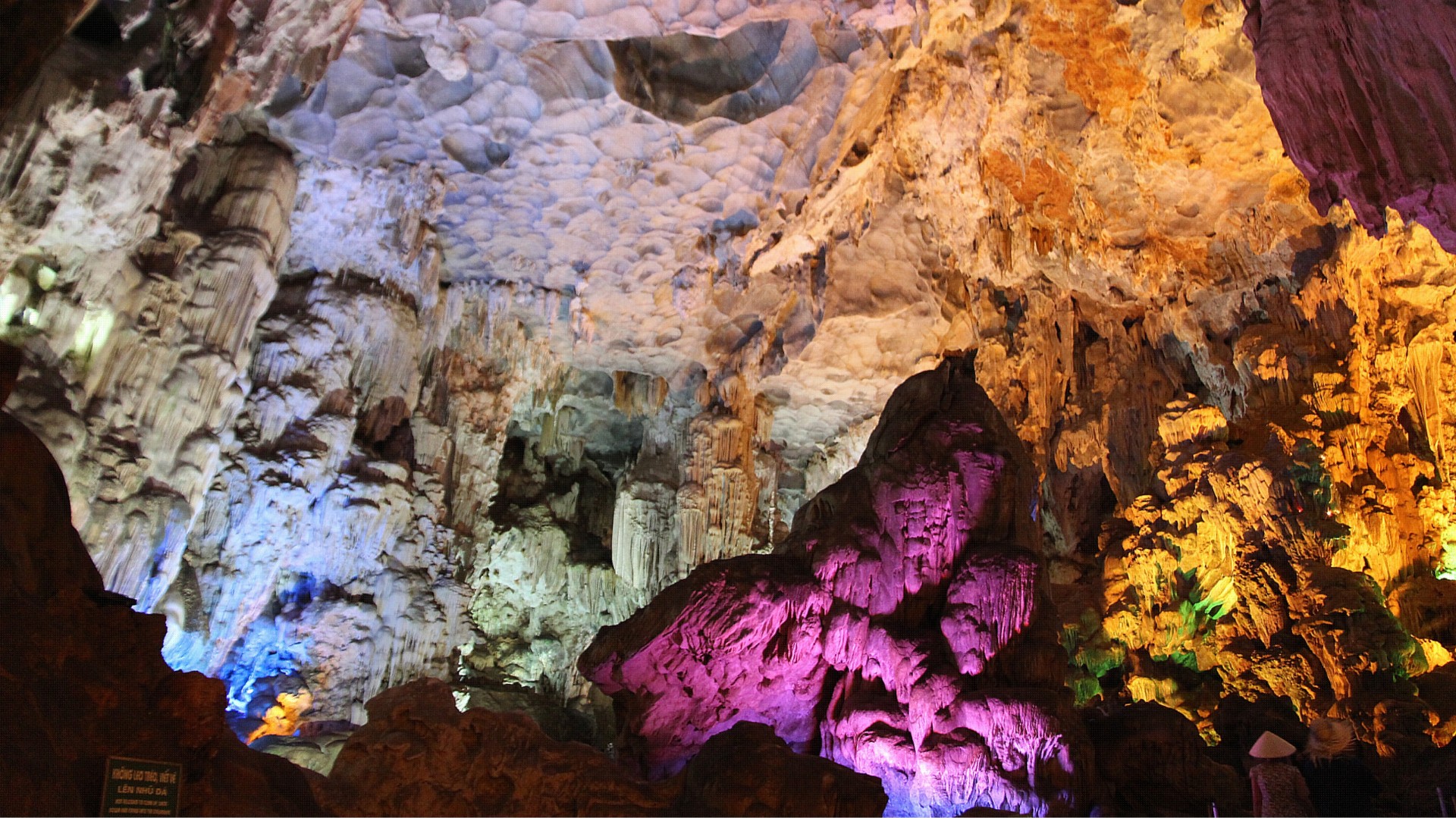
Ha Long Bay weather in December
December is the clearest, driest, and most photogenic month to cruise Ha Long Bay, with daytime temperatures of 18-22°C, calm seas, and rainfall averaging just 30-50 mm for the whole month. It is also the most popular single month to book a cruise.
Temperature and rainfall
- Temperature: 18-22°C daytime, dropping to 14-16°C at night. Warm enough for kayaking and swimming, cool enough to walk the cave steps comfortably.
- Rainfall: 30-50 mm for the entire month (checked with Vietnam Meteorological and Hydrological Administration average). Some Decembers see almost no rain at all.
Sea conditions and what to pack
- Sea conditions: calm. The northeast monsoon keeps the air dry and clears any residual swell from the typhoon season.
- What to pack: light layers: a fleece or thin jacket for evenings on the water. Sunscreen still necessary; UV index remains moderate.
Seasickness on the open stretches
December's seas are usually calm, but the open stretches near the bay mouth can still have a light swell. Larger cruise boats (over 30 m) ride more steadily than smaller wooden junks; if you are prone to motion sickness, ask about boat size when booking and consider bringing tablets regardless.
Skip the final two weeks of December if you have not booked ahead. This is the peak booking window, a 2-night cruise on a mid-range boat runs USD 200-340 per person (checked September 2026, excluding flights), and boats fill up 3-4 weeks in advance.
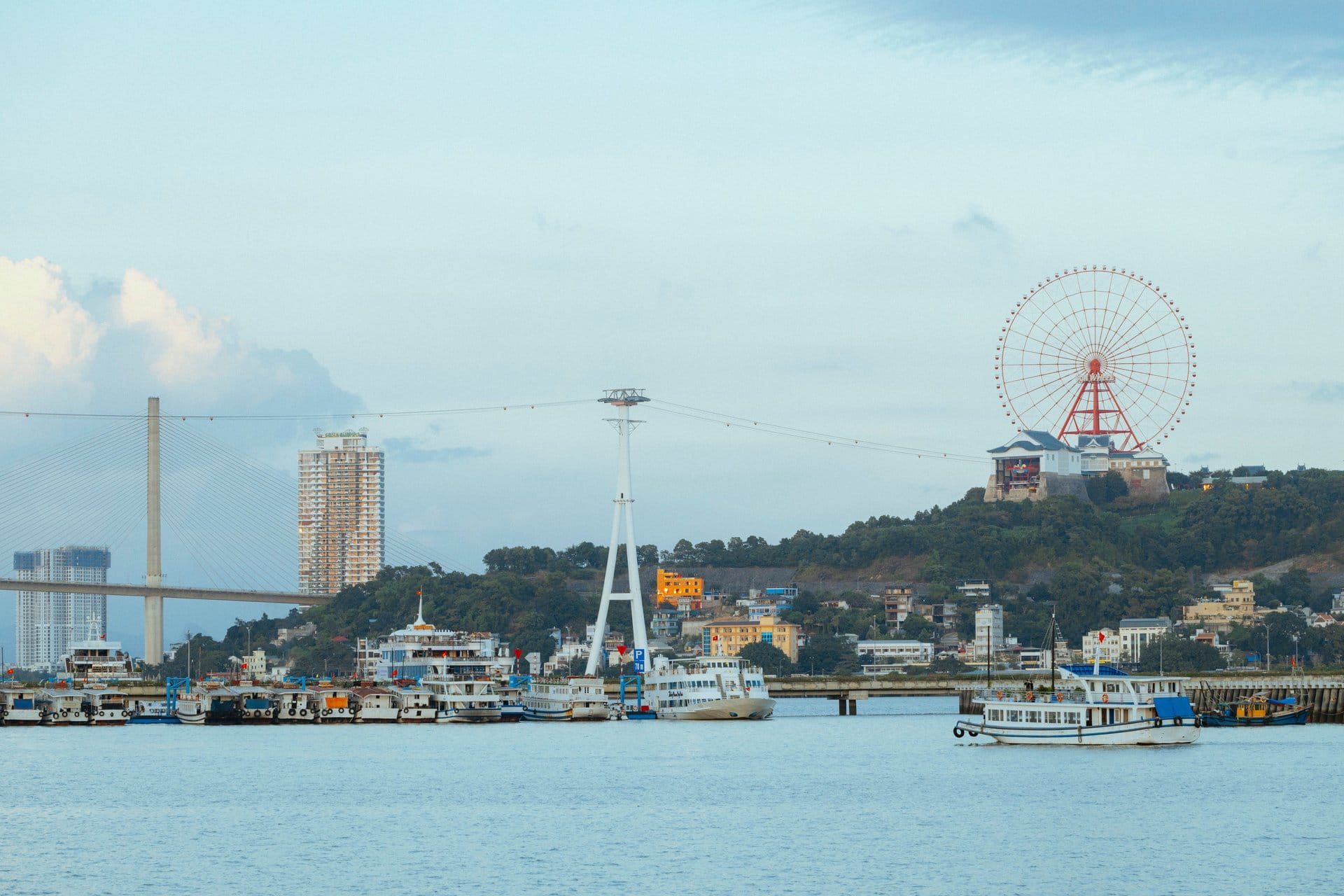
Typhoon season: what to know before you book
Ha Long Bay lies on the northwestern edge of the South China Sea typhoon track. Typhoons typically form over the open Pacific from June and can affect the bay through October, with peak risk in August and September.
What happens when a typhoon hits
A direct typhoon strike closes the bay: all boats return to port, tour operators cancel, and the disruption lasts 2-5 days. For a 2-night cruise booked within this window, that is a meaningful risk.
Typhoon Yagi: the 2024 example
Typhoon Yagi, which made landfall over Quang Ninh province in September 2024, showed how severe this risk can be in a bad year. It sank around 30 vessels at boat lock areas along the bay, including 27 tourist boats, and forced a near week-long closure before Ha Long Bay reopened to cruises on 13 September 2024. Most operators rebuilt or replaced their fleets within the following months, but the episode is why serious cruise operators now treat a written weather cancellation clause as standard, not optional.
How to reduce the risk
Practical steps if you're visiting in high-risk months:
- Book a cruise with an explicit weather cancellation policy and full refund clause.
- Check Vietnam's National Centre for Hydro-Meteorological Forecasting 48-72h before your departure from Hanoi.
- Consider Bai Tu Long Bay instead (the bay directly north-east of Ha Long). It is more sheltered from northeast winds and often accessible when Ha Long Bay is rough. See our upcoming Bai Tu Long Bay guide for details.
- Ha Long Bay's semi-enclosed geography means wind-generated swells are shorter than open-sea conditions, but boats still rock significantly in a full typhoon.
Skip a cruise booking in August or September that has no weather cancellation clause in writing. This is peak typhoon risk, a direct hit closes the bay for 2-5 days, and Typhoon Yagi proved in 2024 that a bad storm can sink boats, not just delay a trip.
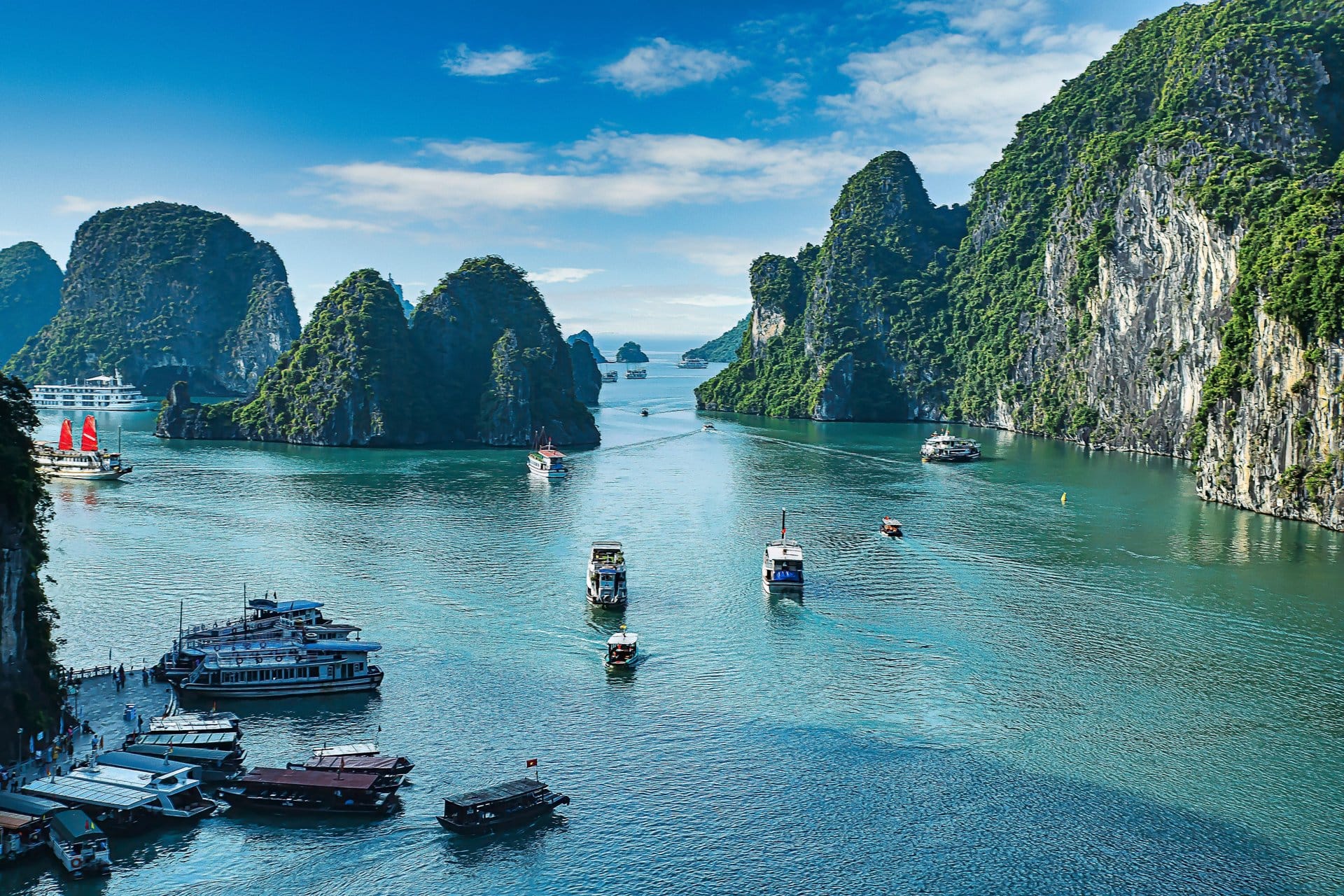
Getting to Ha Long Bay from Hanoi
Ha Long Bay sits roughly 150-170 km east of Hanoi, depending on the route. Most visitors book a cruise package that includes the transfer, so getting there is not something you have to plan separately unless you want to arrange your own bus, flight, or airport transfer.
By limousine bus from Hanoi Old Quarter
The bus takes 2.5-3.5h to Ha Long City or the cruise port via the Hanoi-Hai Phong-Ha Long expressway (longer in heavy traffic). Cost: 200,000-330,000 VND per seat (checked September 2026). Multiple limousine operators run daily departures from about 7-8 am.
By air through Van Don International Airport
Van Don opened in December 2018 in Quang Ninh province, roughly 50 km from the cruise port. Flights connect to Ho Chi Minh City, Da Nang, and Phu Quoc. Useful if you are combining Ha Long Bay with the south and want to avoid the Hanoi transfer.
Which cruise port you'll use
Most overnight cruises board at Tuan Chau Marina, the largest departure point in the bay, with a dedicated terminal for multi-day boats and about 500 vessels operating from its piers. A smaller number of premium and international cruise lines use the newer Ha Long International Cruise Port at Bai Chay, built for larger ships. Your cruise operator assigns the port, you do not choose it, so check your booking confirmation for the exact terminal name before arranging your own transfer.
Skip arranging your own transfer if you're already on an all-inclusive package. The operator assigns the port and handles the bus and boarding formalities, and building your own transport around the wrong terminal, Tuan Chau instead of the newer Bai Chay port, means showing up at the wrong pier.

Our Hanoi and Ha Long Bay 4 day tour combines the Old Quarter with a Ha Long Bay cruise day, cave visits and traditional Vietnamese dining, a compact way to see both in one trip.
Rosie is a Meetup Travel local expert, born and raised in Vietnam, who tracks how the bay's dry and wet seasons and its typhoon track actually affect cruise bookings, not just what a monthly weather average implies.