
Vietnam vs Thailand: Which Should You Visit First?
Vietnam is the smarter first-trip choice for most travelers heading to Southeast Asia. Thailand is easier for absolute beginners, but Vietnam offers more variety per day, better food diversity, and more depth for a 2 to 3 week trip.
I grew up in Hanoi and have traveled Thailand a few times. Bangkok energy is real and the Thai islands are stunning. But when a friend asks me "Vietnam or Thailand for 2 weeks?" my answer is always Vietnam.
Prices are reference only and change with season, group size, and operator.
Meetup Travel plans multi-week Vietnam trips end-to-end. See Vietnam tours . Ask us to plan your trip
Quick reference table
Category | Vietnam | Thailand |
|---|---|---|
UNESCO World Heritage Sites | 8 | 8 |
Best months to visit | Feb to April, Oct to Nov | Nov to Feb |
Daily mid-range budget | around USD 80 to 150+ | around USD 100 to 180+ |
Tourism strength | Landscape variety, food diversity, value | Beaches, nightlife, established infrastructure |
Tourism weakness | Less English outside tourism zones | Overtourism in hotspots, rising prices |
What are the main differences between Vietnam and Thailand?
Vietnam and Thailand share climate and price bracket but feel very different. Vietnam is long and thin with strong regional identity across north, central, and south. Thailand is more compact, built around Bangkok and its islands.
Category | Vietnam | Thailand |
|---|---|---|
Geographic variety | Mountains, delta, karst bays, rice terraces, coast | Bangkok, hill country, tropical islands |
Tourism infrastructure | Growing fast, still developing outside hotspots | Very mature, English signage everywhere |
Food diversity | Three distinct regional cuisines | Central, Northern, Southern Thai + Isaan |
UNESCO sites | 8 (Hue, Hoi An, Halong, Phong Nha, others) | 8 (Ayutthaya, Sukhothai, Ban Chiang, others) |
Thailand is easier, Vietnam is deeper.
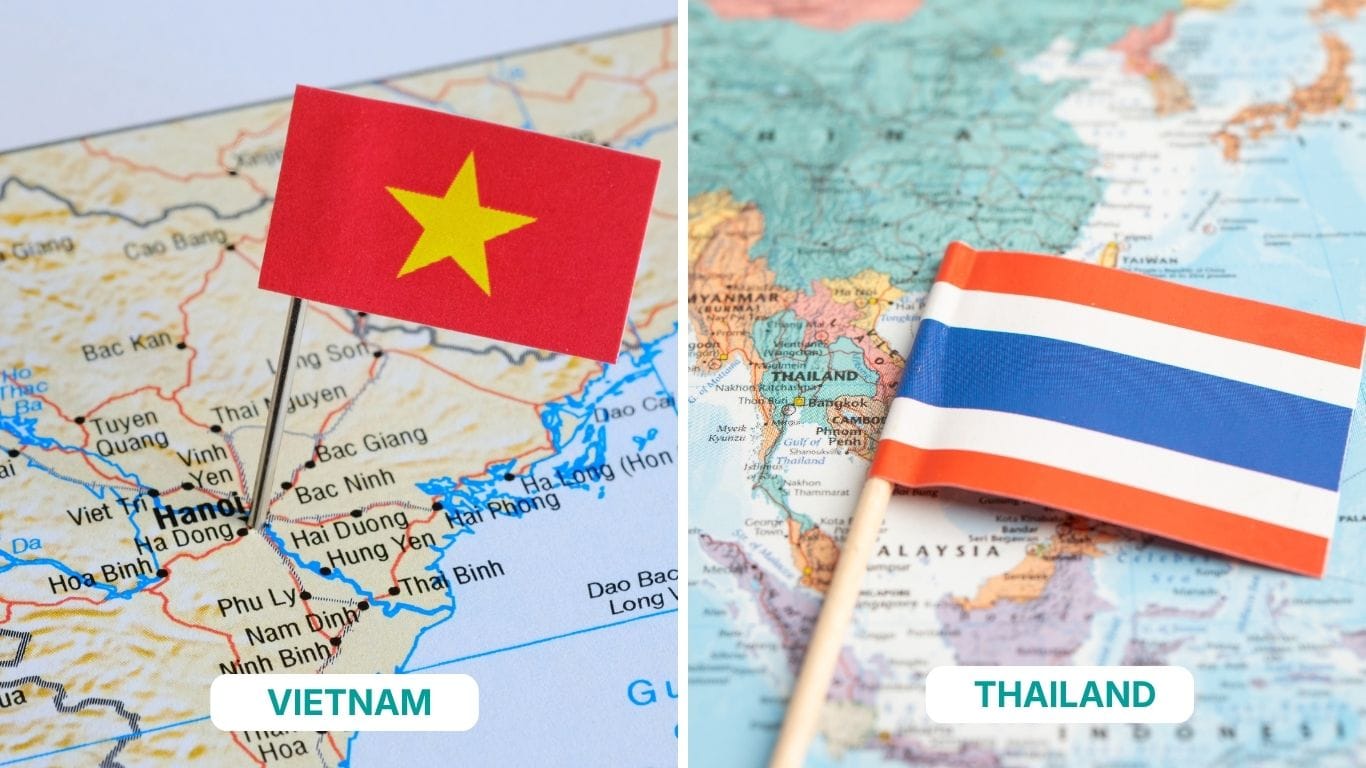
Vietnam and Thailand compared for travellers
Is Vietnam or Thailand better for a first trip to Southeast Asia?
Vietnam is the better first trip if you have 10 days or more. It packs more variety into a single itinerary and delivers stronger value on a longer trip. Thailand is the safer pick only if you want zero friction and mostly beach time.
Why Vietnam wins for a typical first trip:
One country covers mountains, karst bays, ancient towns, colonial cities, beaches, and a huge river delta
Food is more varied day to day and less spicy by default
Prices stay reasonable even in the touristy zones
The Vietnam e-visa is quick, cheap, and valid up to 90 days
Ha Giang, Cao Bang, and Pu Luong still feel largely undiscovered
Locals are famously welcoming to first-time visitors
Thailand wins if: you want polished beach logistics, English everywhere, a Bangkok layover extension, or you're traveling with young kids who need refined service infrastructure.
Which has more to see and do?
Roughly a tie, with different flavors. Vietnam packs mountains, karst bays, rice terraces, colonial cities, and a huge river delta into a north to south spine. Thailand offers Bangkok energy, Chiang Mai hill country, iconic islands, and ruins at Ayutthaya and Sukhothai.
Vietnam highlights: Halong Bay cruises, Sapa rice terraces, Hoi An Ancient Town, Hue Imperial City, Phong Nha caves, Mekong Delta, Ha Giang Loop.
Thailand highlights: Bangkok Grand Palace, Chiang Mai temples, Ayutthaya and Sukhothai ruins, Krabi cliffs, Koh Phi Phi, Phuket, Khao Sok.
For beach volume, Thailand wins. For landscape variety in one overland route, Vietnam wins.
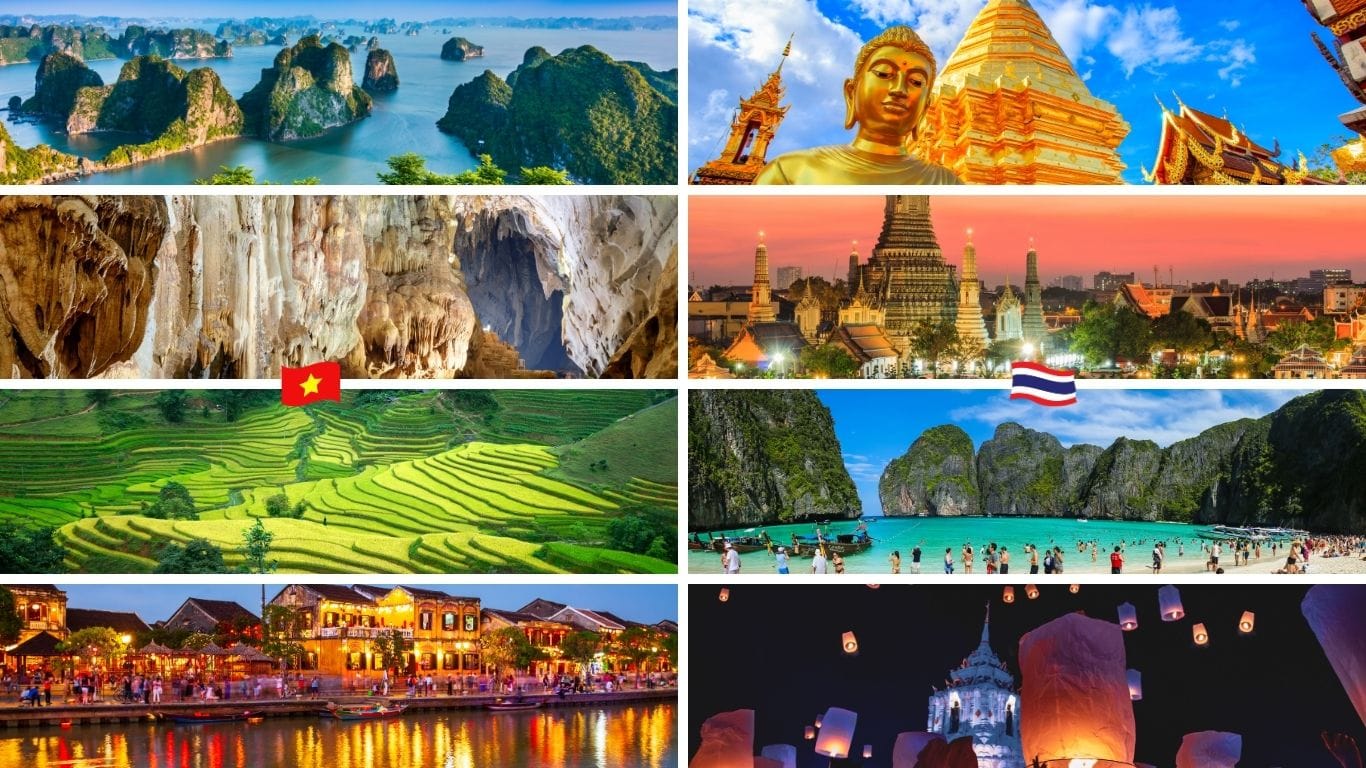
Natural landscapes: Vietnam vs. Thailand side by side
Which is cheaper, Vietnam or Thailand?
Vietnam is slightly cheaper on the ground, especially for internal transport, street food, and mid-range hotels. Bangkok is now nearly Western-city expensive in premium zones; Phuket and Koh Samui in high season are expensive by any standard.
Category | Vietnam | Thailand |
|---|---|---|
Budget hotel per night | around USD 15 to 30+ | around USD 20 to 40+ |
Mid-range hotel per night | around USD 40 to 90+ | around USD 60 to 130+ |
Street food meal | around USD 2 to 4+ | around USD 3 to 5+ |
1-hour taxi (Grab) in main city | around USD 6 to 10+ | around USD 10 to 15+ |
Domestic flight | around USD 40 to 80+ | around USD 45 to 90+ |
Guided day tour | around USD 30 to 60+ | around USD 40 to 80+ |
Vietnam wins the daily budget contest, but the gap is smaller than 5 years ago.
Which has better food?
Vietnam wins on diversity and daily eating comfort. Vietnamese cuisine has three distinctive regional canons (Northern, Central, Southern), versus Thailand's more centralized style. Vietnamese flavors are balanced across salty, sour, sweet, spicy, and umami. Thai food is louder and spicier, a plus or minus depending on your palate.
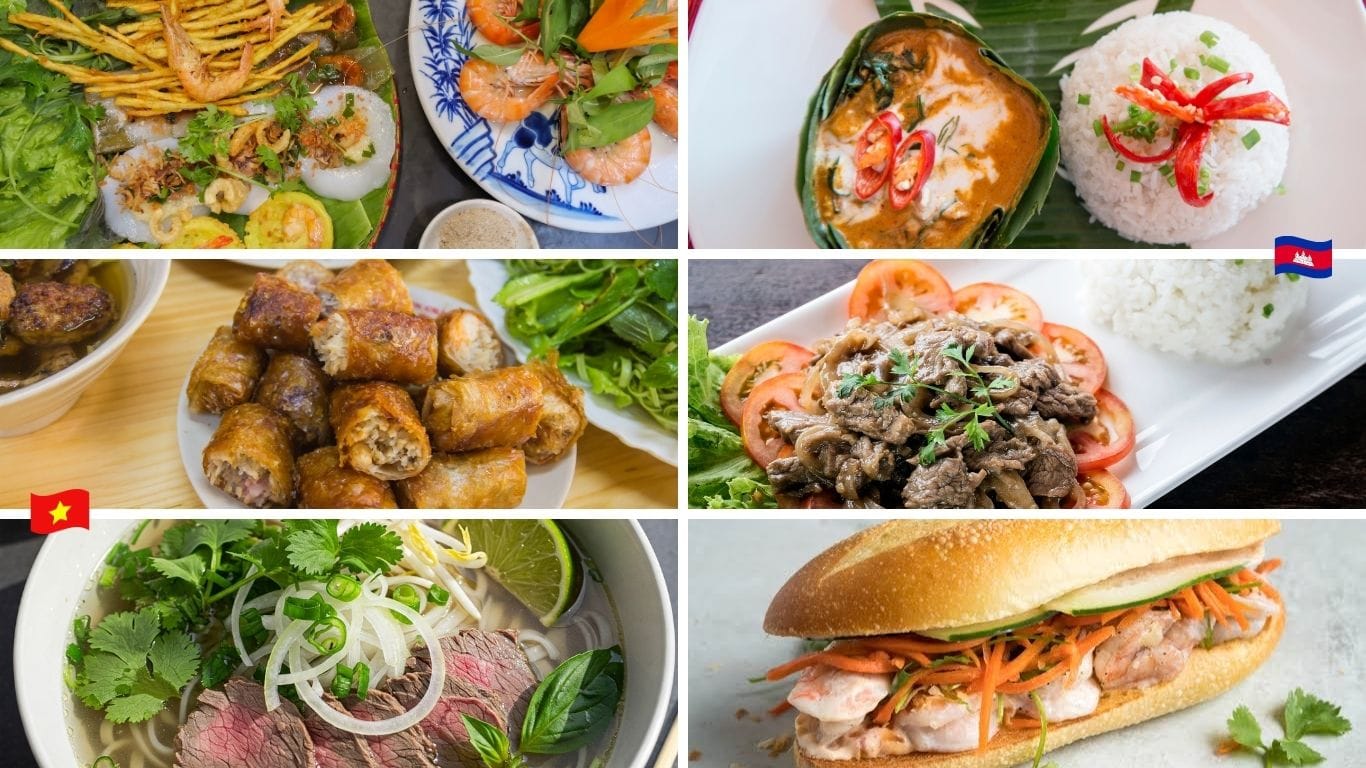
Vietnamese food vs Thailand food
Vietnam: three regional cuisines, dozens of daily dishes
North (Hanoi + Hai Phong): phở, bún chả, bún đậu mắm tôm, bánh cuốn, chả cá, bánh đa cua, bún cá.
Central (Hue + Hoi An + Da Nang): bún bò Huế, mì Quảng, cao lầu, bánh khoái, bánh bèo, bánh khọt, cơm hến.
South (HCMC + Mekong): bánh mì, cơm tấm, hủ tiếu, bánh xèo, bánh tráng trộn, bánh tráng cuộn, gỏi cuốn, cá kho tộ.
Nationwide: cà phê sữa đá, chè, sinh tố, street snacks in every province.
Thailand: strong central canon, iconic globally
Pad Thai, Tom Yum Goong, Green Curry, Massaman Curry, Som Tam, Khao Soi, Mango Sticky Rice, Thai Iced Tea, plus Isaan grilled dishes.
Vietnamese balance makes it easier to eat 3 meals a day for 2 weeks straight. Vietnam wins on breadth and daily rhythm.
Which is easier to travel around?
Thailand is slightly easier for foreign travelers thanks to wider English signage and a very refined domestic flight network. Vietnam has excellent sleeper trains and cheap domestic flights, but less English outside tourism zones.
Category | Vietnam | Thailand |
|---|---|---|
Domestic flights | Vietnam Airlines, Vietjet, Vietravel Airlines | Thai Airways, AirAsia, Nok Air, Bangkok Airways |
Trains | Reunification Express (great sleeper route) | State Railway, decent overnight to Chiang Mai |
Ride-hailing | Grab, Be, Green SM (all cheap) | Grab, Bolt (widely available) |
English on signs | Common in tourism zones | Common almost everywhere |
Thailand wins for smooth logistics. Vietnam wins if you enjoy sleeper trains, scenic drives, and slower overland pacing. If planning feels overwhelming, comparing Vietnam tour companies saves a lot of stress.

Meetup Travel's local expert - your buddies in Vietnam
Which is safer for tourists?
Both countries are broadly safe. Thailand has slightly more well-known scam patterns, especially in Bangkok and Phuket. Vietnam has fewer scam reports overall, but use Grab in Ho Chi Minh City to avoid taxi meter fraud.
Common Thailand scams: tuk-tuk gem-shop tours, jet-ski damage claims in Phuket, "Grand Palace closed today" scams, broken taxi meters in Bangkok.
Common Vietnam annoyances: unofficial airport taxis, motorbike rental damage claims, overpricing at unmarked stalls, touts in Hanoi Old Quarter.
Serious crime against tourists is rare in both. Cover your bag on scooters, don't flash cash, use ride-hailing apps.
Which has better beaches and nature?
Vietnam wins on nature overall, with both stronger mountains and equally beautiful beaches. Thailand has more famous beach brands (Krabi, Phi Phi, Phuket), but those hotspots are crowded and over-developed. Vietnam offers a wider natural palette: karst peaks, the highest mountain in Indochina, world-class terraces, and turquoise islands Forbes and CNN regularly rank in Asia's top 10.
Vietnam mountains: Sapa rice terraces, Ha Giang Loop karst plateau, Fansipan (~3,143m, the Roof of Indochina and the highest peak in Vietnam, Laos, and Cambodia), Ninh Binh limestone peaks, Halong and Lan Ha Bay's karst islands (UNESCO).
Vietnam beaches: Phu Quoc turquoise water, Con Dao untouched marine park, Nha Trang bay, Da Nang My Khe (regularly on Forbes and Sunday Times "top beach in Asia" lists), Quy Nhon.
Thailand nature: Doi Suthep and Doi Inthanon around Chiang Mai, Khao Sok jungle. Beaches: Krabi, Railay, Koh Phi Phi, Koh Samui, Phuket, Koh Lanta, Koh Tao. Iconic, but many are heavily developed and crowded in high season.
If you want beautiful nature (mountains and beaches together), Vietnam wins. For a party-island scene with global brand names, Thailand still leads.
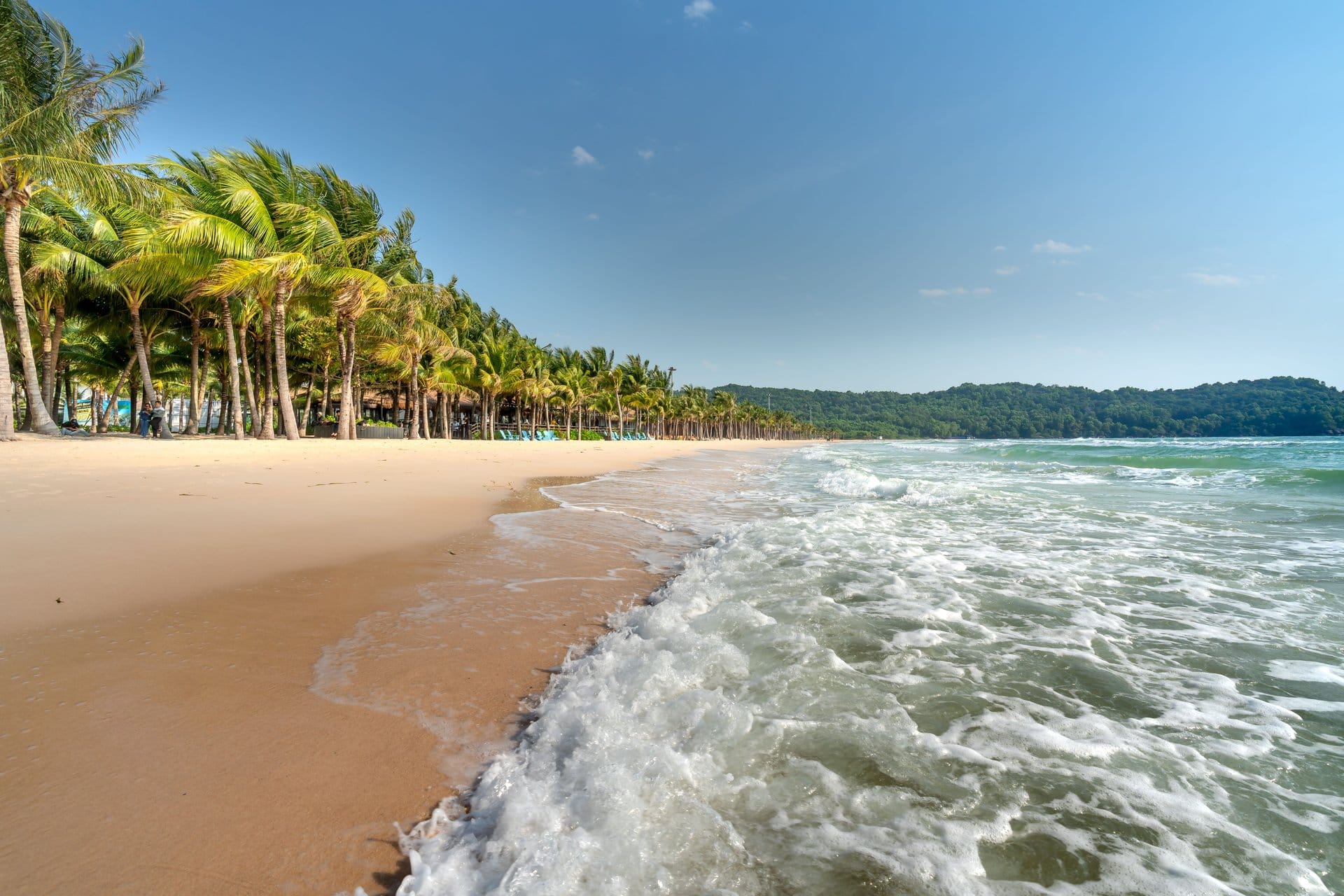
Mountains meeting the sea on the Vietnamese coast
Which has better history and culture?
Vietnam has spread-out cultural depth: Hue Imperial City, Hoi An Ancient Town, French colonial architecture in Hanoi and Ho Chi Minh City, and 54 ethnic minority groups. Thailand has stronger single-site anchors at Ayutthaya, Sukhothai, and Bangkok's Grand Palace and Wat Pho.
Vietnam highlights: Hue Imperial City, Hoi An, Temple of Literature and Hanoi Old Quarter, War Remnants Museum, ethnic villages around Sapa and Ha Giang, My Son Cham temples.
Thailand highlights: Grand Palace and Wat Pho, Wat Arun, Ayutthaya ruins, Sukhothai historical park, Doi Suthep, Ban Chiang.
Roughly a tie. Vietnam spreads culture across the overland route; Thailand concentrates it in a few flagship sites.
Heritage architecture at a Vietnamese vs Thailand cultural site
Which has better visa policies?
Thailand is still easier for many nationalities on paper, but the rules are shifting, and the shift is bigger than most guides say. Thailand currently offers a 60-day visa exemption covering 93 countries and territories. On 19 May 2026 the Thai Cabinet approved scrapping that scheme entirely and replacing it with a tiered one: around 54 countries drop to a 30-day exemption, three (the Maldives, Mauritius, and the Seychelles) drop to 15 days, and Visa on Arrival shrinks from 31 eligible countries to four (Azerbaijan, Belarus, Serbia, and India). Most Western passports, including the US, UK, Canada, Australia, the EU states, Japan, and South Korea, land in the 30-day group.
The change takes effect 15 days after publication in the Royal Gazette, and as of mid-2026 that publication had not happened, so the 60-day rule still applied at the border. Check the current status before you book anything long. Vietnam, by contrast, requires an e-visa for most travelers, but the process is quick, cheap, and valid for up to 90 days.
Country | Visa option | Cost | Duration |
|---|---|---|---|
Vietnam | e-visa single entry | around USD 25+ | up to 90 days |
Vietnam | e-visa multiple entry | around USD 50+ | up to 90 days |
Thailand | Visa exemption on arrival | Free | 60 days for now, dropping to 30 days for ~54 countries and 15 days for 3 once the Royal Gazette publishes |
Thailand | Tourist visa (extended stay) | Check the Thai embassy; the 30-day extension alone is 1,900 THB | 60 days + 30 day extension |
The Vietnam e-visa takes around 3 to 7 working days. Always apply through the official government portal. See the Vietnam e-visa in 2026 guide to avoid unofficial middleman sites.
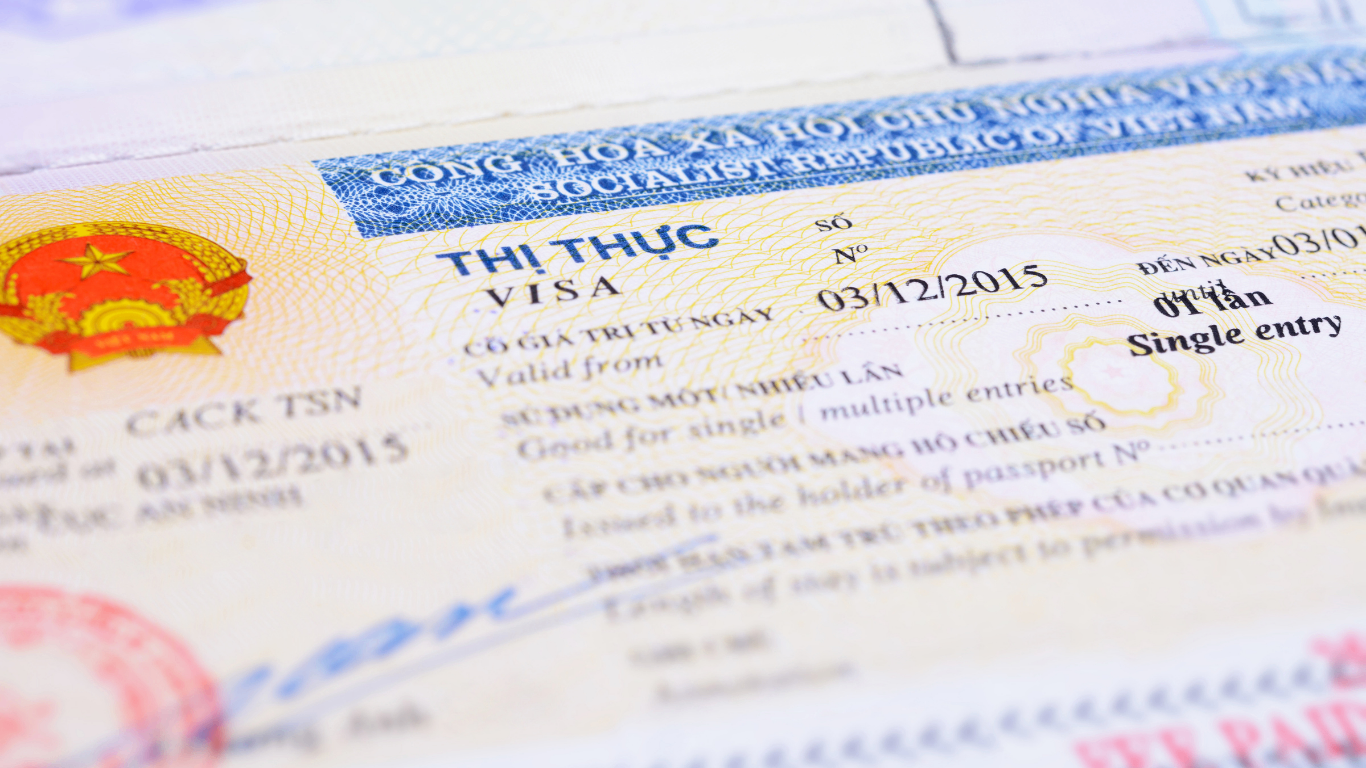
Vietnam e-visa application on the official portal
How many days do I need for Vietnam vs Thailand?
Vietnam needs 10 to 14 days minimum for the classic north to south route. Thailand can be seen in 7 to 10 days with Bangkok, Chiang Mai, and one island. Both work well as 3 to 4 week deep dives.
Vietnam essentials: 10 days for Hanoi + Halong + Hoi An + Ho Chi Minh City
Vietnam classic: 14 days adds Sapa or Ninh Binh + Mekong Delta
Vietnam deep dive: 21 days adds Ha Giang, Phong Nha, and Phu Quoc
Thailand essentials: 7 days for Bangkok + one island
Thailand classic: 10 days adds Chiang Mai
Thailand deep dive: 14 to 21 days adds multiple islands and Khao Sok
Best months vary by region: check the Vietnam weather by month guide before locking dates.

Meetup Travel with our lovely customers
What are the reasons to pick Vietnam over Thailand?
Vietnam wins on variety, value, and a sense of discovery that Thailand has partly lost to overtourism.
More landscape variety in a single overland route: mountains, karst bays, terraces, ancient towns, colonial cities, beaches, delta
Lower daily cost, especially in tourist zones and for domestic transport
Three distinct regional cuisines that stay interesting for 2 or 3 weeks
Less overtourism outside a handful of hotspots
Coffee culture (Vietnam is the world's second-largest coffee producer)
Halong Bay and Lan Ha Bay overnight cruises with no direct Thai equivalent
Hoi An lantern nights, one of Southeast Asia's most photogenic settings
Meetup Travel and local operators can bundle everything into one all-inclusive Vietnam package
Ready to plan a Vietnam trip? Meetup Travel builds custom Vietnam itineraries from around USD 100 to 150+/person/day for 3-star shared, around USD 140 to 200+/person/day for 4-star mid-range private, around USD 180 to 300+/person/day for 5-star luxury (reference only, prices change with season and group size). See Vietnam tours . Ask us to plan your trip
Should you visit both Vietnam and Thailand, or just one?
Just Vietnam for a 10 to 14 day trip. Both countries only if you have 3 weeks or more. Squeezing both into 10 days produces a shallow experience in each and burns a full travel day on the connecting flight.
7 to 10 days: pick one (Vietnam preferred for variety)
10 to 14 days: pick one (Vietnam strongly preferred)
14 to 21 days: still recommend just Vietnam for depth, or Vietnam plus 5 days in Thailand
21+ days: comfortable to do both properly
The most common regret we hear is combining both countries into a short trip. You end up with 4 days in each and nothing sinks in.
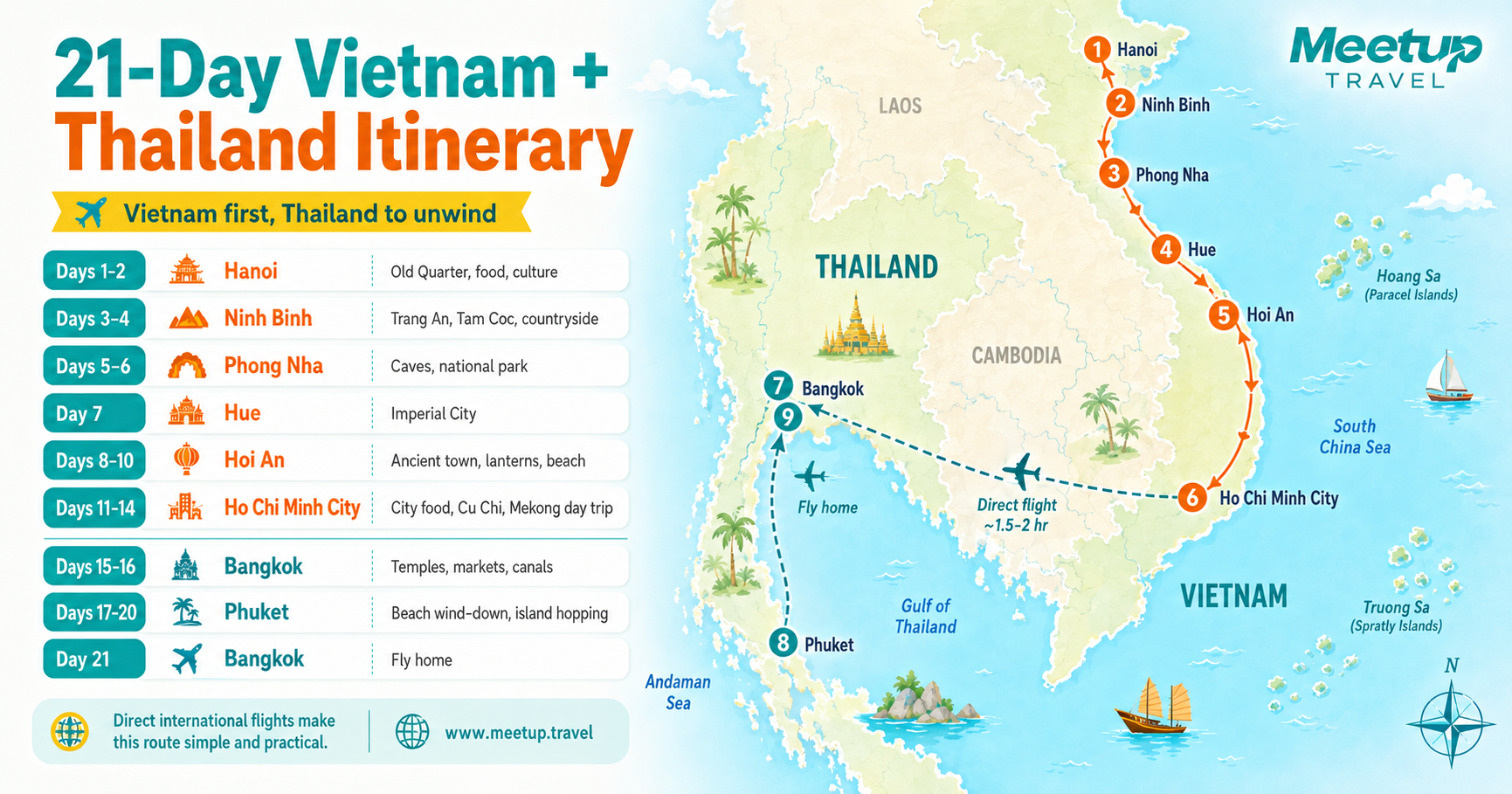
Choosing between a Vietnam and a Thailand itinerary
Which should you do first if visiting both?
Vietnam first, Thailand as the wind-down. Vietnam is more logistically demanding and rewards fresh energy. Thailand is smoother and works well as a beach-focused closer.
Practical sequence:
Fly into Hanoi or Ho Chi Minh City
Travel Vietnam north to south (or south to north) over 10 to 14 days
Fly to Bangkok (direct, around 2 hours)
Spend 5 to 7 days on Thai beaches and Bangkok
Fly home from Bangkok
Reverse order also works, but Vietnam feels more demanding after a beach holiday.
Sample Vietnam itineraries: 10, 14, 21 days
Vietnam works beautifully at 10, 14, or 21 days, with each length unlocking a different depth.
10-day Vietnam highlights
Days | Location | Focus |
|---|---|---|
1 to 3 | Hanoi | Old Quarter, food tour, day trip to Ninh Binh |
4 to 5 | Halong Bay | Overnight cruise on a traditional junk |
6 to 8 | Hoi An | Ancient town, cooking class, beach time |
9 to 10 | Ho Chi Minh City | War Remnants Museum, Mekong Delta day trip |
14-day Vietnam classic
Days | Location | Focus |
|---|---|---|
1 to 3 | Hanoi + Ninh Binh | Cultural intro, Trang An boat ride |
4 to 5 | Sapa | Rice terrace trekking, minority villages |
6 to 7 | Halong or Lan Ha Bay | Overnight cruise |
8 to 10 | Hue and Hoi An | Imperial history, tailors, lanterns |
11 to 12 | Da Nang | Beach or Ba Na Hills |
13 to 14 | Ho Chi Minh City | Cu Chi Tunnels, Mekong Delta |
21-day Vietnam deep dive
Days | Location | Focus |
|---|---|---|
1 to 4 | Hanoi and Ha Giang Loop | City intro plus 3-day motorbike loop |
5 to 7 | Cao Bang and Ban Gioc | Waterfall, karst landscapes |
8 to 9 | Halong Bay | Overnight cruise |
10 to 12 | Phong Nha | Caves, jungle |
13 to 15 | Hue and Hoi An | Culture, food |
16 to 17 | Da Lat | Highland coolcation, coffee farms |
18 to 19 | Ho Chi Minh City + Mekong | City + delta |
20 to 21 | Phu Quoc | Beach wind-down |
Sample Meetup Travel Vietnam tours
Itinerary | Days | Best for | Link |
|---|---|---|---|
Vietnam Family Tour | 15 days | Families with kids | |
Vietnam Honeymoon Journey | 10 days | Couples | |
Essential Vietnam | 12 days | First-timers | |
Vietnam's Top Attractions | 10 days | Highlights in one trip | |
Northern Vietnam Highlights | 8 days | Hanoi + Halong + Sapa | |
South & Central Vietnam | 6 days | HCMC + Hoi An + Da Nang |
Final verdict: which should you pick?
Pick Vietnam. For most travelers deciding between these two countries for a first Southeast Asia trip of 10 days or more, Vietnam delivers more variety, better value, stronger food diversity, and a more memorable overland journey. Thailand is fantastic in its own right and wins for beach-focused trips, Bangkok layover extensions, or absolute beginners who want maximum comfort. But if you can only pick one country, pick Vietnam. Save Thailand for a return trip built around beaches and Bangkok nightlife.
Want a Vietnam trip built around your specific interests (food, beaches, history, trekking, or all four)? See Vietnam tours . Ask us to plan your trip