
Vietnamese street food: dishes, prices, and where to eat
Vietnamese street food is best understood not as a category of dishes but as an eating culture: small plastic stools at the side of the road, bowls of broth ladled from a cart that has been serving a familiar local recipe, and an affordable meal. The dishes differ by city and by time of day; the experience of sitting on a low stool in an alley while the format changes from city to city.
Dish | Type | Where it's best | Approx. cost (Sep 2026) |
|---|---|---|---|
Pho | Breakfast noodle soup | Hanoi (clear broth); HCMC (sweeter) | 30,000-60,000 VND |
Banh mi | Sandwich, any meal | Everywhere, Hoi An has the best reputation | 20,000-40,000 VND |
Com tam | Broken rice, any meal | Ho Chi Minh City, originally | 35,000-70,000 VND |
Bun cha | Grilled pork + noodles, lunch | Especially associated with Hanoi | 40,000-70,000 VND |
Banh xeo | Sizzling crepe, lunch/dinner | Central and southern Vietnam | ~20,000-80,000 VND |
Xoi | Sticky rice breakfast | Hanoi especially | 15,000-40,000 VND |
The essential Vietnamese street dishes
Three dishes define Vietnamese street food more than any others: pho, banh mi, and bun cha. Each has a regional home base and a strict time window, and eating the wrong city or the wrong hour usually means a worse version of the same dish.
Pho: Hanoi style vs Ho Chi Minh City style
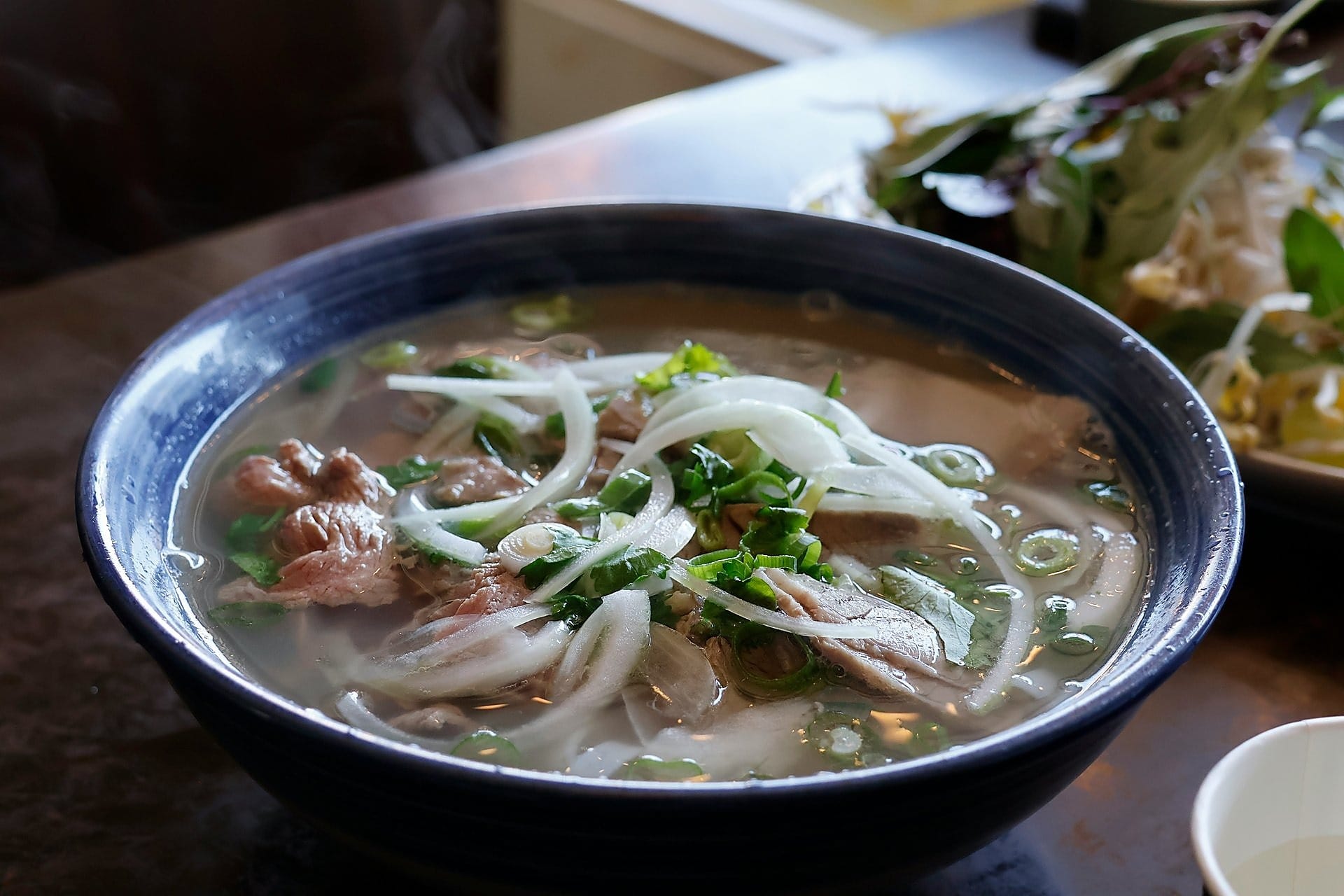
Pho is Vietnam's most internationally recognized dish. It is a clear bone broth served with flat rice noodles, thinly sliced beef or chicken, fresh herbs, and condiments. Hanoi-style pho uses a clear, light broth with minimal garnish; Ho Chi Minh City-style pho is sweeter, served with a larger plate of bean sprouts, lime, and basil. Both versions are breakfast and mid-morning foods, the best stalls typically close by 10 am. Vietnamese eat pho by adding herbs and condiments at the table, then mixing from the bottom of the bowl.
Banh mi: from French bread to Vietnamese sandwich
Banh mi evolved from the French baguette during the colonial period and became distinctly Vietnamese by what was put inside: pate, pickled daikon and carrot, fresh coriander, cucumber slices, and chili. The bread itself is lighter and crispier than a French baguette. A banh mi cart or shop can be found on almost every urban street block. Hoi An's versions have an unusually good reputation, in particular the Madam Khanh and Phuong shops in the Old Quarter.
Bun cha: Hanoi's lunch specialty
Bun cha is a Hanoi specialty: grilled pork patties and sliced fatty pork cooked over charcoal, served in a light vinegar dipping broth with cold vermicelli noodles, fresh herbs, and cha gio (spring rolls) optional. It is a lunch dish; stalls appear from around 11 am.
Skip ordering bun cha outside Hanoi and expecting the real thing. Imitations exist elsewhere, but the smoke quality and the specific pork cut are hard to copy outside the city where the dish started.
Vietnamese breakfast
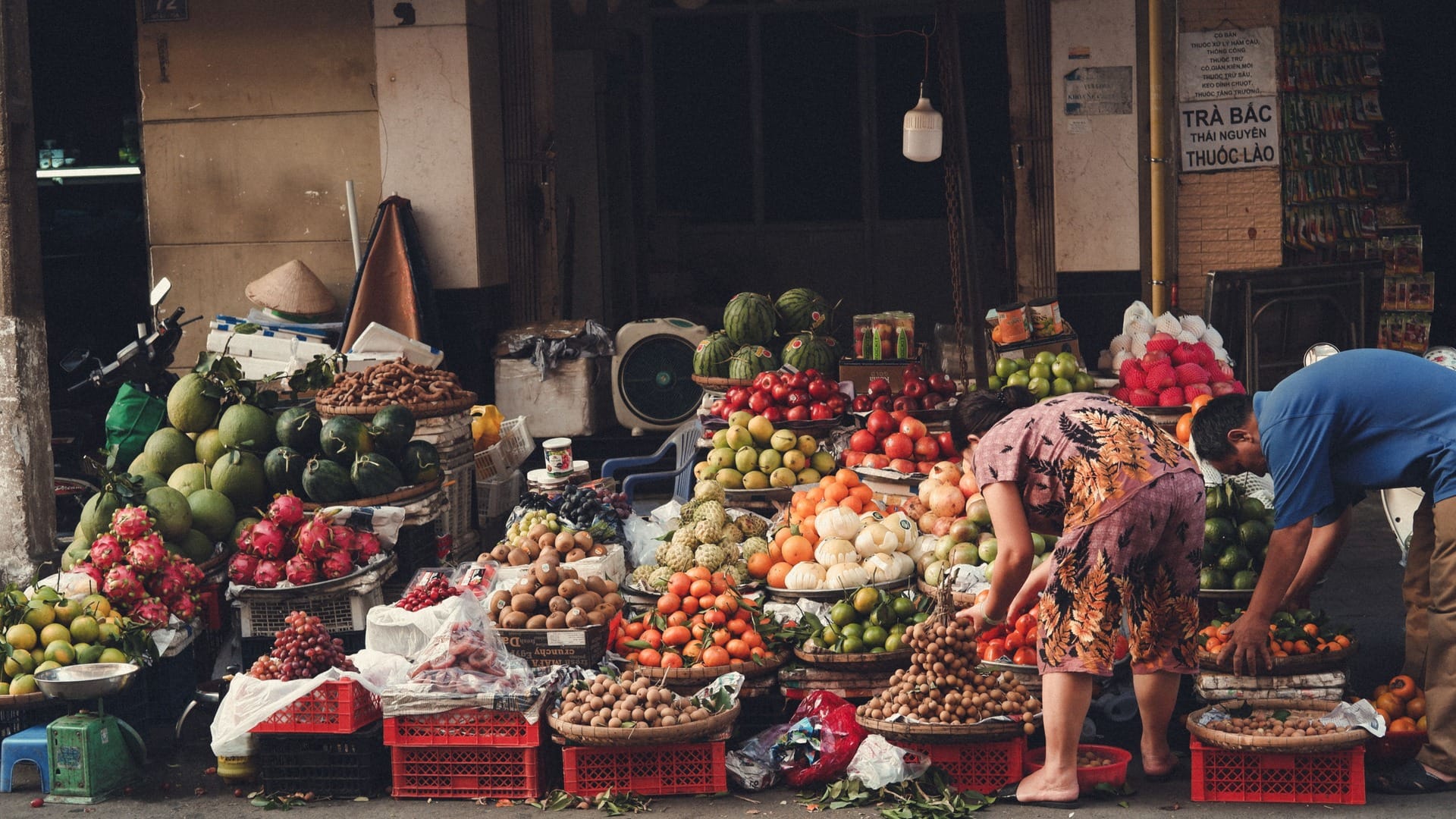
Vietnamese breakfast culture runs from roughly 6 am to 9 am and is built around freshness and specificity: each shop does one dish, made from ingredients prepared that morning. Menus are rarely multilingual, but photos are often available or a neighboring diner will help.
Banh cuon and xoi: the classic pair
Banh cuon: steamed rice rolls stuffed with minced pork and wood ear mushroom, served with a dipping broth. Primarily a Hanoi breakfast.
Xoi (sticky rice): served with a variety of toppings including shredded chicken, mung bean paste, fried shallots, or salty egg. Available from early morning carts, 15,000-40,000 VND depending on toppings.
Banh mi trung and chao: quick and simple
Banh mi trung: banh mi with a fried egg added. The cheapest breakfast banh mi variant and found everywhere.
Chao (rice porridge/congee): plain or with pork, chicken, or offal. A stomach-settling breakfast common near wet markets.
Streets around Hoan Kiem Lake in Hanoi have a morning breakfast energy from 6-9 am that later visiting hours don't replicate. For what to do after breakfast, see the Hanoi activities guide.
Skip expecting a seated, leisurely breakfast. Vietnamese street breakfast means eating standing or perched on a low stool, ordering with a quick "mot tai, mot nam" or simply pointing, then finishing fast and moving on.
What is broken rice? (Com tam explained)
Broken rice (com tam, literally "broken grain") is rice that fractured during milling, once food for the poor because whole grains sold for more. In Ho Chi Minh City it became the base of a street dish so popular the "broken" grains are now produced on purpose.
What's actually on the plate
A standard com tam plate in Ho Chi Minh City includes the broken rice topped with a combination of: grilled pork chop (suon nuong), shredded pork skin mixed with roasted rice powder (bi), steamed egg cake (cha trung), and a fried egg. It comes with a bowl of clear fish sauce broth, a small side of pickled vegetables, and scallion oil on top of the rice. Every element matters; removing any one changes the dish.
Where and when to find it
Com tam is available from roughly 7 am onward and stays available as a lunch and sometimes dinner dish. A full plate costs 35,000 to 70,000 VND (checked September 2026). Street shops in Ho Chi Minh City's Districts 1, 3, and Binh Thanh are the most concentrated (district names are still used locally as neighborhoods, though Vietnam abolished the district level as an administrative unit in July 2025).
Skip looking for great com tam in Hanoi. The dish appears everywhere in the south but is less common in the north, so if broken rice is the goal, build the trip around Ho Chi Minh City instead.
Hanoi vs Ho Chi Minh City vs Hoi An: regional differences
Hanoi, Ho Chi Minh City, and Hoi An each have a distinct street food identity. The clearest way to taste the difference is by region: subtle and specific in the north, sweeter and more mixed in the south, and locally singular in Hoi An and Hue.
Hanoi: subtle flavors, specialist shops
Hanoi: subtler flavors, less sweetness, smaller portions. Bun cha, bun rieu (crab noodle soup), cha ca La Vong (grilled fish with dill). Eating culture more ritualistic, specific shops for specific dishes. The Hoan Kiem area has dozens of per-dish specialists within a few streets.
Ho Chi Minh City: sweeter and more mixed
Ho Chi Minh City: sweeter and more varied. Com tam, banh mi variations, hu tieu (Chinese-influenced pork noodle soup), bun bo Hue available alongside local originals. More open to mixing dishes. Larger portions. The Ben Thanh area and District 4 are the street food dense zones.
Hoi An and Hue: central Vietnam's own repertoire
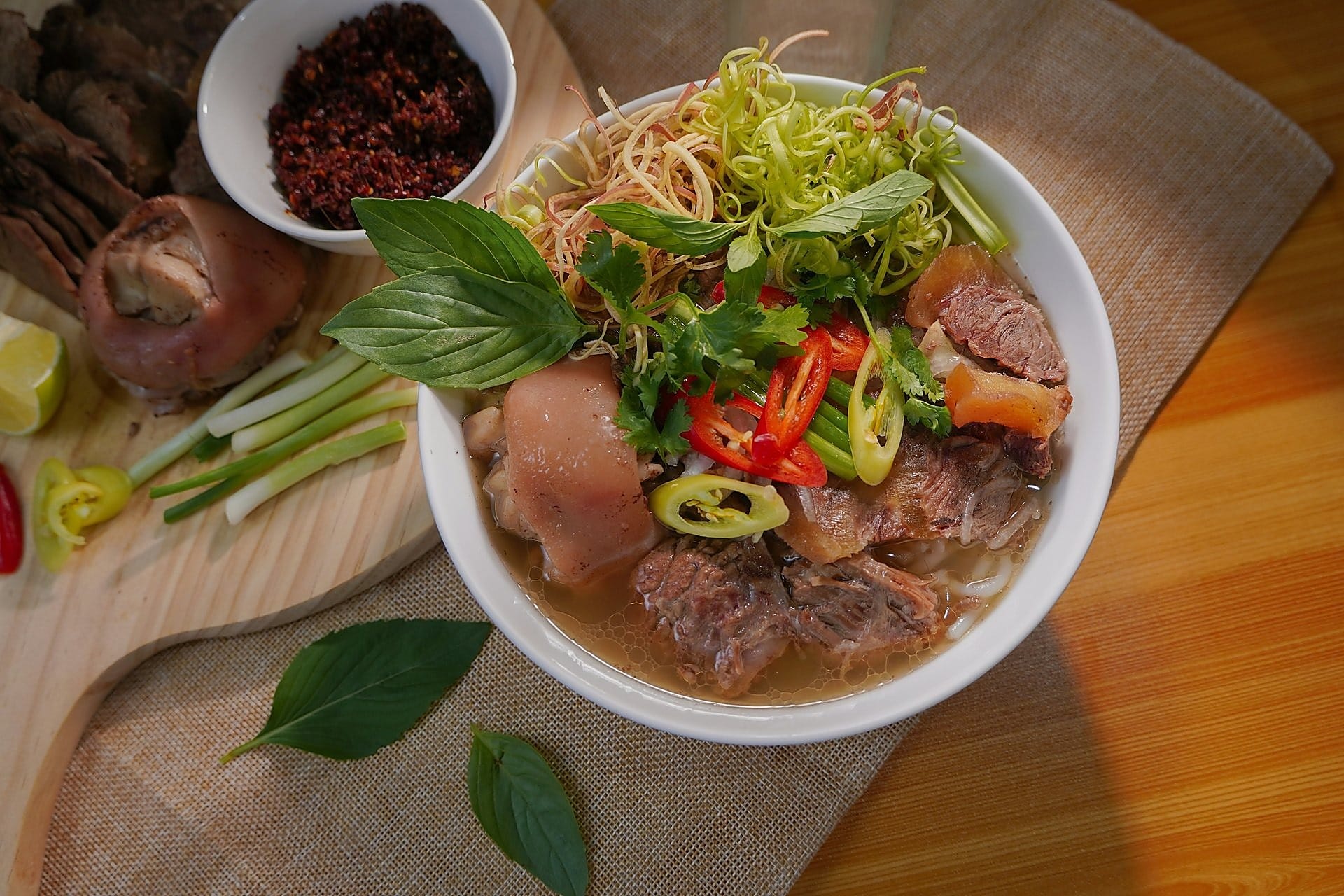
Hoi An: a distinctly local repertoire not found elsewhere. Cao lau (thick noodles using water from a specific well), white rose dumplings (banh bao vac), and banh mi (arguably the country's best). The covered market near Bach Dang Street is the best single place to eat Hoi An specialties with locals. See the Hoi An guide for more detail. Hue: the spiciest regional cuisine. Bun bo Hue uses a deep, lemongrass-forward beef broth with sliced pork and beef and a significant chili presence. Com hen (baby clam rice) is a Hue breakfast food found almost nowhere else.
Skip treating one city's habits as the national default. Hanoi's culture is built around specialist shops for one dish each; Ho Chi Minh City is built around mixing dishes and bigger portions, and expecting either city to work like the other will throw off a food itinerary fast.
How to eat street food safely
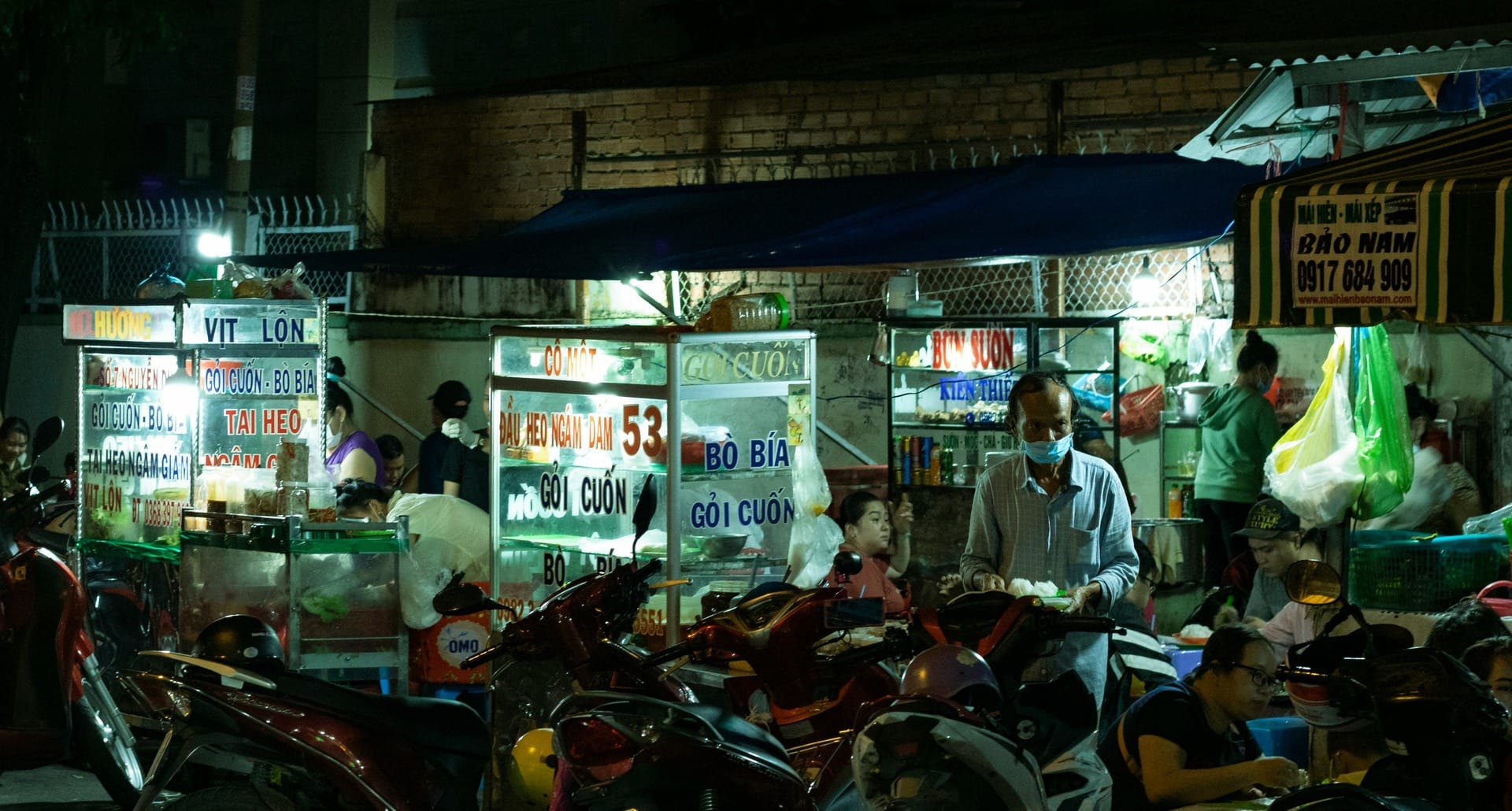
Vietnamese street food has a strong safety record for travelers who follow a few practical habits: eat where it's busy, trust food cooked to order at high heat, and be more careful with anything raw, pre-cut, or sitting at room temperature.
Spotting a good stall
Busy stalls turn over faster: high volume means food is cooked fresh, not sitting. A queue is a quality signal.
Ice, fruit, and sanitation habits
Avoid pre-cut fruit left uncovered. Fresh-cut-to-order is fine.
Check the ice: bagged manufactured ice (the cylinder type) is safe for drinks; crushed ice from buckets at room temperature is less reliable. Most urban stalls now use manufactured ice.
Chopstick cups with boiling water: a cup of boiled water with chopsticks is a sanitation ritual at many stalls, pour it over your utensils before eating.
Why broth and cooked-to-order dishes are lower risk
Trust the broth: pho and bun bo are made from long-simmered broth at high temperature. The broth itself is rarely the vector for problems.
Heat is your friend: anything cooked to order at high temperature is lower risk than pre-assembled cold dishes.
Skip pre-cut fruit sitting out uncovered, even if it looks fine. Fresh-cut-to-order is the same fruit at the same price, and it's a free swap in risk.
Street food tours: exploring with a local guide
A local guide closes the gap between reading about Vietnamese street food and finding today's best version of each dish. Stalls that were excellent two years ago close, new ones open, and a guide already knows which shop has not changed its recipe in decades.
What a local guide actually adds
A good guide knows which com tam shop has not changed its recipe in 30 years, which pho cart the neighborhood has been going to since the owner's grandmother ran it, and which market lane has the best banh cuon in the city.
Walking vs motorbike tours: pace vs ground covered
Guided street food walks in Ho Chi Minh City and Hanoi run 2-3 hours, cover 4-6 stops, and cost 300,000-600,000 VND per person (checked September 2026). Motorbike or Vespa tours cover more ground and more neighborhoods in the same time window; walking tours allow more time at each stop.
Skip a motorbike tour if you want real time at each stop rather than more ground covered. Walking tours hit fewer neighborhoods but let you sit down and actually finish the dish instead of grabbing a few bites and moving on.
Our Essential Vietnam 12-day tour runs the length of the country, from Hanoi in the north through Hoi An and Da Nang on the central coast to Ho Chi Minh City and the Mekong Delta in the south, enough regional ground to taste pho, bun cha, banh mi, and com tam where each is at its best.
Hynnee is a Meetup Travel local expert, born and raised in Vietnam, who tracks which stalls still cook the way they did decades ago and knows exactly which street dish to order in which city, and at which hour, to get the real version.