
Hoi An Lantern Festival: What Happens and When to Go
Hoi An's Full Moon Lantern Festival happens once a month, not every night, and this one fact confuses more visitors than almost anything else about the town. Come on the wrong evening and Nguyen Thai Hoc Street looks like any other pretty street. Come on the 14th of the lunar month and it turns into something special.
This guide gives you the real schedule, the streets that matter, and the small choices (arrive by 6:00pm, come from the river end) that make a good night instead of just an okay one.
Quick Facts About the Hoi An Lantern Festival
Item | Detail |
|---|---|
When | 14th day of each lunar month (eve of full moon) |
Hours | 5:30pm to 10pm; peak 7pm to 9pm |
Arrive by | 6:00pm at Bach Dang riverfront |
Best street | Nguyen Thai Hoc, from the river end |
Street entry | Free |
Ancient Town ticket | 120,000 VND foreign / 80,000 VND Vietnamese (16+) |
Ticket validity | 24 hours, choose 5 heritage sites |
Boat + candle release | 50,000 to 100,000 VND per person |
When Is the Hoi An Lantern Festival in 2026?
The Full Moon Festival falls on the 14th of each lunar month. Here are the 2026 dates that are still to come:
Month | 2026 Date | Notes |
|---|---|---|
August | Aug 26 | Wed |
September | Sep 24 | Thu, day before Mid-Autumn (Trung Thu) |
October | Oct 23 | Fri |
November | Nov 22 | Sun |
December | Dec 22 | Tue |
January 2027 | Jan 21 | Thu, last full moon before Tet (Tet starts Feb 6). Usually the busiest night |
Earlier 2026 dates have already passed: January 2, February 1, March 2, April 1, April 30, May 30, June 28, and July 27. The lunar calendar moves by about 10 to 11 days each year, so always check a Vietnamese lunar calendar before you book.

Vietnamese lunar calendar dates for the Hoi An Full Moon Festival
Why the Date Matters
Hoi An's Full Moon Festival happens only on the 14th of each lunar month, not every night. Come on the wrong evening and you just get a normal street. The lunar calendar moves about 10 to 11 days each year, so the 2027 dates are different again. Always check a Vietnamese lunar calendar before you book.
Walk in from Bach Dang Street at 6:00pm and you get something even better than the festival itself: the town easing into it. Around 6pm the electric lights start to go off, one street at a time, until only lanterns and moonlight light the quarter until 10pm. The last daylight catches the amber and yellow silk overhead, and for a few minutes the town feels like it is holding its breath. The crowd is still light here, easy to move through. But it does not last: by 7pm, the river end of Nguyen Thai Hoc is packed.
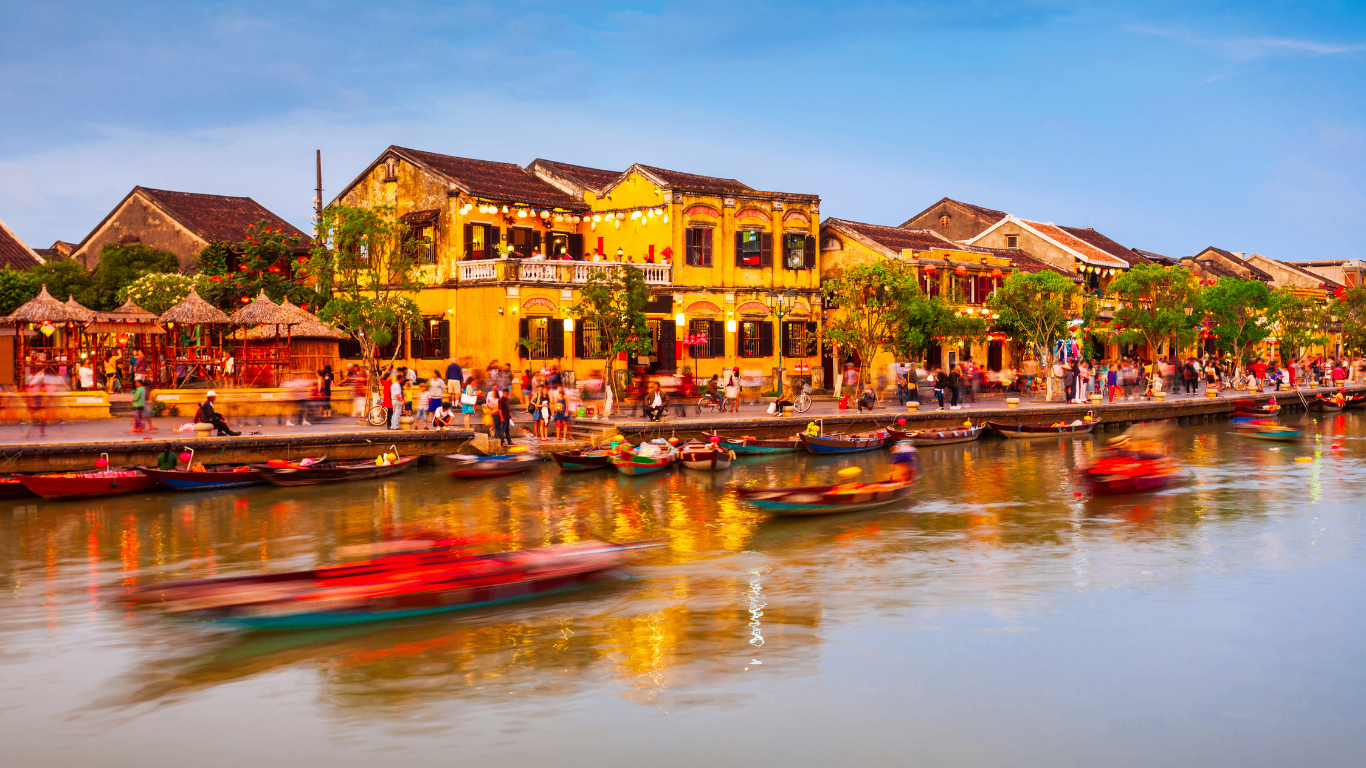
Lanterns along Nguyen Thai Hoc Street early in the evening
How the Lunar Calendar Works for This Trip
The Vietnamese lunar calendar is not the same as the Western (Gregorian) calendar.
The 14th of the lunar month (the eve of the full moon) lands on a different Western date each month.
The whole pattern moves about 10 to 11 days each year.
So being in Hoi An on "the 14th" of a Western month means nothing.
Timeline of a festival night:
Time | What is happening |
|---|---|
5:30pm | Vendors light lanterns, the streets get busy |
6:00pm | Electric street lights start to dim |
6:00 to 7:00pm | Best time to walk around: cool air, easy photos |
7:00 to 9:00pm | Peak lanterns, thick crowd, boat candle releases |
9:00 to 10:00pm | Tour groups leave, the town gets quiet again |
10:00pm | Electric lights come back, vendors pack up |
The Geography of the Festival: Street by Street
Three streets carry the evening, each in its own way.
Nguyen Thai Hoc Street
The east-west street with the most lanterns in the Ancient Town, hung at three levels: shopfronts, wires between buildings, and bamboo poles overhead.
Come from the Bach Dang (river) end, not from Tran Phu.
From this way, the view looks right against the western night sky.
Peak time (7pm to 9pm) is slow and packed, so keep your bag small and your hands free.
Leave onto the riverside walk instead of going back the way you came.
Bach Dang Street (Riverside)
The best spot for the water candle release.
Runs along the north bank of the Thu Bon River.
Boats offer lantern-floating trips from about 7pm.
Best time: 7:00 to 7:30pm, just after dark.
Cost: 50,000 to 100,000 VND per person. Agree the price at the boat landing.
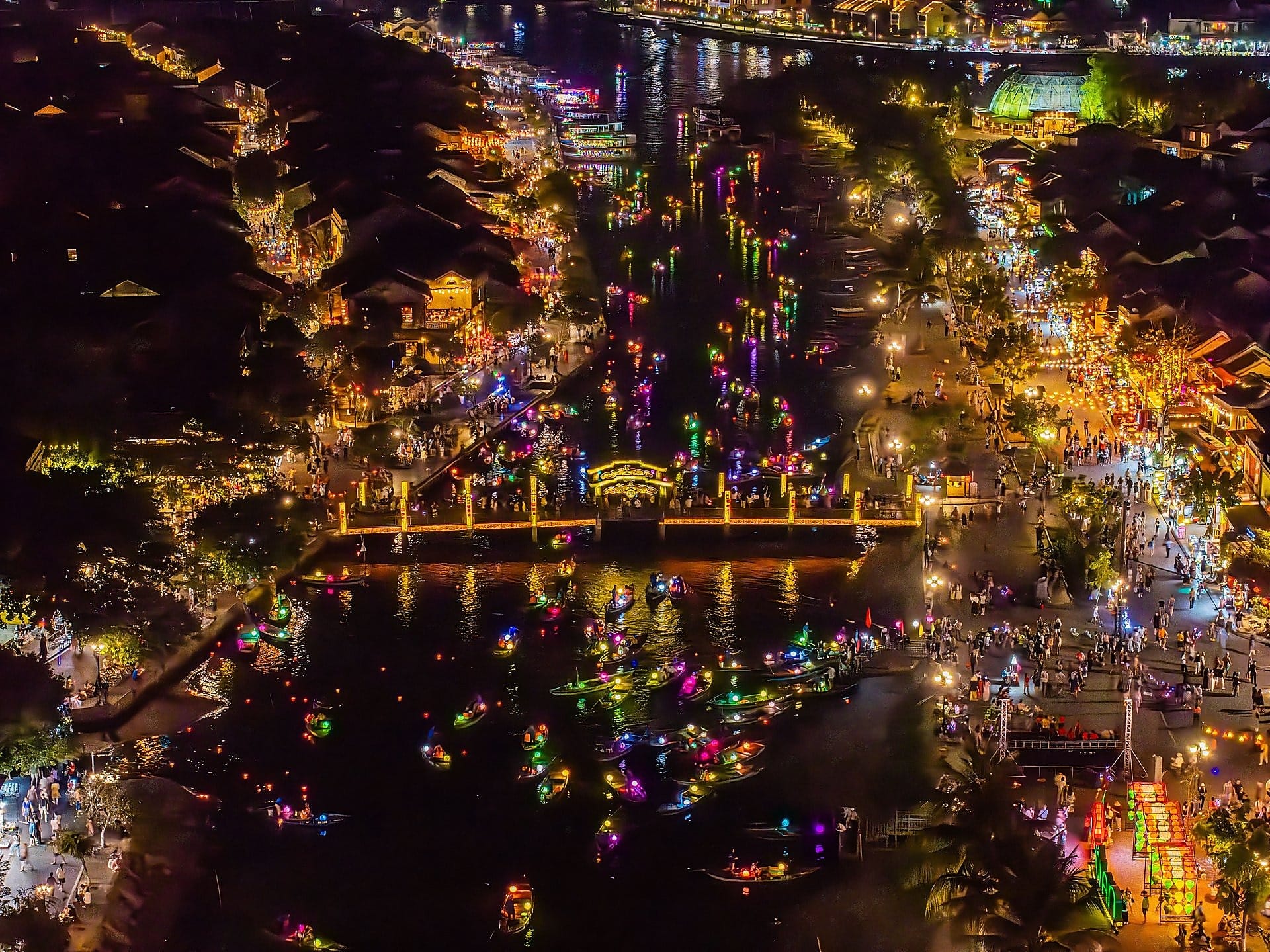
The floating candles drift south with the current, and the buildings reflect from above.
Tran Phu Street (Heritage Buildings)
Not just a walking street. This is where the cultural depth is.
Site | What happens on festival night |
|---|---|
Japanese Covered Bridge | Western end, lit up |
Phuc Kien Assembly Hall | The most elaborate ceremony: incense, prayer, traditional music |
Quang Dong Assembly Hall | Lantern-lit courtyard ceremony |
Hai Nam Assembly Hall | Quieter courtyard ceremony |
Merchant houses | 16th to 18th century interiors, most open with a ticket |
Assembly Hall entry is covered by the Ancient Town ticket. Time inside Phuc Kien gives you more cultural context than one more street photo.
Phuc Kien Assembly Hall on Tran Phu Street in Hoi An
What the Festival Is Actually Celebrating
Most guides skip this, but it is worth knowing before you go. The festival comes from the Buddhist and Taoist traditions of Hoi An's old merchant community. For them, the 14th of the lunar month was a night for prayer, honouring ancestors, and quiet business ritual. Merchants once lit lanterns to honour their business ties and ask for a good year ahead, and the town has simply never stopped. Even the dimmed streetlights follow this idea: it is not a show turned on for visitors, it is a tradition left alone. When you see a family kneel by the Thu Bon River to release a floating candle, that is not a photo set up for tourists. It is a private practice with its own meaning, just as it would be on any other 14th.
Knowing this changes the evening. You stop watching a show from outside and start standing inside something that really belongs to the people around you.
Is Hoi An Ancient Town Worth Visiting Without the Lantern Festival?
Yes. If your dates do not match the full moon, do not force it.
It is quieter and easier to walk, and better for actually seeing the architecture.
Mornings before 8am belong to residents: food vendors, motorbike deliveries, and ca phe from side streets.
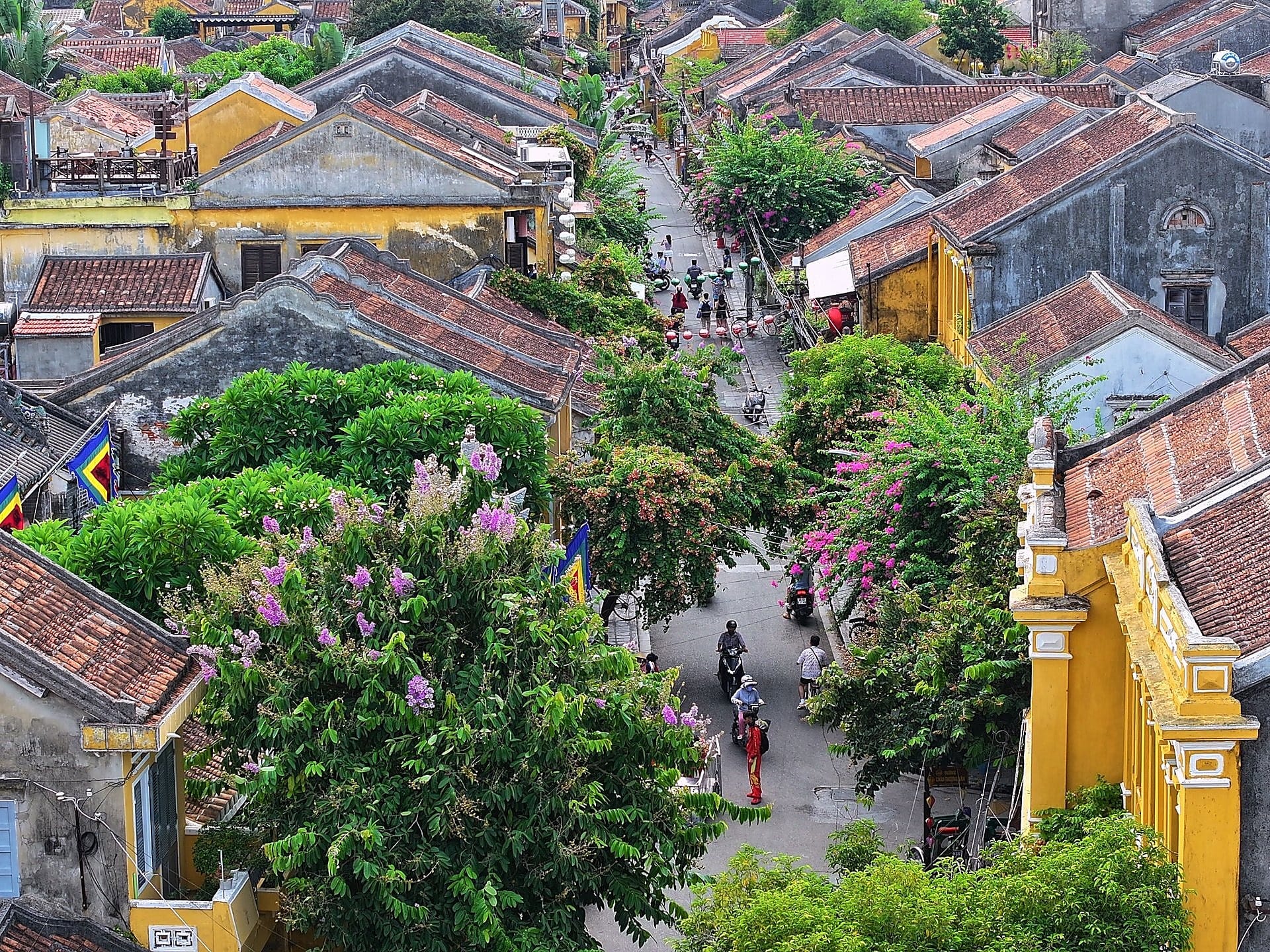
The UNESCO status is for the town itself, not the festival, and it covers more than 1,300 protected heritage buildings.
The yellow ochre walls change colour through the day. The best light is early morning and golden hour.
The town itself is the point.
On non-festival nights, the night market runs every evening along An Hoi Bridge and the south bank. It is more commercial and less magical than the Full Moon Festival, but still a good evening option between lunar cycles.
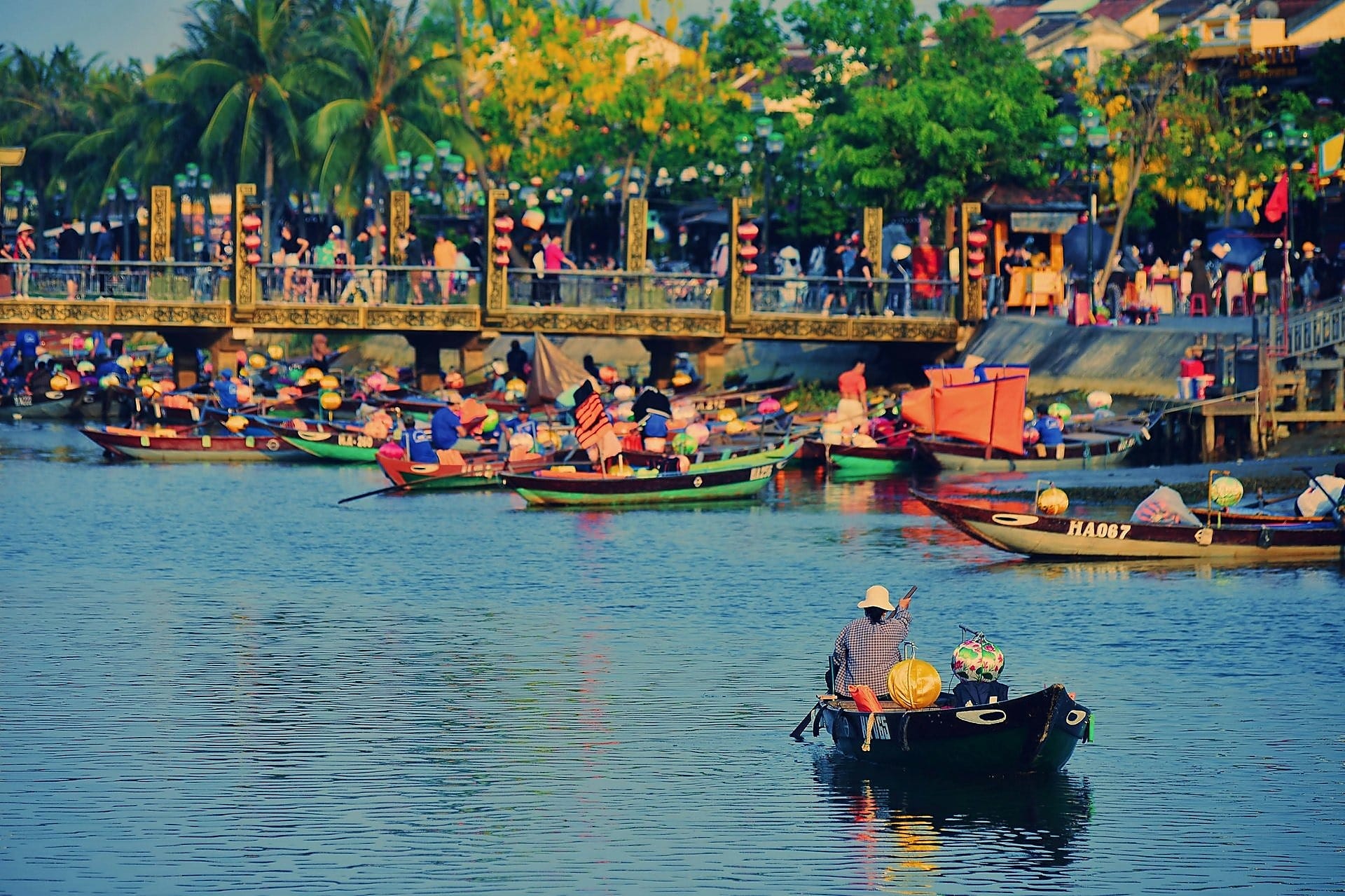
An Hoi Bridge night market lanterns in Hoi An
Practical Information
Category | Detail |
|---|---|
Best arrival time | 6:00pm at Bach Dang riverfront |
Prime navigation window | 6:00 to 7:00pm |
Slowest crowds | 7:30 to 9:00pm |
Post-crowd quiet | After 9pm, the town returns to its normal mood |
Footwear | Comfortable shoes for cobblestones |
Bag | Small, hands-free |
Camera | A phone camera handles the lantern light fine |
Booking window | Book weeks ahead for festival nights in high season (Nov to April) |
Where to Stay for the Lantern Festival
Stay within walking distance of the Ancient Town. Cars and motorbikes cannot enter the walking zone on festival nights, so a hotel you can walk from at 5:30pm and back to at 10pm is worth more than a cheaper one further out.
Hotel | Style | Position |
|---|---|---|
Anantara Hoi An Resort | 4-star riverside luxury | Short walk from the Ancient Town, on the Thu Bon River |
Little Riverside Hoi An | 5-star boutique, one of the top-rated riverside stays | 5 to 10 min walk to the Ancient Town, riverside |
Allegro Hoi An | Boutique luxury, well-reviewed pool and spa | Walking distance, quiet at night |
Hoi An Historic Hotel | Mid-range 4-star, about 150 rooms | Edge of the Old Quarter, walking distance |
Vinh Hung Old Town Hotel | 3-star, 33 rooms | 3-min walk to the night market, 6-min to the Old Town |
Should I Stay in Hoi An or in Central Da Nang?
After the 2025 merger, both are inside Da Nang city, but they are about 30km apart.
Base | Best for |
|---|---|
Central Da Nang | Cheaper rooms, beach access, day trips to Hoi An |
Hoi An Ancient Town | Lantern festival evenings, walking access, slow mornings |
For the lantern festival, stay in Hoi An. Arriving by taxi at 7pm and leaving in a rush at 10pm is a much worse experience than walking home from a nearby guesthouse.
Guesthouse lane in Hoi An Ancient Town at night
Are There Entrance Fees for the Hoi An Lantern Festival?
The streets are free during the festival. Individual costs:
Item | Cost |
|---|---|
Ancient Town ticket (foreign) | 120,000 VND |
Ancient Town ticket (Vietnamese, 16+) | 80,000 VND |
Children 1m to 1m4 | 50,000 VND |
Children under 1m | Free |
River boat lantern release | 50,000 to 100,000 VND per person |
Typical evening total (no food) | 170,000 to 220,000 VND (foreign) |
The ticket is valid for 24 hours and covers 5 heritage sites, per official pricing from the Hoi An World Heritage Center. Each site uses QR check-in as of 2026.
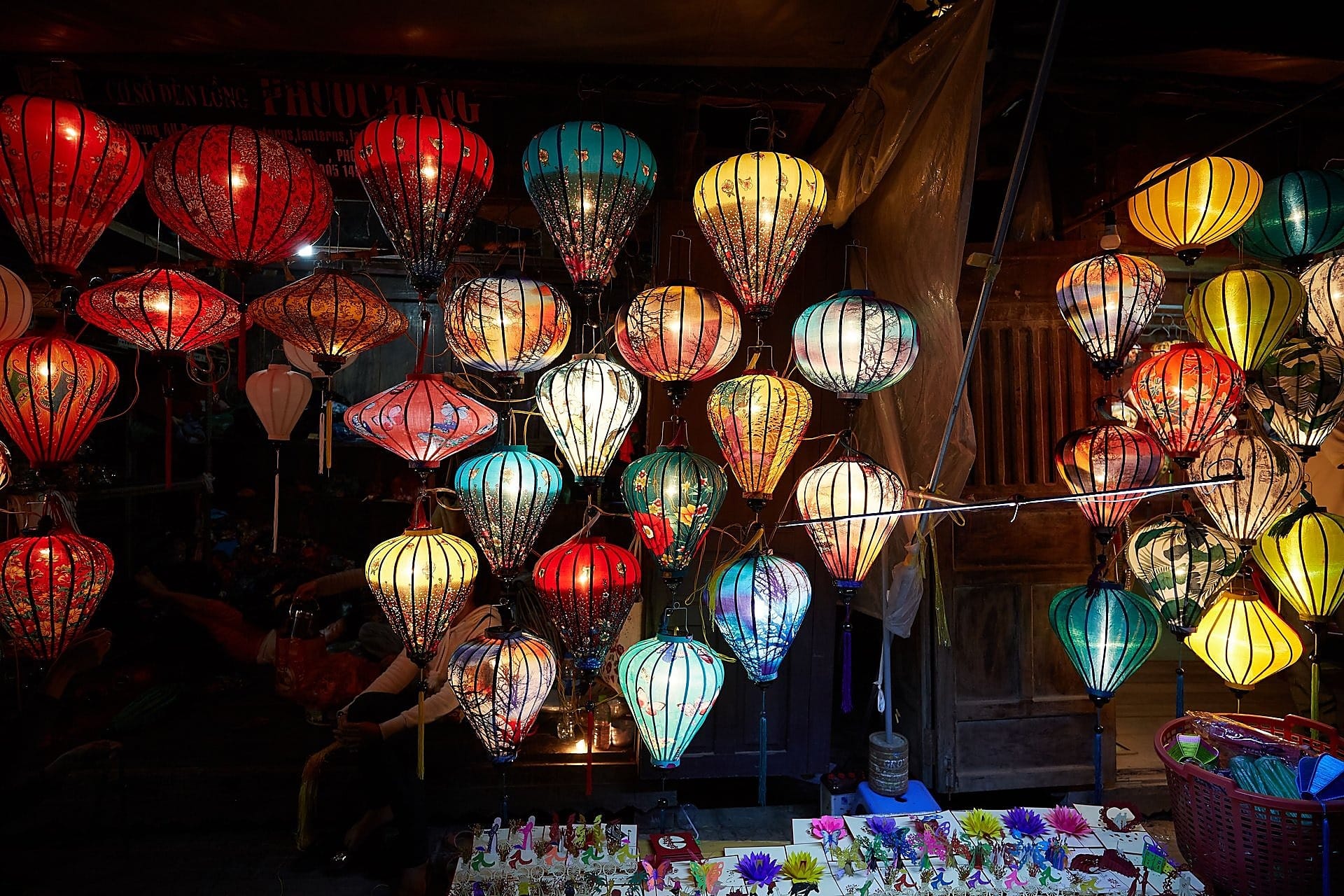
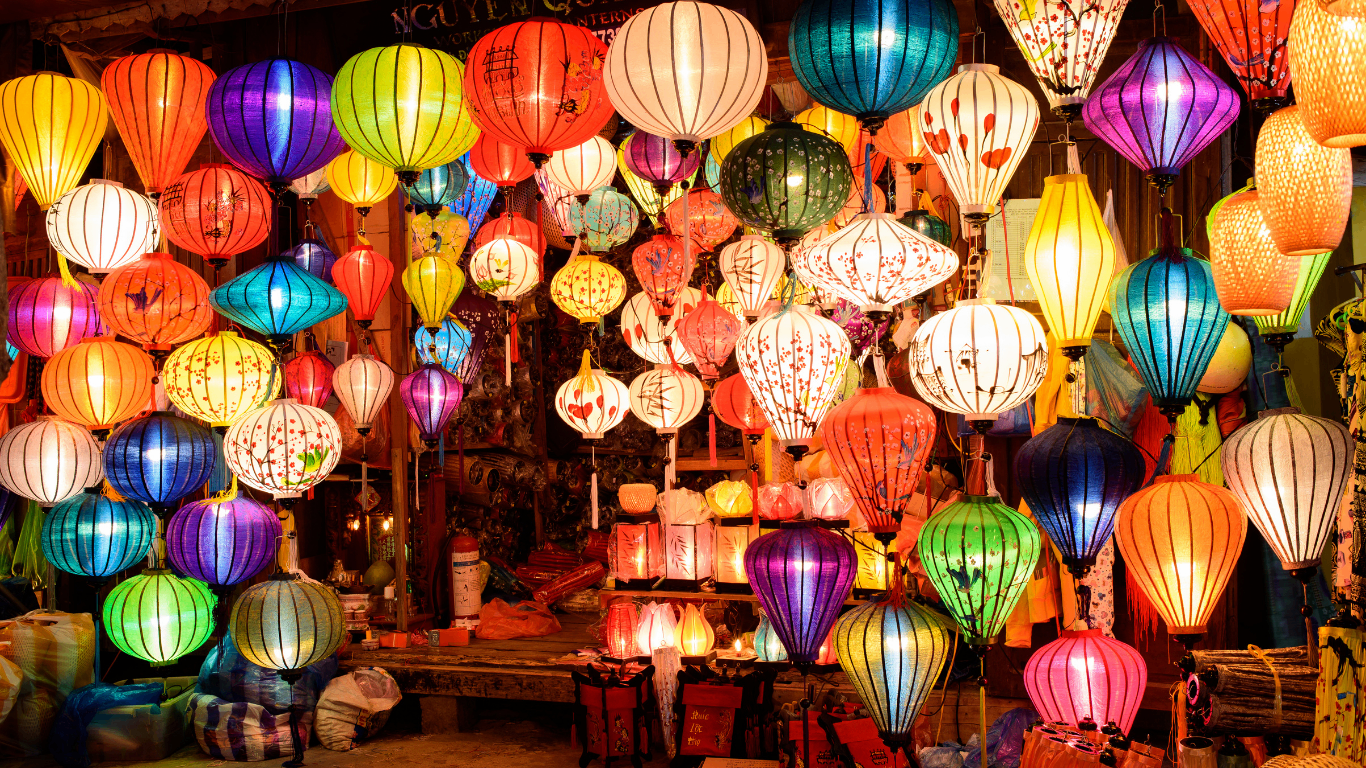
Handcrafted silk lanterns illuminating Hoi An Ancient Town at night
Three things are worth remembering. First, check the lunar 14th before you book, because the wrong night just gives you a normal street, not the festival. Second, walk in from the Bach Dang (river) end of Nguyen Thai Hoc, not from Tran Phu, because the lanterns catch the light better from the west and the crowd carries you along instead of against you. Third, be there by 6:00pm, because the 7 to 9pm window is the best part, but the good spots by the river fill up early.
Get the timing and direction wrong, and the festival feels small: a few lanterns over a normal street. Get them right, and it becomes one of those evenings you tell people about back home, one of the most beautiful and quietly special nights in Vietnam.