
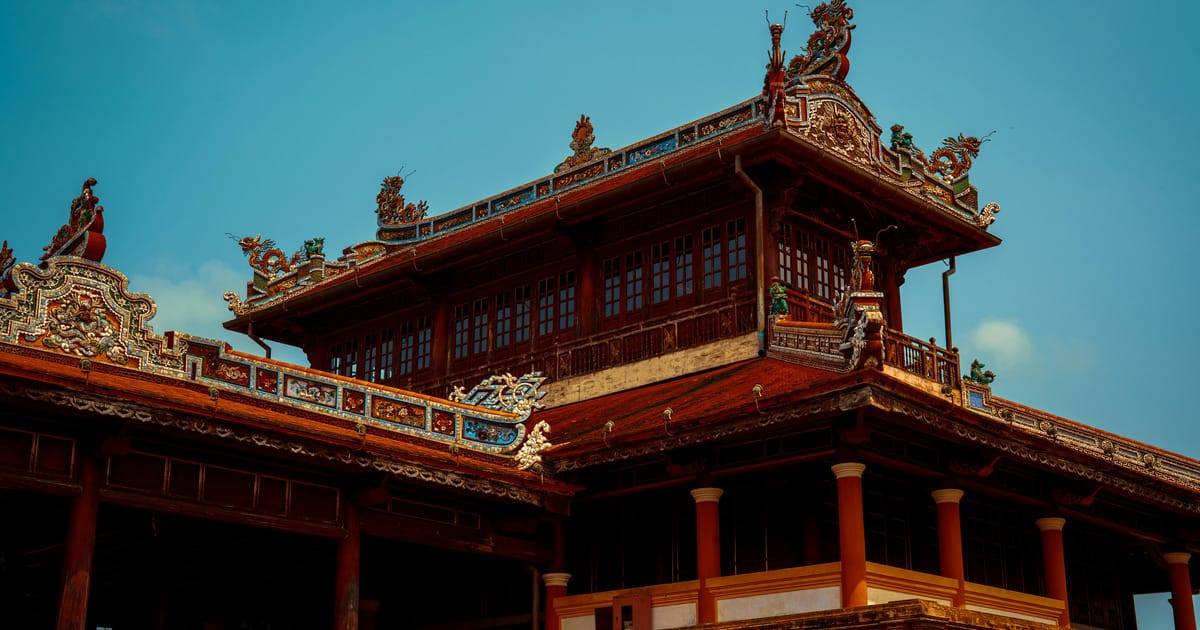
Imperial City Hue Tour: Reading the Citadel Like a Local
The Citadel is not just an old ruin. It shows how the Nguyen emperors used power in a calm, controlled way.
This is useful to know before you go in. Many first-time visitors expect something huge, like the Forbidden City in Beijing or Angkor Wat in Cambodia. Hue is different. It is large, but not too much. The decoration is careful, not showy. The low roofs and walled courtyards control what you see, step by step. This tells you a lot about how the emperors wanted to show power: with calm, not noise.
The Nguyen Dynasty ruled from here from 1802 to 1945. To understand the place, walk through it slowly and in order.
What the Imperial City Actually Is (and Isn't)
Three Layers, Not One
Many visitors and guidebooks think the Citadel is one place. In fact, it is three areas, one inside the other. Each one had a different job and different rules about who could enter.
Layer | Vietnamese | What it was | Today |
|---|---|---|---|
The Citadel | Kinh Thanh | The outer walled city, 520 ha, with support buildings | People still live here |
Imperial Enclosure | Hoang Thanh | The ceremony and office area; Thai Hoa Palace | The main area for visitors |
Forbidden Purple City | Tu Cam Thanh | The emperor's private home | Mostly ruins after 1968; some parts rebuilt |
What 1968 Changed
In 1968, during the Tet Offensive, Hue saw one of the hardest city battles of the Vietnam War. The fighting inside the Imperial City lasted about 26 days. By the end, about 70% of the buildings in the Forbidden Purple City were destroyed.
This is important for your visit. In the inner areas you will see empty ground, grass, and repair work next to old buildings. So the place feels both very old and still being rebuilt. Knowing this changes how the visit feels.
The Correct Walking Order Through the Citadel
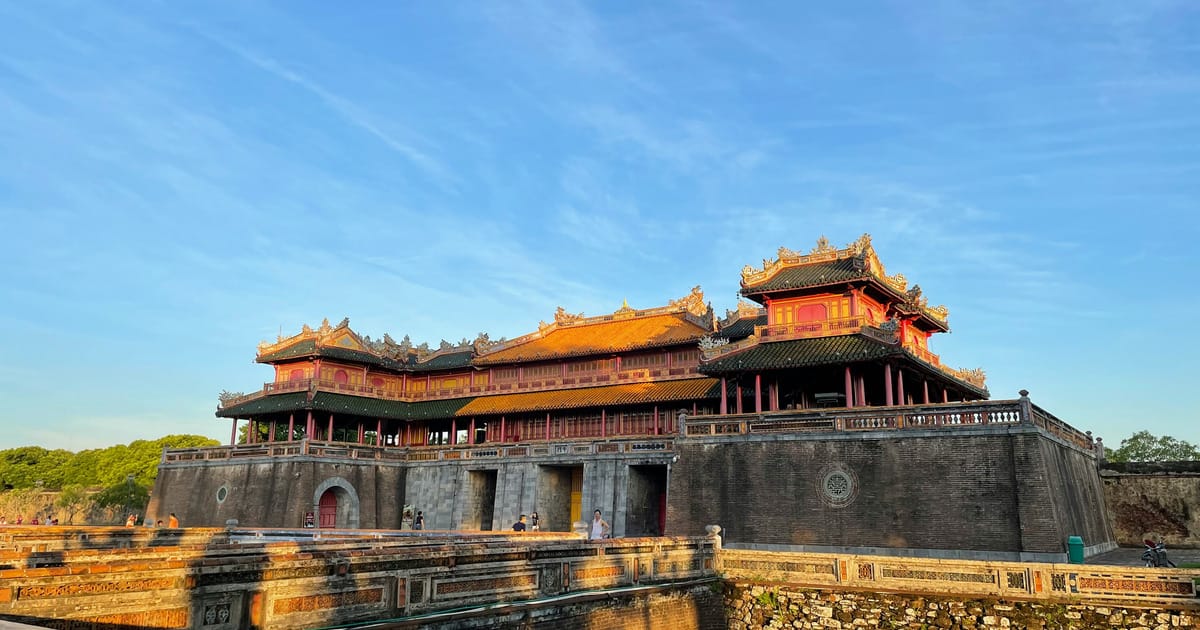
Ngo Mon Gate to Thai Hoa Palace
Enter through Ngo Mon Gate (the Noon Gate) on the south side of the Imperial Enclosure. This was not only a gate. It was the line between the outside world and the emperor's world. It has five openings, and the middle one was only for the emperor. Stand on the open ground in front to see the whole gate.
Thai Hoa Palace is straight ahead, north of the gate, across a courtyard and a pool. It is the most important building here. This is where the emperor held his main ceremonies. Inside, you can still see the painted wooden columns, the lacquer work, and the throne. Stop at the door and look before you walk in.
The Section Most Tour Guides Skip
After Thai Hoa Palace, most tour groups go straight to the Forbidden Purple City and the Royal Theatre. They often miss the Nine Dynastic Urns. You will find them near the Hien Lam Pavilion, on the left of the main line, in the southwest, in front of The Mieu.
This is a mistake. The nine bronze urns were made between 1835 and 1837, under Emperor Minh Mang. They are some of the best metalwork in Vietnam. Each urn stands for one Nguyen emperor. On each urn you can see maps, plants, and scenes from the country. These pictures show how the dynasty saw its land.
Duyet Thi Duong: Royal Theatre and Nha Nhac
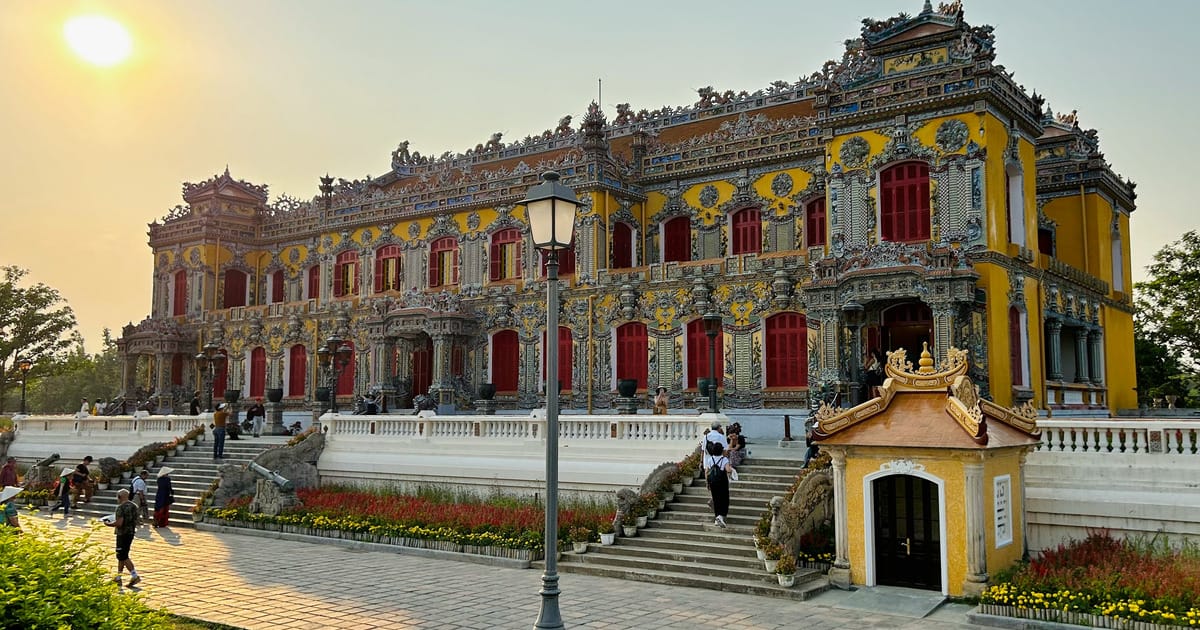
The Royal Theatre (Duyet Thi Duong) is one of the oldest theatres in Vietnam. It was built in 1826. Today it is where you can watch Nha Nhac, the royal court music. UNESCO lists Nha Nhac as an Intangible Cultural Heritage of Humanity.
There are shows at 10am and 3pm every day. Buy your ticket at the theatre desk inside the Imperial Enclosure, not from a tour agency. The ticket costs 200,000 VND per person. The show often starts about 15 minutes after the time on the sign, so do not leave if the room looks empty.
Nha Nhac is not just background music. It is a careful, well-planned kind of music. It started from Chinese court music and, over many years, became truly Vietnamese. A 35-minute show helps you hear the difference between just listening and really understanding it.
Royal Tombs Beyond the Citadel
The Nguyen emperors built their own tombs while they were still alive. Each tomb is a small complex, with courtyards, temples, lotus ponds, and graves. Seven royal tombs are still here. They are spread out in the countryside south and west of the Citadel, about 7 to 16 kilometres away. Three of them are worth the trip.
Tomb | Style | Feeling | Distance | Good for |
|---|---|---|---|---|
Tu Duc | Romantic, like a garden, calm | Quiet, with lake views and poems | ~7km | People who like literature; Tu Duc wrote thousands of poems |
Minh Mang | Classic, balanced, one long line | Formal and large, well kept | ~12km | People who like Confucian design |
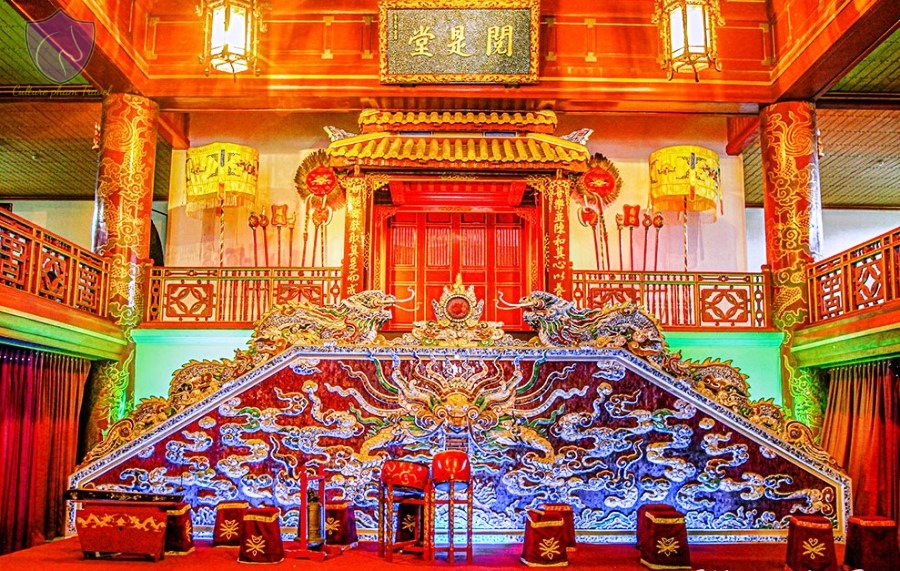
Khai Dinh | A mix of French and Vietnamese styles | Dramatic, on a hill, unusual | ~10km | People who like architecture and photos |
If you have time for only one: choose Tu Duc for feeling and beauty, or Minh Mang for the full, classic design.
You can visit three tombs, the Citadel, and Thuy Xuan Incense Village in one day. But without a local driver, moving between them usually adds about two extra hours. Meetup Travel's Hue day tour plans the route so you still catch the 3pm Nha Nhac show.
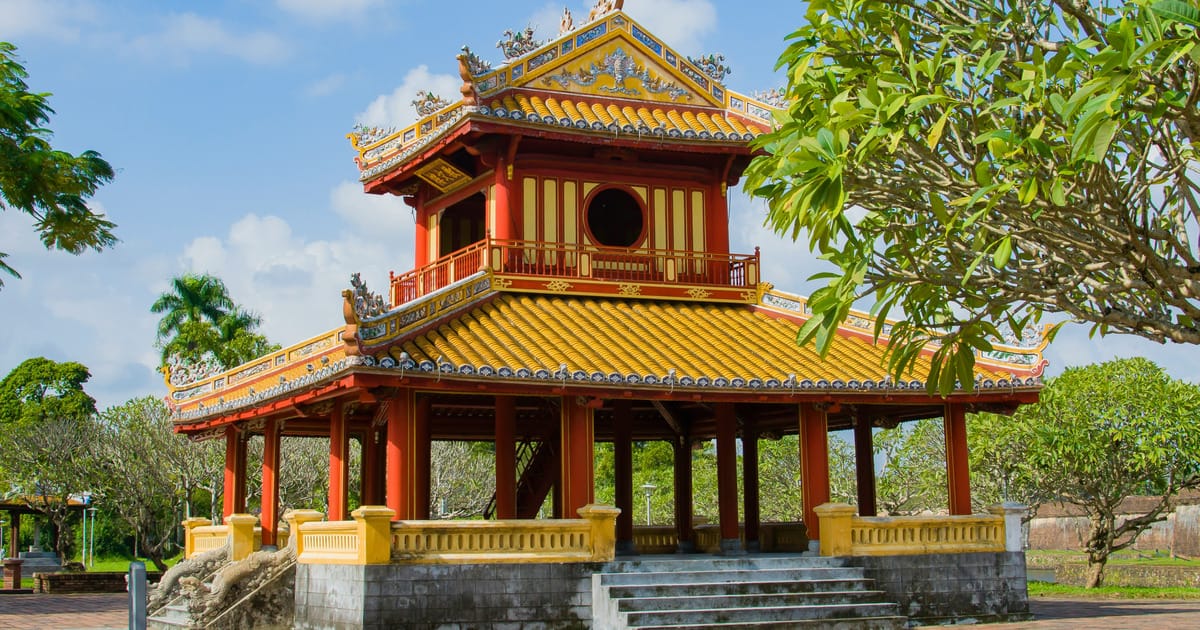
Hue's Food as a Cultural Layer
Hue food is more than local food. It comes from the royal kitchen. The court needed many small, careful dishes at every meal. Today's Hue restaurants are a simpler version of that, but the idea is the same.
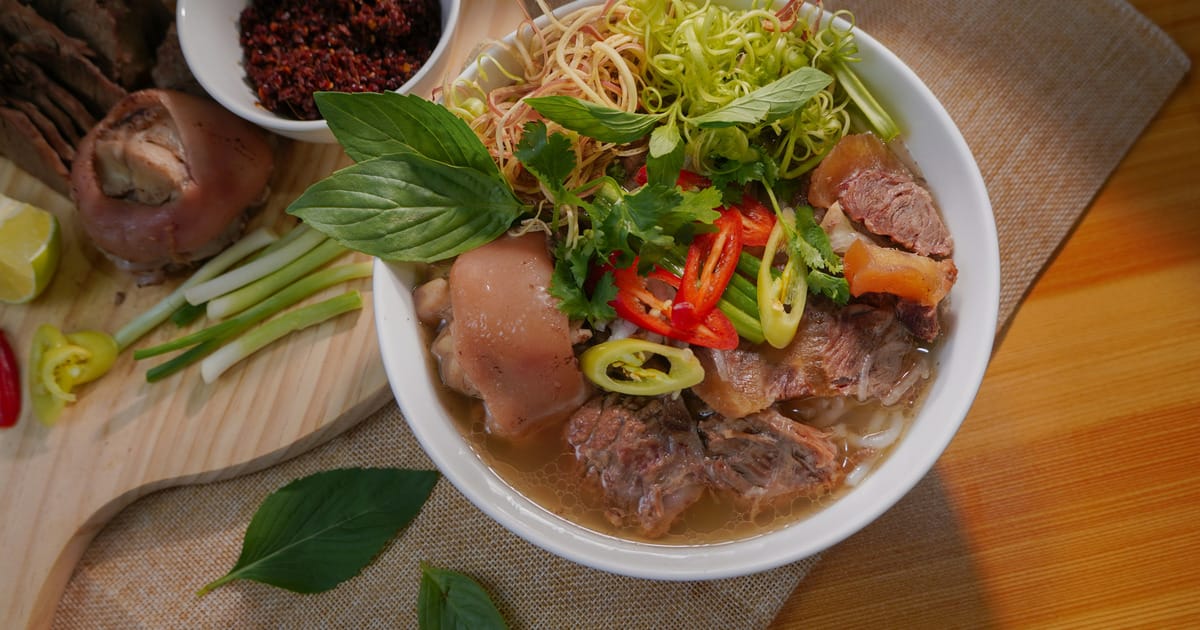
Bun Bo Hue is the most famous Hue dish outside Vietnam. It is a spicy beef noodle soup with lemongrass and shrimp paste. Versions in other cities are usually less spicy. The real bowl has thick round noodles, not the thin ones in pho. The soup is darker and richer, with a strong lemongrass smell that you often lose in other cities.
Banh Beo, Banh Nam, Banh Loc are three small steamed rice cakes. People eat them in the afternoon. They also come from the royal kitchen, but now they are street food. Each cake has a different filling and texture, and each comes in a small cup or on a banana leaf. People eat them in sets, not one at a time.
Food here is not expensive. We also include meals in our all-inclusive Meetup Travel tours.
Thuy Xuan Incense Village: The Afternoon Continuation
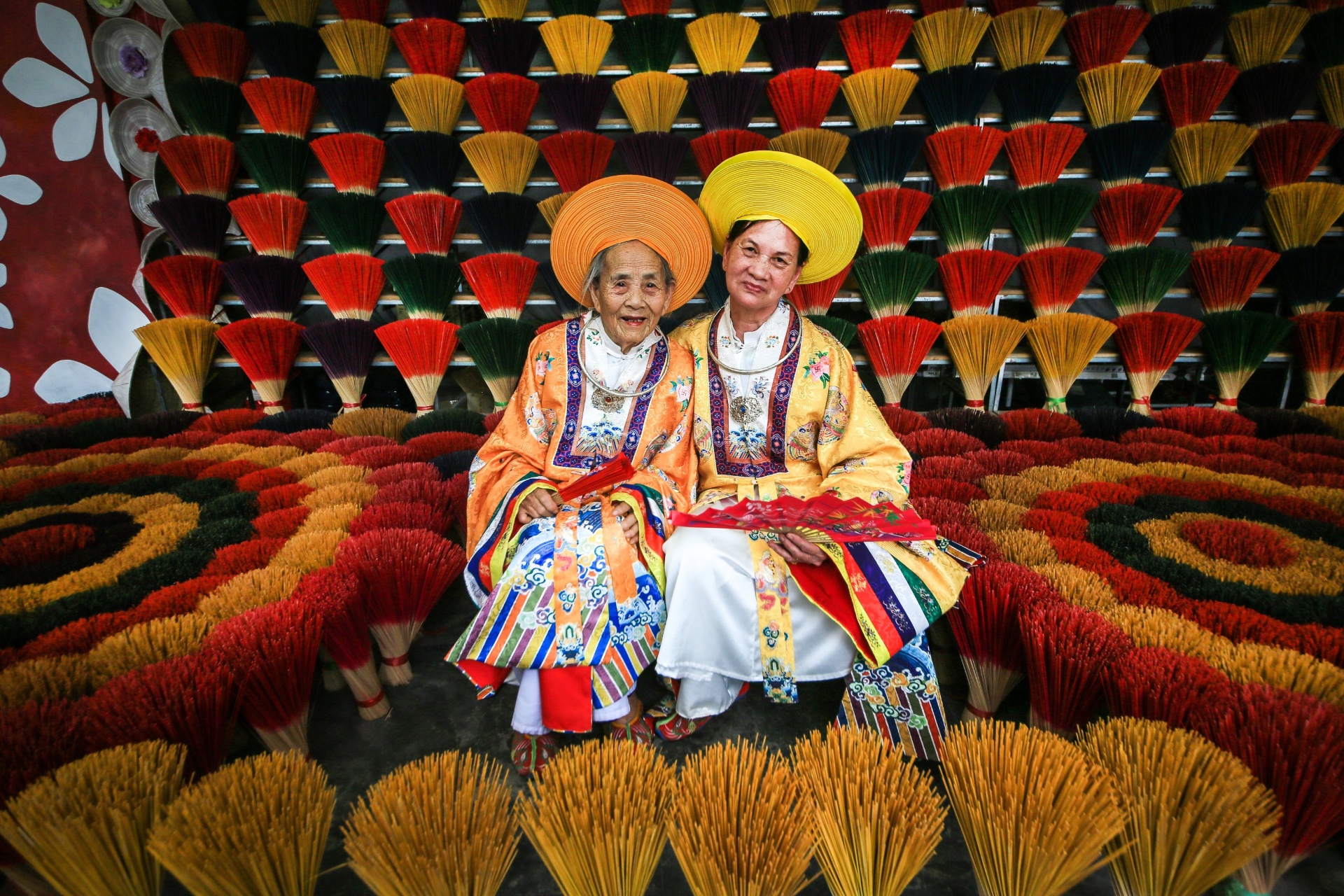
Thuy Xuan Village is about five kilometres south of the Citadel. It makes most of the incense for Hue's temples and pagodas. You can see the work from the road: bright bundles of bamboo sticks, dyed red, pink, and purple, standing in tall pots and drying in round shapes in the sun.
This is a real workplace, not a show for tourists. The makers use the same skills as their parents. Today they use man-made dye instead of plant dye, so the colours look brighter, but tying 200 sticks to the same thickness is still real skill.
Come here in the late afternoon. The light from the west hits the drying sticks and makes the photos you have seen from this place. Arrive between 3:30pm and 5pm.
Practical Information
Imperial Enclosure ticket: 200,000 VND per person. This one ticket also covers the Museum of Royal Antiquities and Kien Trung Palace.
Nha Nhac show (Duyet Thi Duong): 200,000 VND per person. Buy it at the theatre desk inside, not at the main gate.
Opening hours: 7am to 5:30pm daily in summer. In winter it is often about 7:30am to 5pm.
Best time to come: Before 8am, to walk the main line without big tour groups. The first hour is much quieter than midday.